
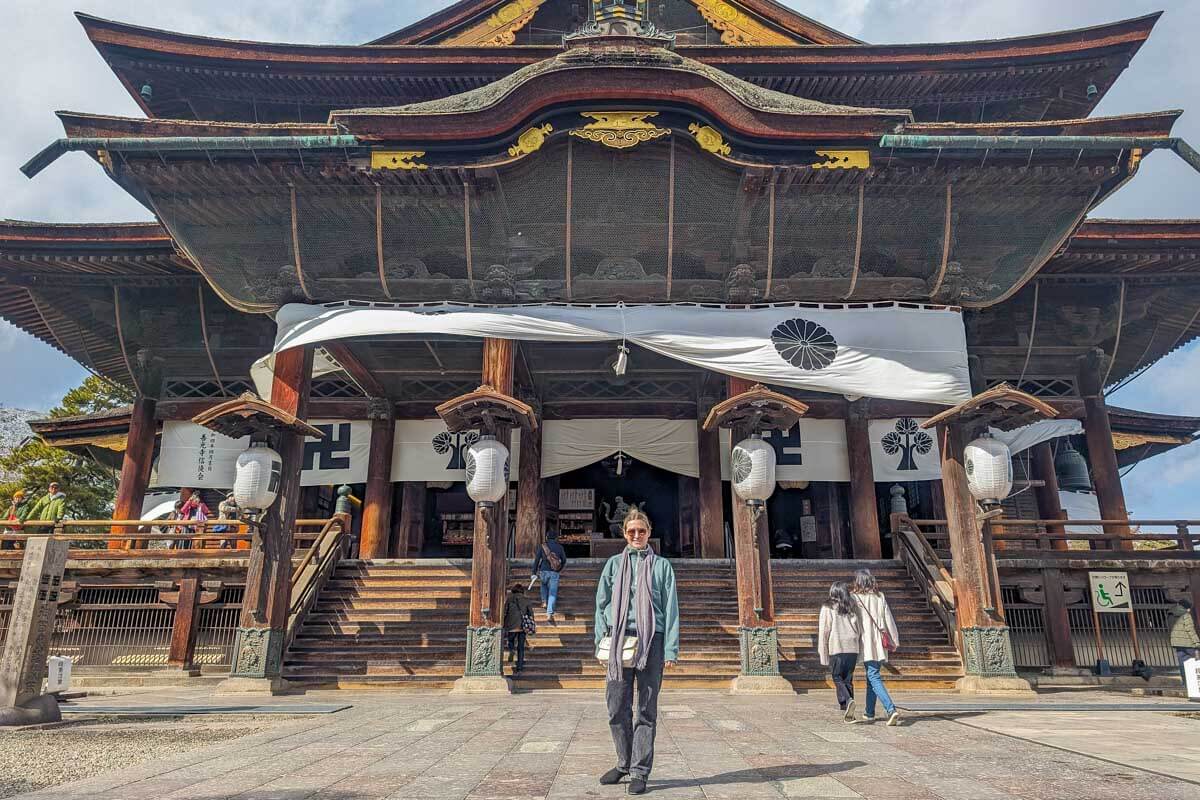
16 Japan Travel Etiquette Mistakes to Avoid
Planning a trip to Japan and curious about local etiquette? You’re in the right place.
Japan runs on order and efficiency, and many of the unwritten rules can feel completely different from what you’re used to. The country has a respect-based culture, which means as a visitor, you should be aware of the local etiquette so that you can navigate social situations with confidence and avoid awkward moments.
We’ve traveled all over Japan and learned a lot about etiquette along the way, so we’ve written this guide to break down the most common etiquette mistakes travelers make and show you how to avoid them. Follow these tips, and you’ll fit right in!
Travel Etiquette Mistakes to Avoid
1. Talking loudly on trains
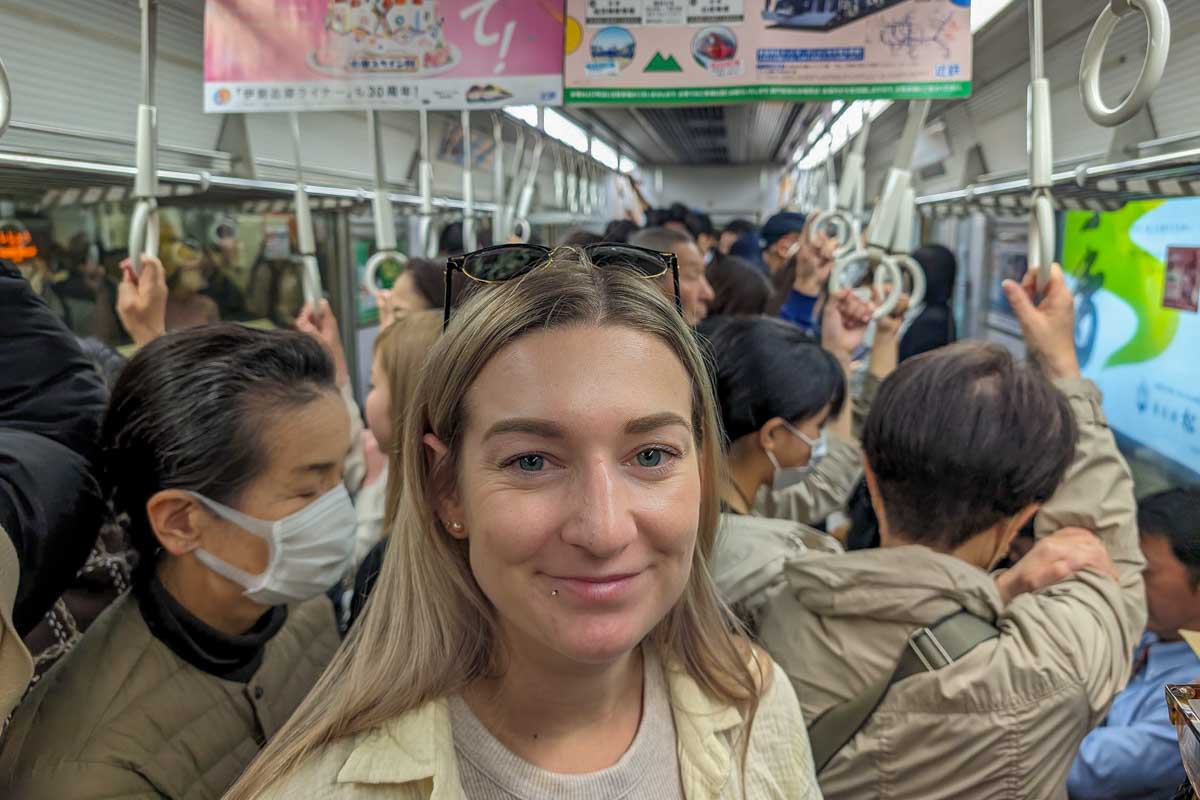
In Japan, trains are largely treated as a place to rest while people commute to and from work or school. Therefore, you should be quiet on board!
Keep your conversations to a low volume, or better yet, just do what the locals do and use this time as an opportunity to read or doze. It might feel strange at first since chatting on public transport is acceptable in most parts of the world, but we very quickly began to enjoy this quiet time on the trains.
We also recommend putting your phone on silent before you board the train, and taking phone calls is very much frowned upon. If it’s an urgent call, then speak at a low volume and keep the conversation as short as possible. And definitely don’t watch videos or play music without headphones on—in most countries that’s considered rude, but here in Japan it’s completely taboo.
Related Read: Since trains play such a big role in getting around, be sure to check out our ultimate guide to the Japan Rail Pass for tips and savings.
2. Ignoring crowded train etiquette

While we’re on the subject of train etiquette, it’s important to be mindful of others on busy trains. Priority seats should be given up for pregnant women and elderly or disabled passengers, although we hope that you’d do that anyway! And if you’re carrying a backpack, either wear it in front of you or ideally put it down at your feet so that you don’t jostle other passengers with it.
One really nice thing about traveling by train in Japan is that there’s no pushing and shoving when getting on and off. If you’re waiting to board, step back to allow plenty of space for passengers who are leaving the train before you attempt to get on. Don’t worry, it’s not going to leave without you!
On commuter trains, you’re not allowed to consume food or drink on board, other than water and coffee. This is okay on long-distance bullet trains, but you must clean up after yourself more on that to come.
Related Read: If you want more practical tips for navigating Japan’s transit system, be sure to check out our blog on how to get around Japan here.
3. Not taking off shoes when required
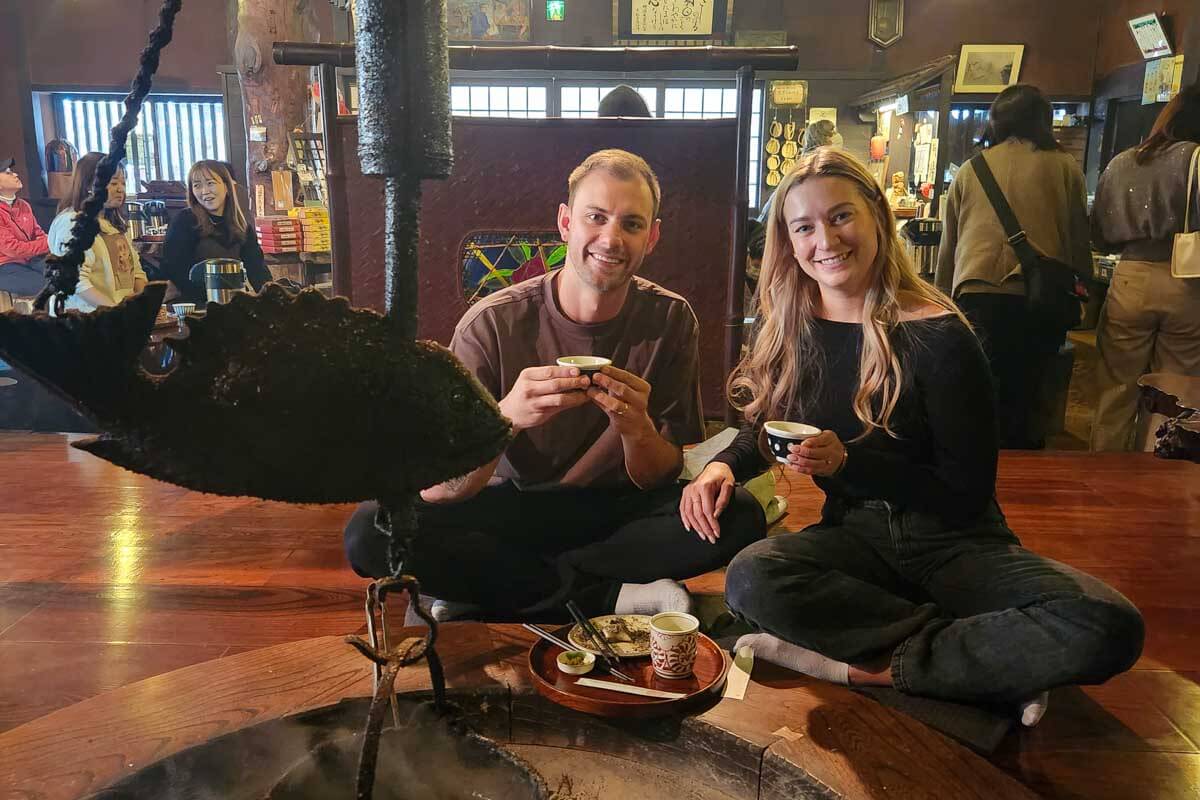
In Japan, you’re expected to remove your shoes in private homes and temples, as well as certain restaurants and ryokans. Why? Because shoes are dirty, of course!
If you’re visiting someone’s home, you’ll take off your shoes on entering and be given house slippers to wear. When you need to use the toilet, you usually remove these slippers and swap them for another pair to wear inside the bathroom. Meanwhile, in temples, you can just stay in your socks or go barefoot.
You’ll always take your shoes off when entering a temple or someone’s home, so that part’s simple. In restaurants, it depends. If you see tatami floors and a line of shoes by the door, slip yours off too. Usually, slippers are provided for the bathroom, but you won’t need them for the general dining area. The same goes for ryokans!
Last but not least, remember to keep your shoes neat and orderly when you take them off. Don’t just fling them anywhere—line them up neatly.
4. Standing on the wrong side of escalators

Escalator etiquette is important in Japan. I saw this almost every day! Most countries have a general rule about which side to stand on, but here, they take it more seriously.
One side of the escalator is for standing, and the other is for walking, so take care not to block the walking side. If you’ve got a bag or suitcase with you, place it in front of or behind you instead of holding it out to the side.
The confusing part about this is that the correct side to stand on varies by region! In Tokyo, they stand on the left and walk on the right, whereas in Osaka and Kyoto, it’s the other way around. If in doubt, just do what the locals are doing, and you won’t go far wrong.
5. Managing your garbage incorrectly
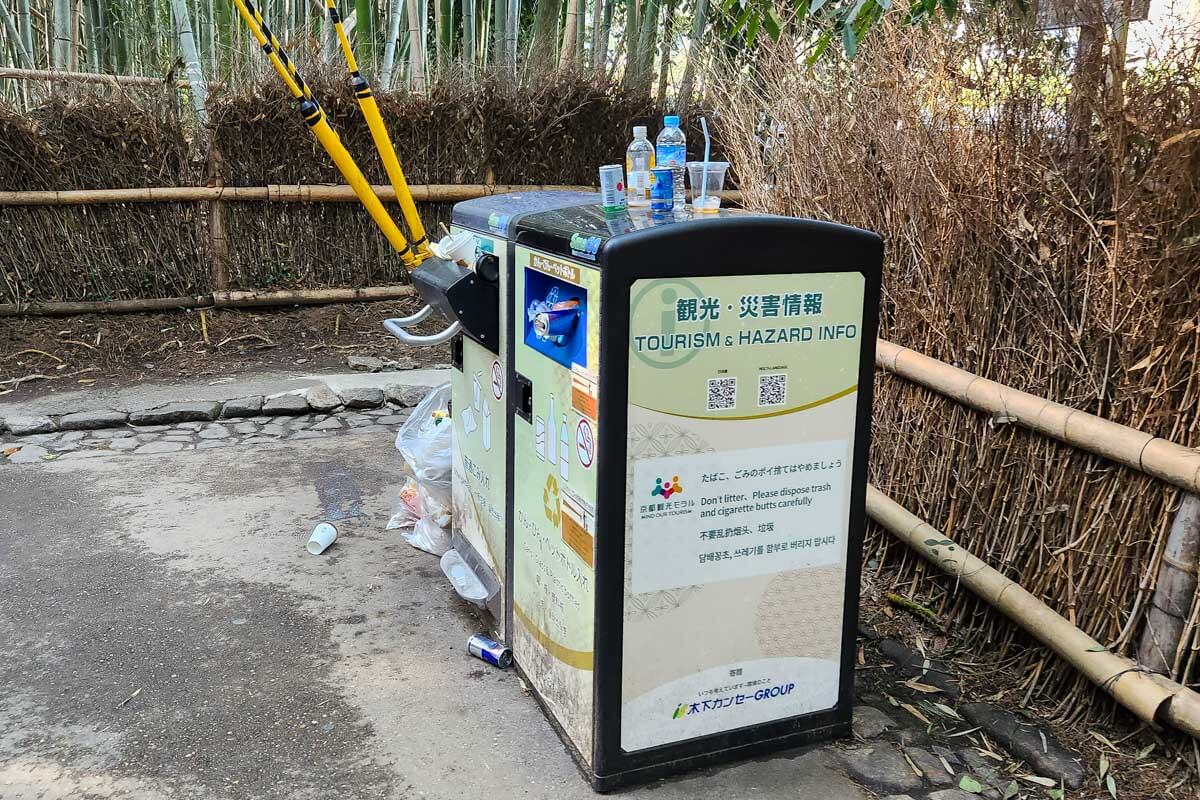
Waste disposal in Japan can be a bit confusing. You don’t see litter anywhere, but you also don’t see many trash cans, so where does it all go?
Well, in Japan, what you do is carry a few plastic bags with you to collect and sort your rubbish as you go about your day. Trash in Japan is generally divided into four categories:
- Burnable – Food waste, cardboard, and paper scraps
- Non-burnable – Glass, metal, and ceramics
- Recyclable – Cans and plastic bottles
- Oversized – Furniture and home appliances
Now, if you’re traveling in Japan, we’re going to go ahead and assume you don’t need to worry about oversized waste. It’s also worth noting that the rules do vary by region and even by ward in Tokyo, especially when it comes to plastics, so double-check these before you throw anything away.
And as for actually throwing your trash away, you’re expected to carry it with you until you find a bin. Convenience stores and train stations often have them, but not always! If you can’t find one, you’ll need to take your rubbish home with you. Hotels and apartment buildings will have bins for you to use.
Japan Rail Pass!
The Easiest Way to Travel Japan By Train
If you’re planning to explore Japan, the Japan Rail Pass (JR Pass) is hands down the easiest and most affordable way to get around. It’s a special 7, 14, or 21 day pass for foreign visitors that gives you unlimited rides on Japan’s famous JR trains, including the high-speed shinkansen (bullet trains)!
Why We Love the JR Pass
Pro Tip: If you’re only exploring one region of Japan, consider a Regional Pass instead (like the Kansai, Hokkaido, or Kyushu Pass). They’re cheaper and perfect for smaller trips!
Where to Get Your Pass
We personally recommend buying your pass online in advance through JRPass.com — they’re an official reseller with fast worldwide delivery and English support, making the whole process super simple. They even offer handy add-ons like pocket WIFI and meet & greet services! Still not sure if the JR Pass is right for you? Check out our Ultimate Guide to the Japan Rail Pass for a full breakdown of costs, inclusions, and when it’s worth it!
6. Eating or smoking while walking
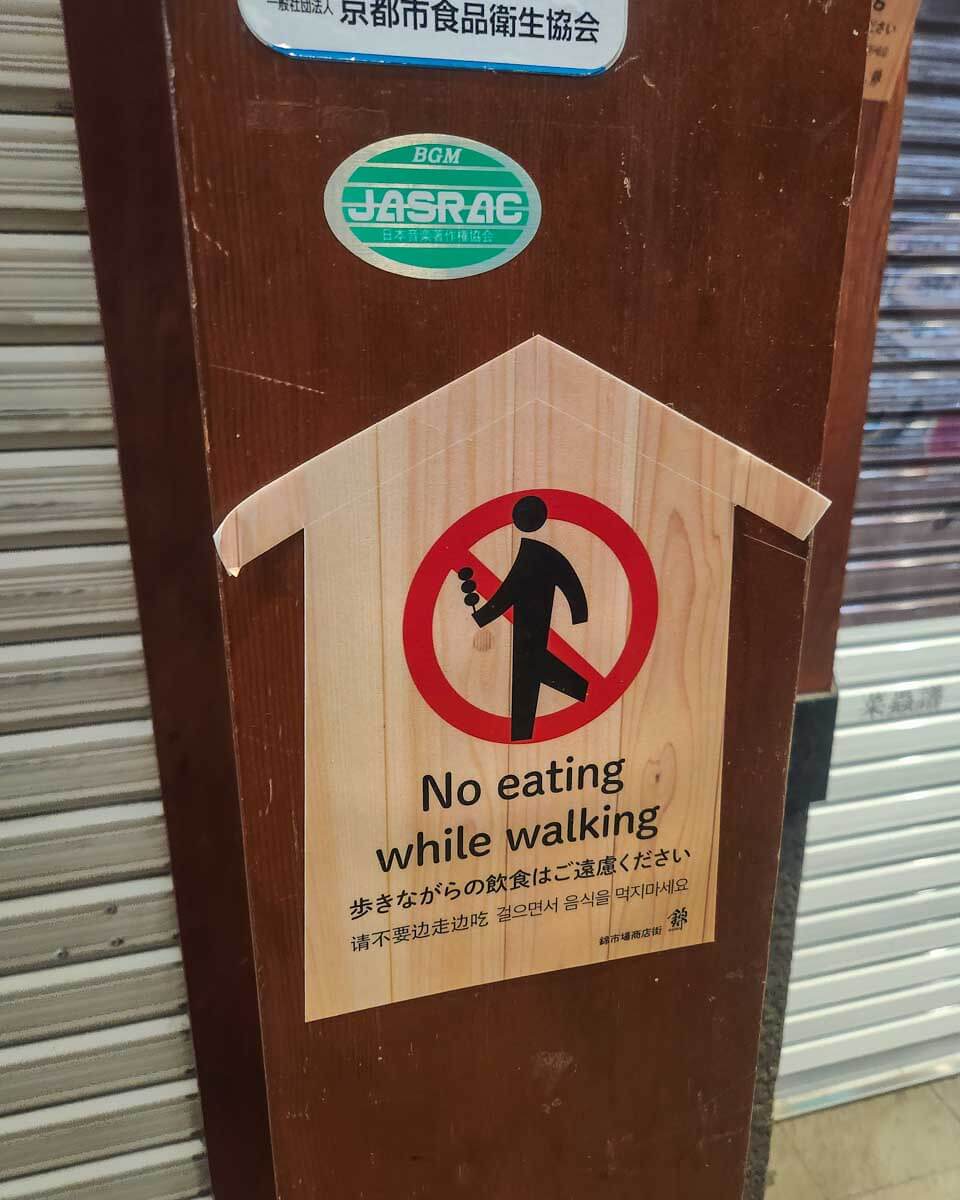
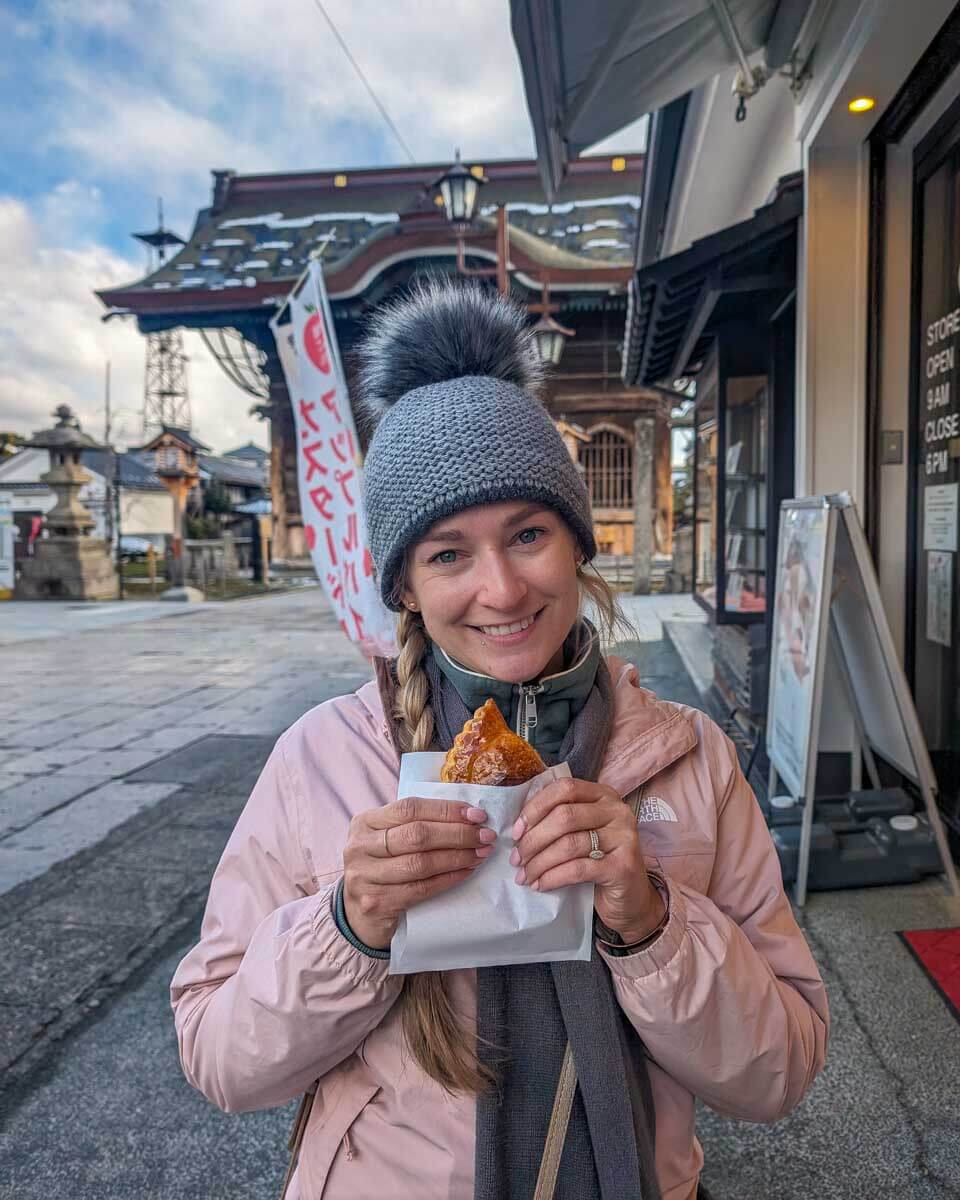
Eating while walking is a no-no in Japan! It’s considered impolite and messy, as you risk soiling your clothes or someone else’s. Plus, the practice creates opportunities to litter, so it’s not a socially acceptable thing to do.
Of course, Japan has a big street food culture, but people just don’t eat on the move. Once you’ve grabbed your food, either find a place to sit and enjoy it or just eat it standing up close to the stall, or somewhere out of the way. Again, if you’re unsure, it’s best to follow what the locals are doing!
Now, you may or may not know that Japan has historically had a strong smoking culture. This is in decline now, but lots of hotels offer smoking rooms, and there are often designated indoor areas in restaurants. However, you’re still not allowed to smoke on the move! In fact, you can even be fined for smoking in the street.
Basically, smoking is only allowed in designated zones. You can sometimes find public smoking booths on the street, or hotels and restaurants will typically have an enclosed smoking area. Train stations almost always have smoking rooms, too.
And when you’ve finished your cigarette, you should never throw your butt on the ground. The smoking zones will have ashtrays and bins you can use—you don’t have to take your stubs home with you!
7. Poor chopstick etiquette
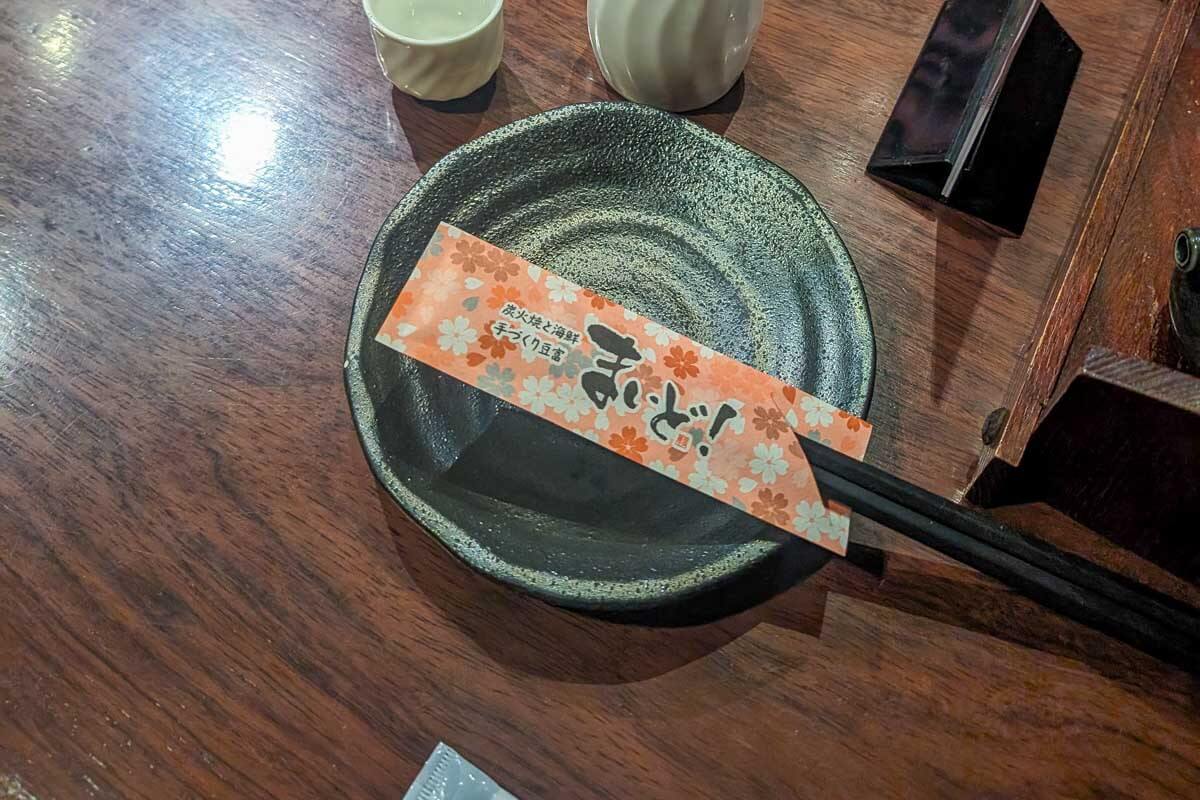
It’s not enough to just be able to use chopsticks in Japan! There are certain chopstick movements that are considered rude, and it’s important to be aware of these so that you don’t end up inadvertently offending your fellow diners.
First of all, don’t stick your chopsticks upright in rice. It might seem like the natural thing to do when you’re taking a break, but this is actually a funeral ritual, so it’s not appropriate to do it during a regular dinner. Rest them in the holders when you’re not using them, and do this horizontally across your bowl, as this is a sign of respect.
It’s also important that you open your chopsticks horizontally, because separating them vertically is a bad omen! And don’t rub them together, either, because this insinuates that they’re cheap or poor quality. You’ll definitely offend the host or restaurant if you do this.
Finally, don’t point your chopsticks! I mean, think about it, you probably wouldn’t point your fork at someone, would you? But this gesture would be considered even worse in Japan. Pointing your finger here is considered aggressive and rude, and using chopsticks to point is regarded in the same way.
Related Read: Now that you know how to properly use chopsticks, get excited to taste all the local dishes with our list of must-try foods in Japan (and where you can eat them!).
8. Queuing incorrectly
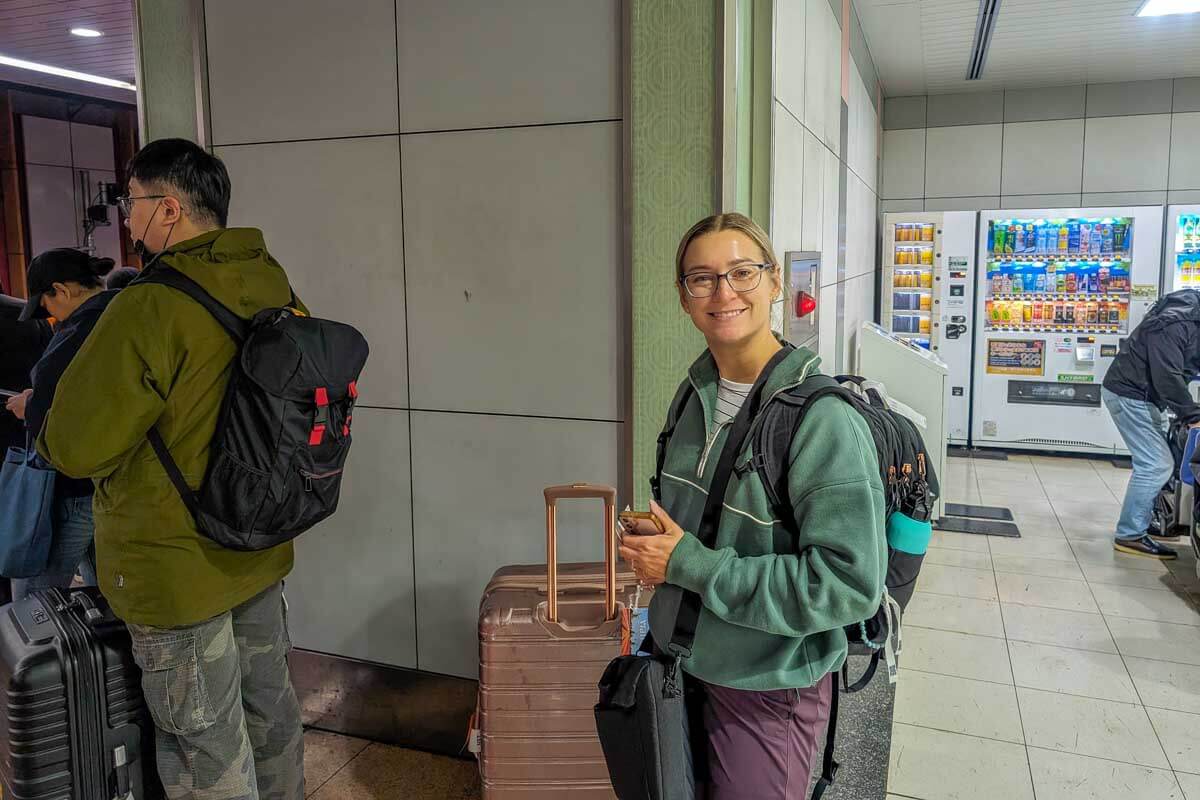
Life in Japan is extremely orderly, and queues are the key to that efficiency. But of course, that relies on everyone following the rules. Don’t cut in line or crowd lines – keep it strictly single file. And remember to pay attention when standing in line and move with it rather than causing a hold up.
There are usually marked queue points in stores and stations, which makes things easy. If in doubt, respect the queue at all costs. Saving places for friends and dipping in and out of the line doesn’t fly in Japan!
Similarly, when crossing the street in Japan, the locals respect the “don’t walk” sign at all times of day. Yep, even in the dead of night when there’s no traffic on the road! Although funnily enough, if one person does go while the “don’t walk” sign is on, everyone else will follow suit. There’s even a Japanese saying about this that essentially means “we’ll all be safe if we go together”.
9. Dressing inappropriately

Japan’s clothing culture tends to be pretty modest, at least outside of the major fashion hubs like Harajuku and Shibuya. People here tend to dress smart-casual and mostly focus on muted colors. I always notice that everyone looks very neat and put together!
While you don’t necessarily have to stick to beige and navy the whole time, we do recommend keeping modesty in mind. It can be hard to dress smartly when you’re traveling with a backpack, but keep things fairly neat. Don’t go running around in bike shorts and oversized t-shirts or those elephant pants that you picked up in Thailand. Pack some neat casual clothes if possible, and if it’s too late for that, you can usually purchase some fairly cheaply at stores like Uniqlo and GU.
As for visiting temples and shrines in Japan, there’s no strict dress code as such, but you should cover your shoulders and knees as a sign of respect. Avoid short shorts, crop tops, and low necklines when visiting religious sites, and remember to remove hats and shoes when entering.
10. Not respecting onsen culture

If you’re super excited for a relaxing onsen soak, then I don’t blame you! But you do need to be aware of the rules before you enter the water. Onsens tend to have some pretty specific rules, although each individual spot will make its rules clear before you enter.
In general, you need to wash yourself before entering the bath, although this is a pretty standard rule globally when it comes to swimming or bathing! You don’t usually wear any clothes or swimwear in an onsen, although more resort-style facilities do sometimes allow it.
Probably the biggest thing to note is the tattoo restrictions. Traditionally, tattoos were a complete no-no in onsens, and things are still quite strict to this day. This is because tattoos have a historical association with organized crime, and so seeing someone with tattoos in an onsen would make other bathers feel very uneasy.
Some onsens will usually allow you to cover small tattoos with a sticker, although that’s not always the case. If you have large tattoos, you’ll need to book a private onsen, and you should still double-check that it’s one that allows tattoos. Some of them don’t!
Related Read: Thinking about driving while you’re here? Check out our guide to renting a car in Japan here for essential tips and everything you need to know.
11. Not following rules and culture at temples and shrines
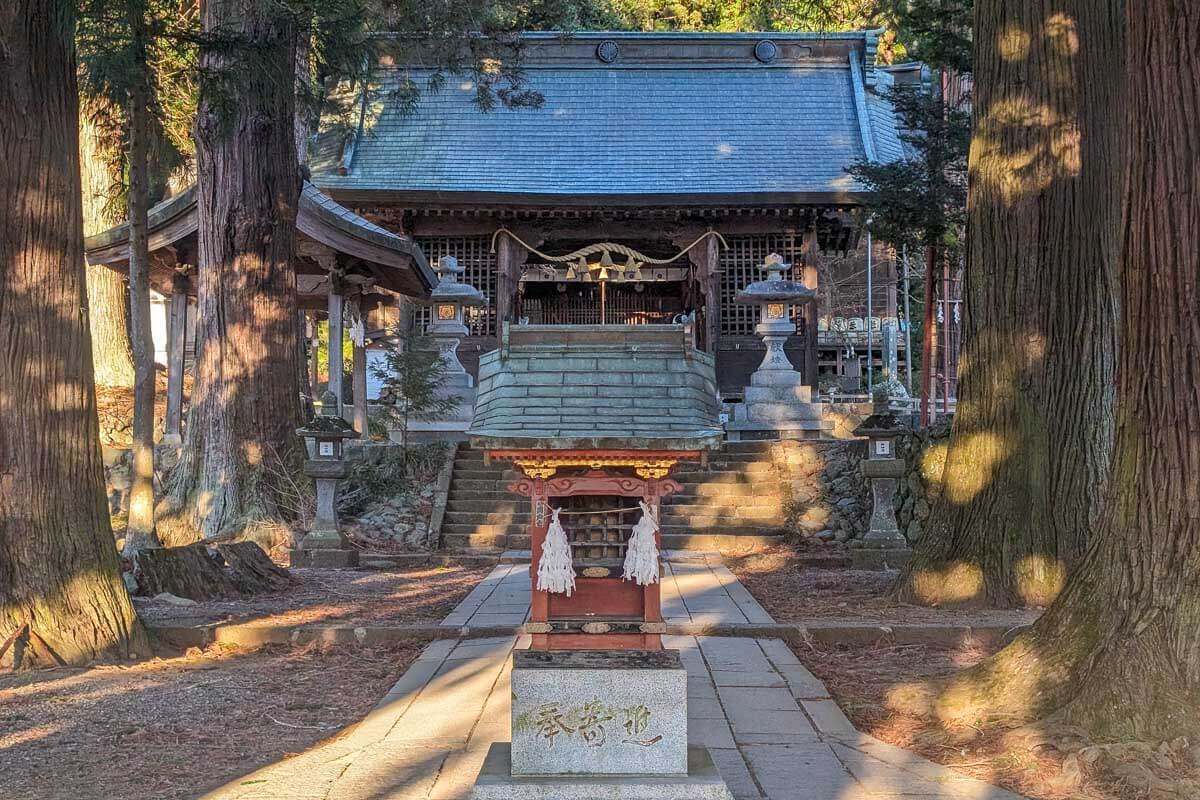
Of course, being respectful of rules and customs at religious sites is a must. Don’t make too much noise, as being loud is considered very rude, and don’t get in the way of people who are there to worship. You can take photos, but don’t have the flash on, and don’t take photos of restricted areas.
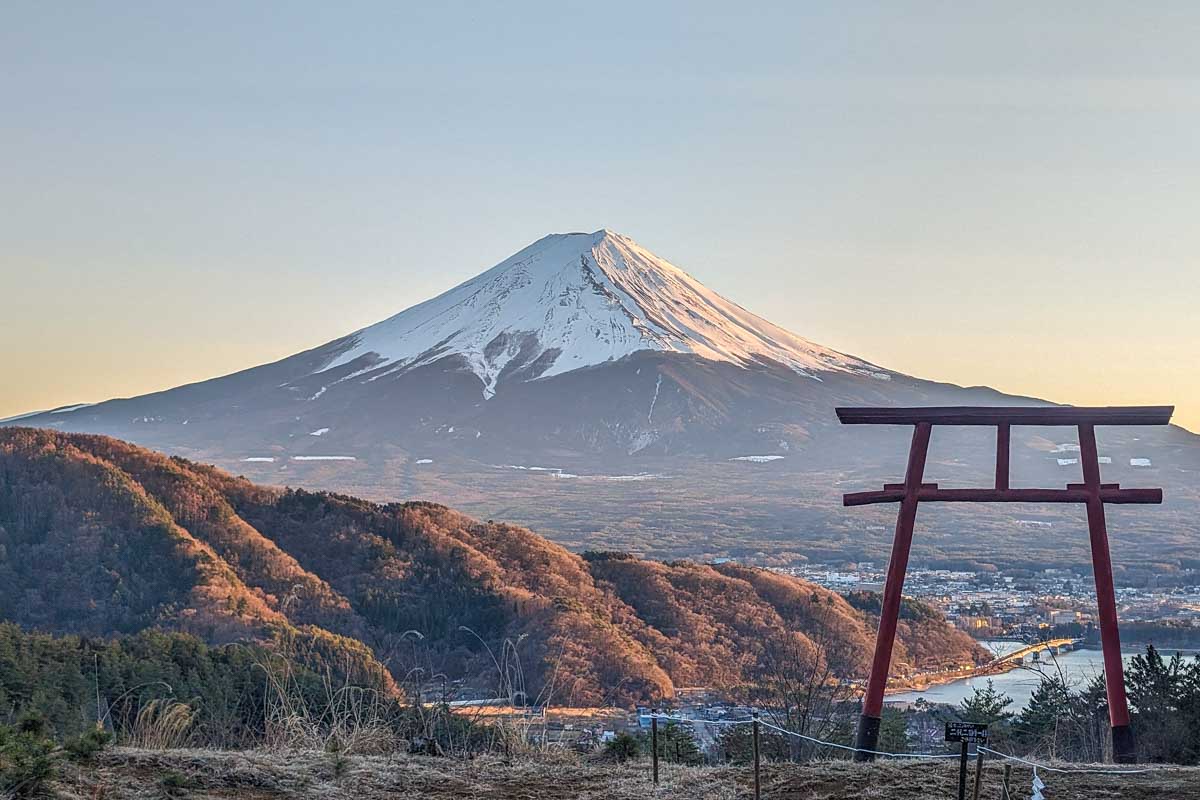
When you walk through a torii gate, you should always keep to one side. It doesn’t matter which side, but the center is reserved for deities, so don’t go through the middle. To be honest, there are usually rules posted about how to behave at the entry of temples and shrines. You can follow what the locals do, but don’t start participating in any religious customs or acts or worship unless you’re expressly invited to do so.
12. Handling money & tipping incorrectly
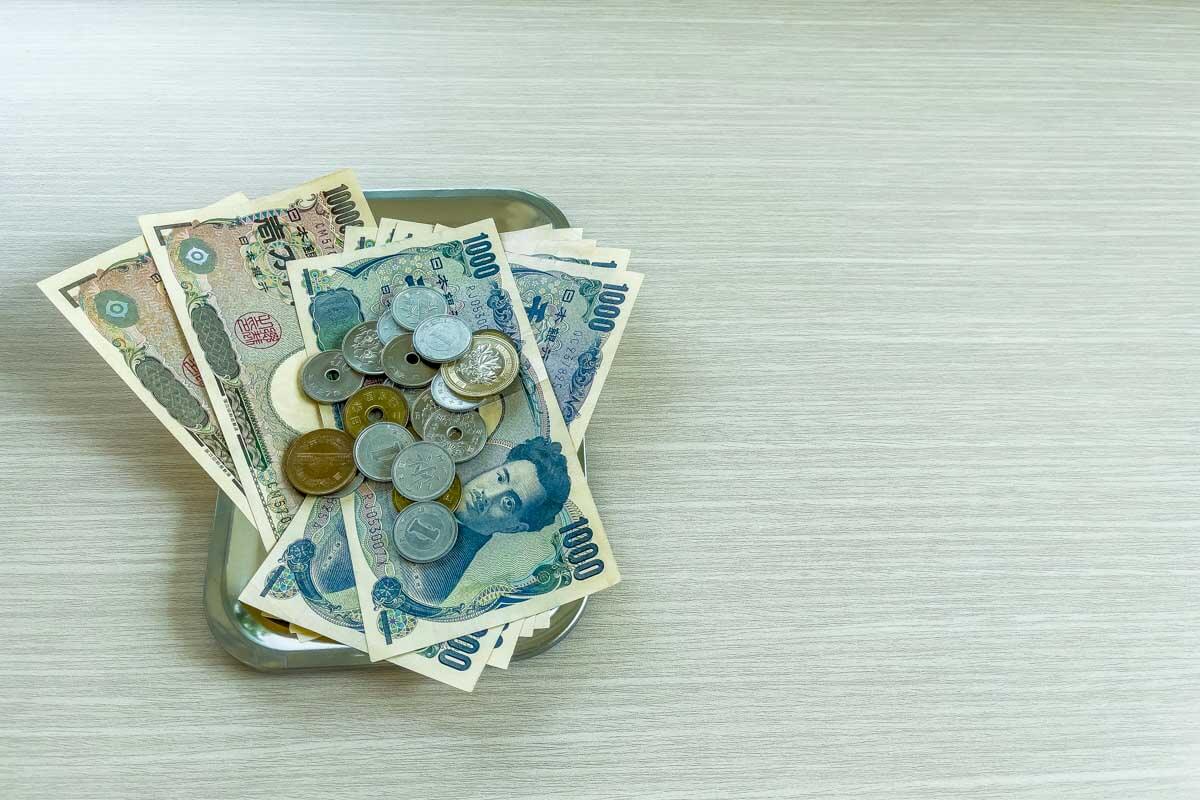
When you pay for something in cash in Japan, you’ll notice a little tray on the counter. Place the money in the tray and not the cashier’s hand, and they’ll give you your change back in the same way. This is a lot more hygienic when you think about it, and it also keeps things neat and respectful—handing the cash directly to the cashier is considered rude.
Speaking of cash, it’s king in Japan, so make sure that you always have some with you. And I’m not just talking about notes, either—coins are widely used here! It can feel like a bit of a faff, but you should try to always have your money ready to go so that you don’t cause a hold-up when checking out. Efficiency is everything in Japan!
It’s also worth noting that Japan does not have a tipping culture. Tipping is not a normal practice in Japan, and at best, it will seem a bit odd if you leave a tip. However, it can actually be perceived as rude, as it might suggest that you don’t think a worker’s employer is paying them enough! Dignity and respect go much further than a tip in Japan.
Related Read: For even more Japan travel tips, check out our guide on common mistakes to avoid when planning a trip to Japan here.
13. Being disrespectful in restaurants
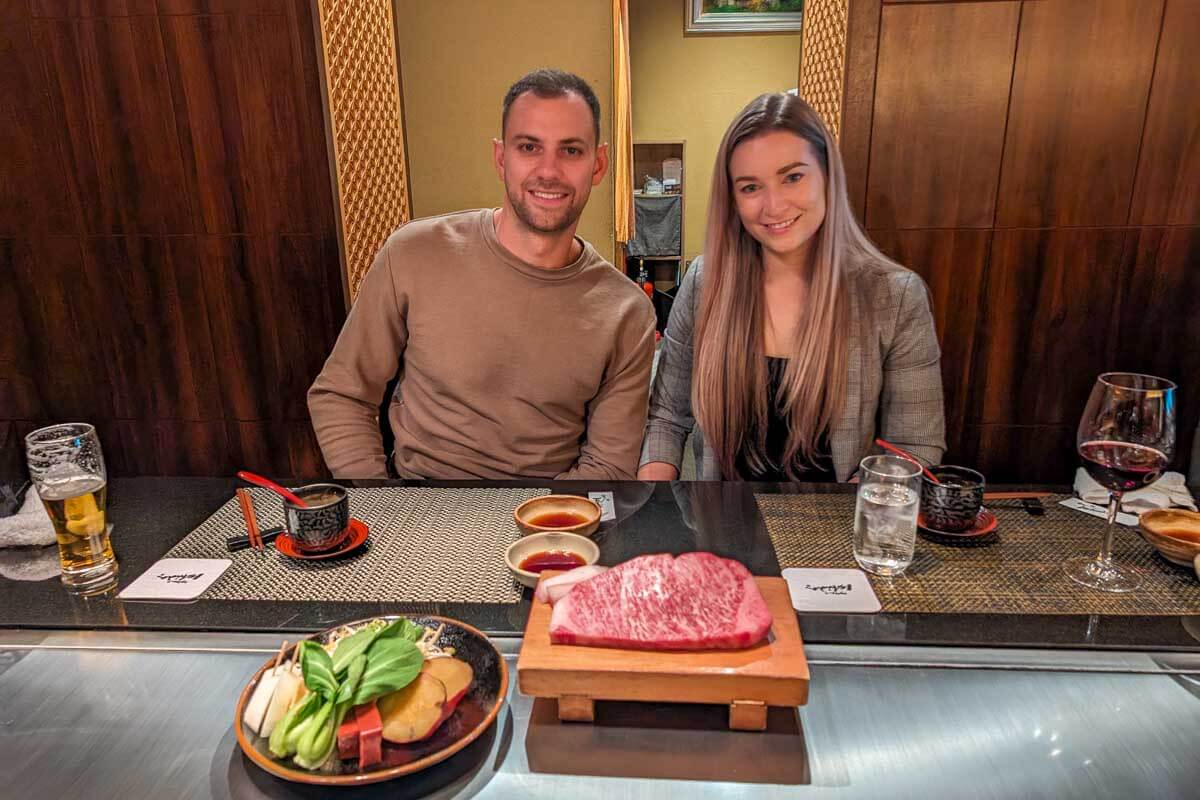
The vast majority of restaurants in Japan aim for a calm atmosphere, so use your inside voice when dining out! Talking loudly and making a lot of noise is very disrespectful to other diners, so keep things quiet and civilized.
It’s also considered very rude to leave a mess at your table. We saw a group of tourists who left a ton of food on their plates and the table, as well as napkins strewn everywhere, and half-drank glasses, and the staff were clearly angry.
In Japan, it’s polite to finish all of your food and drink, so don’t over-order and finish everything when possible. I know it’s easy to get carried away when you’re doing all-you-can-eat (or drink,) but be mindful of how much you can realistically consume. Japanese people don’t make a habit of leaving food on their plates, and remember, you can always order more later!
But it’s not just about finishing your food and drinks. Clean up the table before you leave! In Japan, it’s considered good manners to put your bowls, plates, and glasses back in the same position you found them when you sat down—don’t stack them. As for your napkins, fold them up neatly and put them on the table near your plate, but not on it or in a bowl.
14. Abusing public drinking
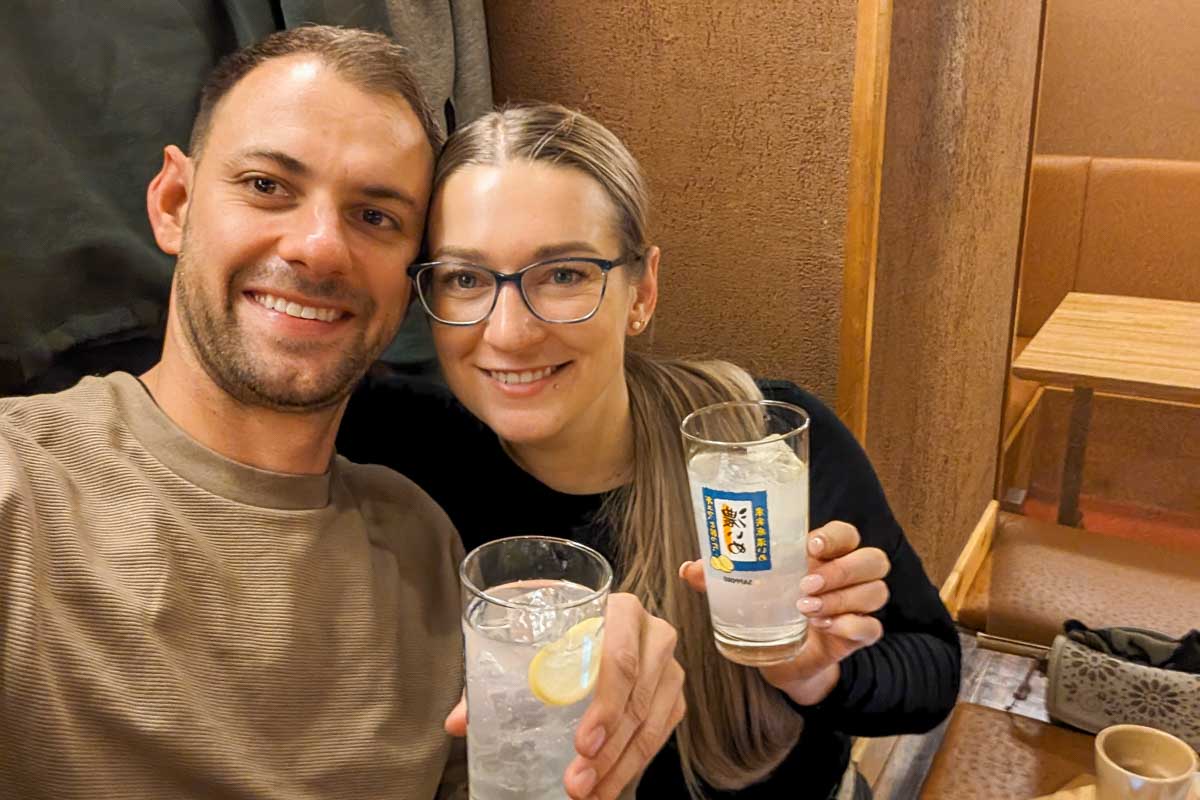
Public drinking is allowed in Japan, but the key is not to get carried away. You can pop into a convenience store, grab a canned highball, and drink it on the spot! This is exciting for a lot of people, but being excessively intoxicated in public is heavily frowned upon, and don’t get so drunk that you leave your trash behind.
It’s also worth noting that public drinking isn’t generally seen as acceptable outside of festivals and certain areas. For example, it actually helped us save money while we explored the nightlife in Osaka’s famous Dotonbori district, and it tends to be more common in Tokyo’s tourist-centric areas.
Having said that, some areas have put restrictions in place. For example, Shinjuku bans street drinking overnight on Halloween to stop celebrations from getting out of hand. Meanwhile, Shibuya has a year-round ban on public alcohol consumption between 6 pm and 5 am in the areas around the station, although it’s not heavily enforced.
15. Not learning any Japanese phrases
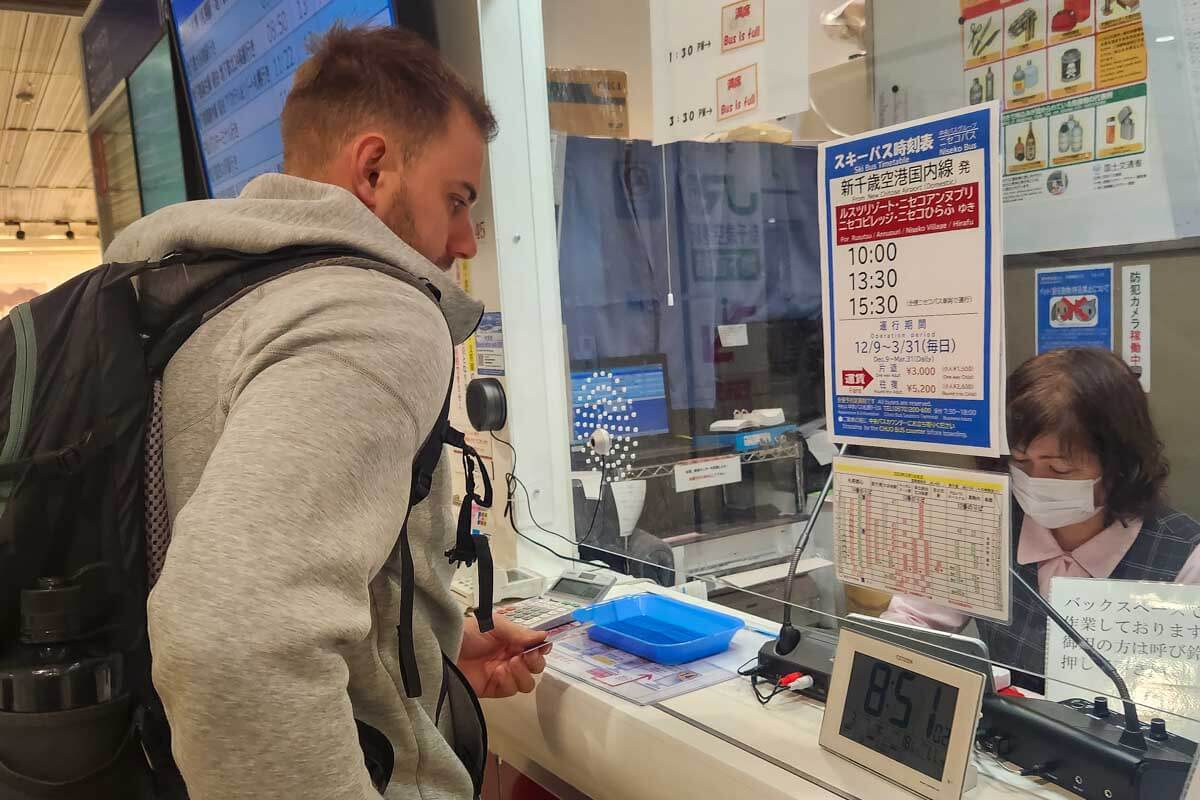
English is around in Japan, but it’s pretty limited, especially outside of the major cities. And to be honest, when you’re visiting any new country, it’s best to learn a few phrases. Not only is this a sign of respect, but it can also just make life a lot easier!
We’re by no means fluent in Japanese (not yet, anyway), but a few phrases that we’ve found particularly helpful include
- Hello – Kon’nichiwa
- Thank you – Arigatou (casual) or arigatou gozaimasu (formal)
- Where is the toilet? – Toire wa doko desu ka?
- How much? – Ikura
Even if your skills are rudimentary, the locals will really appreciate the effort, so it’s definitely worth learning the basics for your trip. I find Duolingo to be pretty helpful, if you can stand all of the annoying notifications, or the Wanikani app is specifically dedicated to learning Japanese.
Of course, communication is never just about the words themselves. It’s polite to bow when saying hello or goodbye, and when thanking someone. And if someone bows to you, bow back! Following customs like this is the most obvious way to show respect in Japan.
16. Handling Large Luggage on Bullet Trains
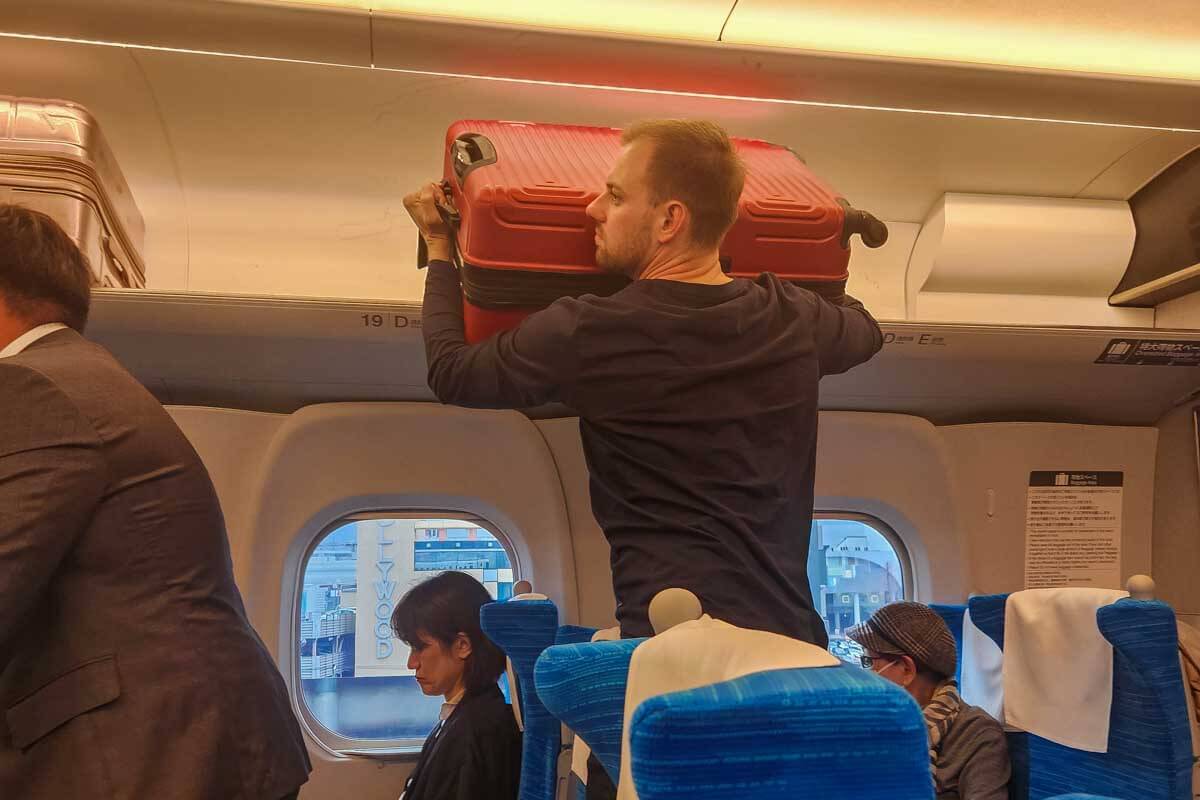
If you’re bringing big suitcases on the Shinkansen, you’ll need to follow a few rules to keep things running smoothly. Oversized bags can’t just be wedged into the aisle or squeezed between seats! For anything larger than standard carry-on size, you’ll either need to reserve a seat with a luggage space behind it or book one of the dedicated oversized baggage spots at the end of the car. These tend to fill up, so try to sort this when you book your ticket.
If you’re too late to secure one of these spots, you can always use a luggage forwarding service. We’ve done this a few times and thought it was well worth it because then we didn’t have to navigate crowded train stations with bulky bags in tow! You can usually organize this through your hotel or a convenience store. It costs between ¥1,500 to ¥3,000 ($10 to $20 USD) for a standard suitcase, and your bag will usually be delivered right to your hotel the very next day.
If your bag is smaller, you can always store it in the overhead racks, as long as you don’t block the walkway or pile luggage on empty seats. And when you’re getting on or off the train, move quickly and keep your bags close to ensure that you’re not holding anyone up. The Shinkansen runs like clockwork, and travelers are expected to keep their luggage organized to keep the system flowing smoothly.
Related Read: Now that you know how to navigate Japan respectfully, see our guide on the best time to visit Japan to help plan your itinerary.
Renting a Car in Japan

Japan’s trains are great, but if you want to explore rural areas, scenic routes, or off-the-beaten path hidden gems, renting a car offers unmatched flexibility. Driving in Japan is generally safe, with well-maintained roads and clear signage, though there are some unique rules and customs to be aware of.
We always book with Discover Cars and can’t recommend them enough. It’s super easy to compare multiple provider prices, check company ratings, filter for the type of vehicle you want, and add affordable full coverage insurance. If you want a full breakdown, check out our Discover Cars review here.
Tips for Renting a Car in Japan
What You Need to Rent a Car in Japan
Ready to hit the road? Discover the freedom of exploring the Japan on your own terms!
Airalo e-sim
Up To 15% Off With Code “DTRAVEL10”
What’s an eSIM?
An eSIM is a digital version of a SIM card. Instead of buying a little plastic chip and swapping it into your phone, you just download it. It connects your phone to a local network in whatever country you’re visiting — no stores, no waiting, and no fiddling with tiny cards.
In simple terms, it’s the easiest way to get data and stay connected while traveling.
We’ve tested a bunch of eSIMs in North America, and after a few frustrating experiences, we’ve found our favorite — Airalo. It’s fast, reliable, and incredibly easy to use. You can set it up in minutes (even my mom managed it solo on her first try!), and the prices are some of the best out there.
Bonus: We’ve got an exclusive 15% discount for our readers. Use the codes:
Thanks for reading!
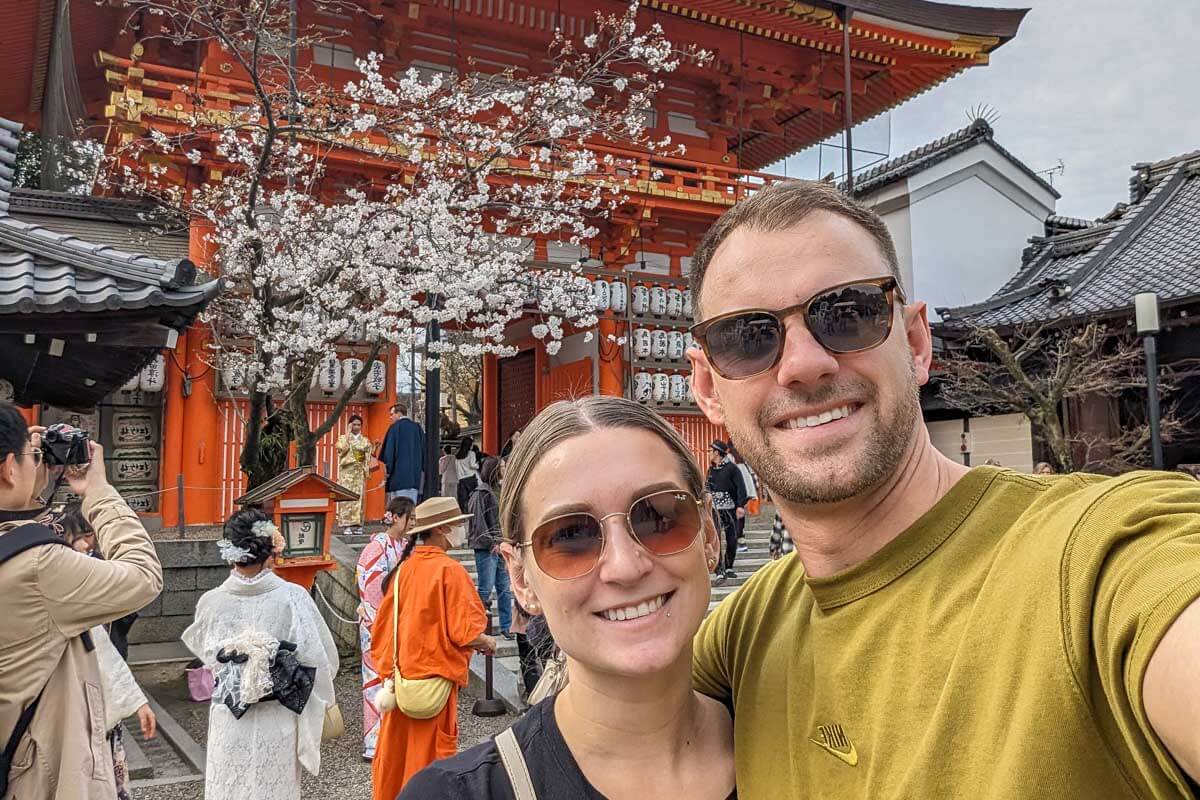
The truth is, learning Japanese etiquette isn’t about following a long list of rules—it’s about showing respect for the culture and helping everything run smoothly during your trip. Whether you’re mastering quiet train rides, soaking in an onsen, dining out politely, or navigating temples and shrines, these little habits will help you feel confident and blend in with ease.
Before you head off, make sure to check out all of our Japan blogs here! Now that you’ve got the basics of local etiquette down, we’ve got guides to help you craft the perfect adventure. Or here are a few related reads to keep your Japan trip planning rolling—enjoy!
17 Best Places to Visit in Japan (And Why They’re Worth Visiting!)
Where to Go in Japan Based on Your Travel Style
How to Spend TWO WEEKS in Japan: 14-Day Itinerary
Is Japan Expensive? Cost of Traveling to Japan
The Services We Recommend
From hotels to guided tours, we only recommend services we know and trust. Here are our recommended partners so you can explore Japan with confidence.
Book Hotels
With Booking.com
Thank you for all your comments
I am slowly getting there with every thing.
the e-sim looks good so will be checking that out nearer the time.
You’re very welcome! Glad it’s all slowly coming together😊
Hope the rest of the planning goes well, and feel free to reach out if you have any more questions along the way!
Great info !
Thank you so much for your lovely comment!