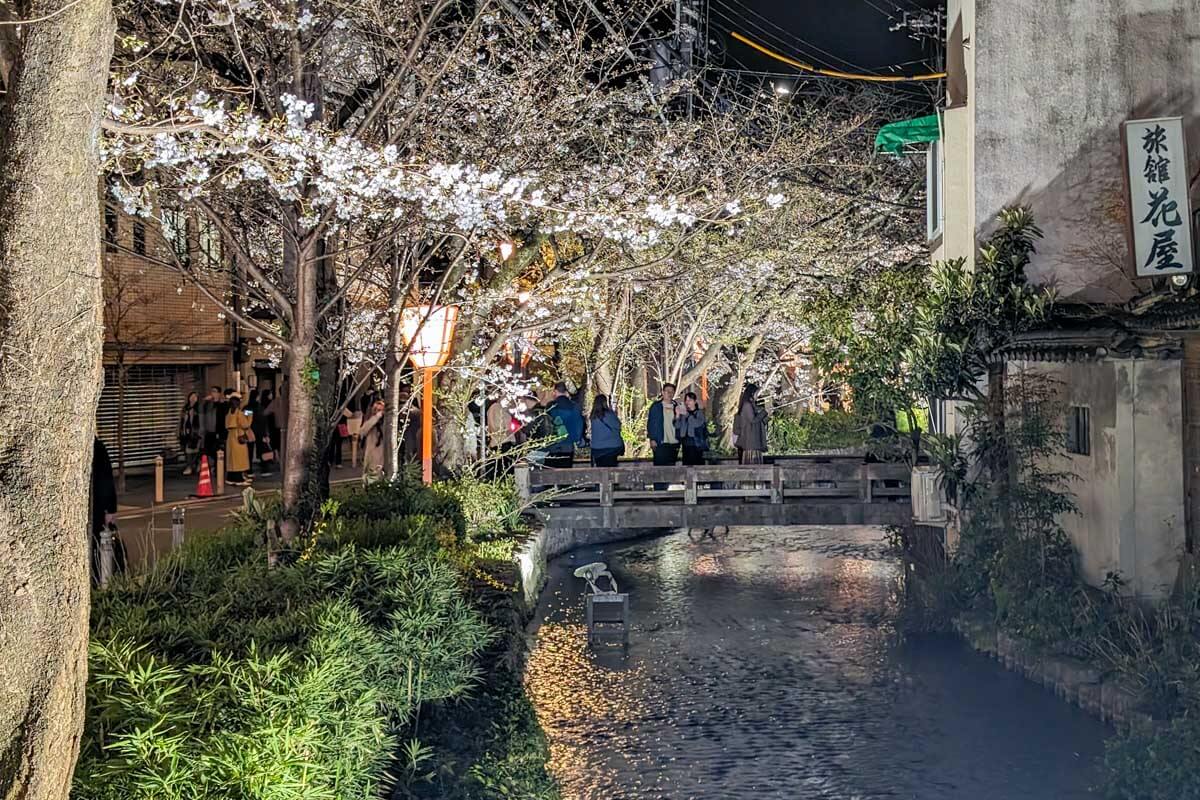
The 15 Best Ryokans in Kyoto with an Onsen
Looking for an authentic ryokan stay in Kyoto with a splash of pure onsen bliss? You’re in the right place!
Kyoto is all about slow, beautiful moments, and staying in a ryokan with an onsen fits that vibe perfectly. After a day of temple hopping in Higashiyama, browsing Nishiki Market, or walking the Philosopher’s Path, sinking into a hot spring bath feels like the ultimate reward.
In this guide, we’re rounding up Kyoto’s best ryokans with onsen facilities, from classic traditional inns to more modern stays that still deliver that proper soak. We’ve included options for every budget, so you can find the perfect base and end each day feeling relaxed, reset, and ready for more!
Don’t miss out!
Our Top Choice
This is the ryokan and area we loved the most and suggest booking ASAP!
Our personal FAVORITE area to stay is near Kyoto Station. This area is centrally located, so it’s easy to get around, yet it still offers the traditional charm we were hoping to find in Kyoto.
We recommend staying at Kyoto Takasegawa Bettei. It offers a serene escape and an authentic feel, while still being budget-friendly and in a great location!
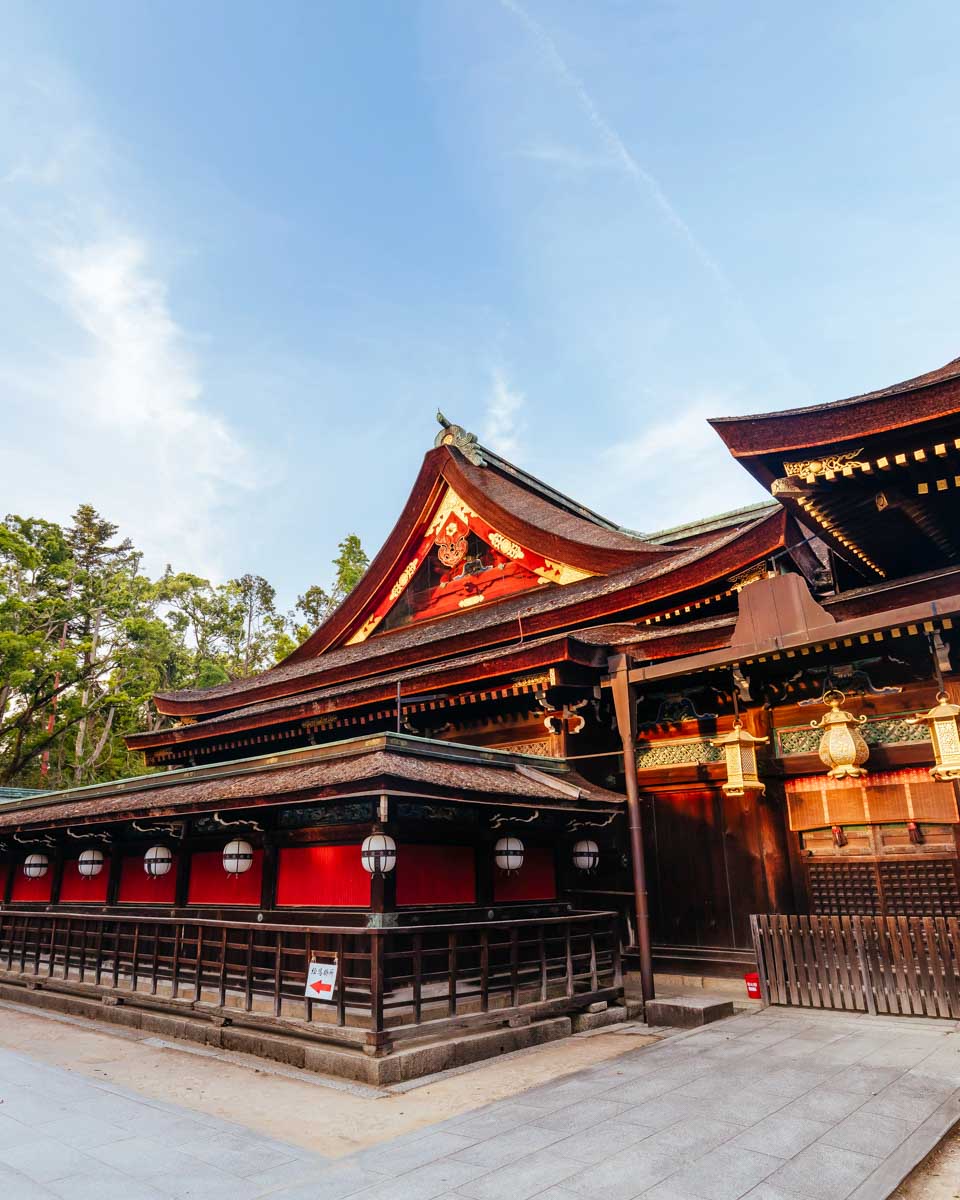
Higashi Hongan-ji Temple
Where to Find the Best Ryokans with an Onsen in Kyoto
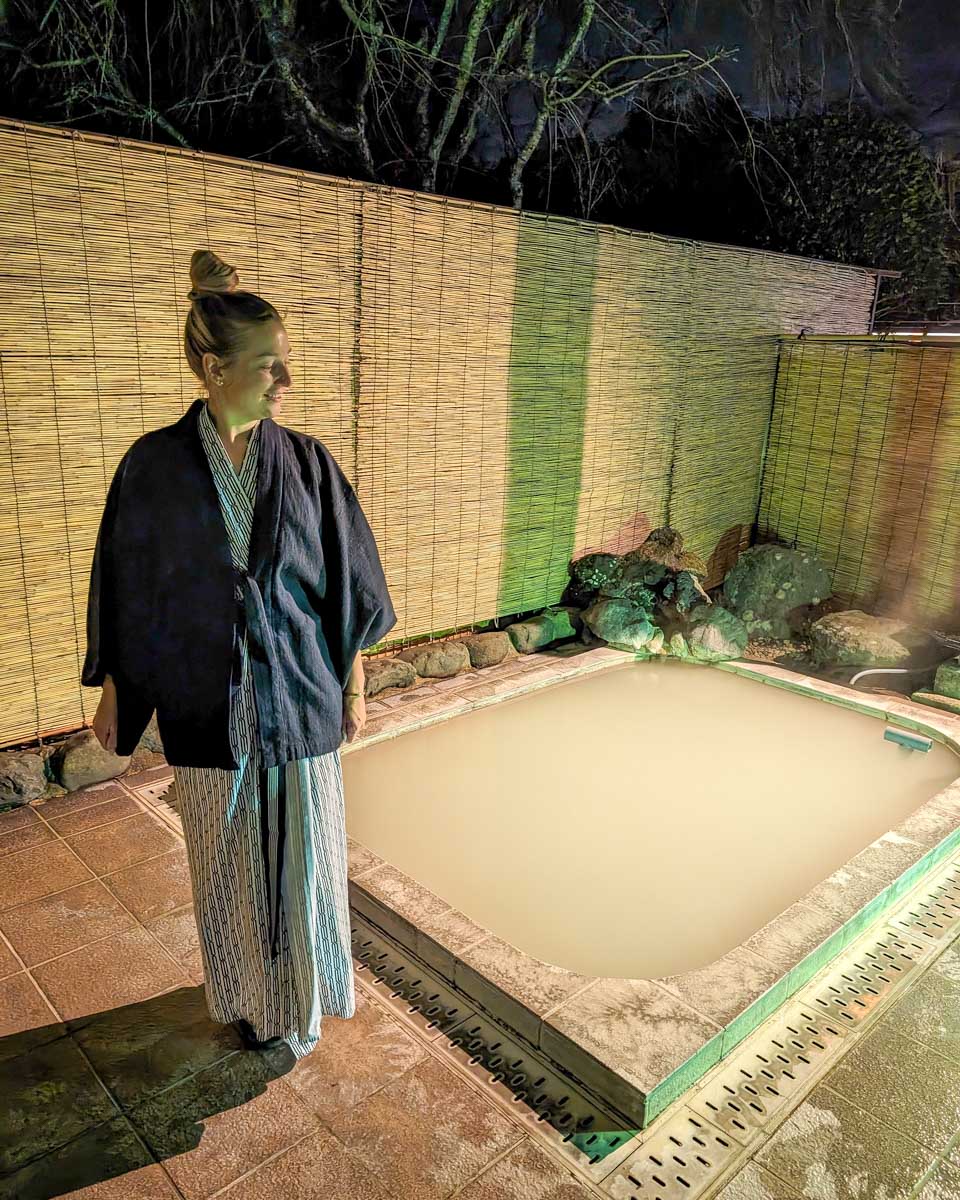
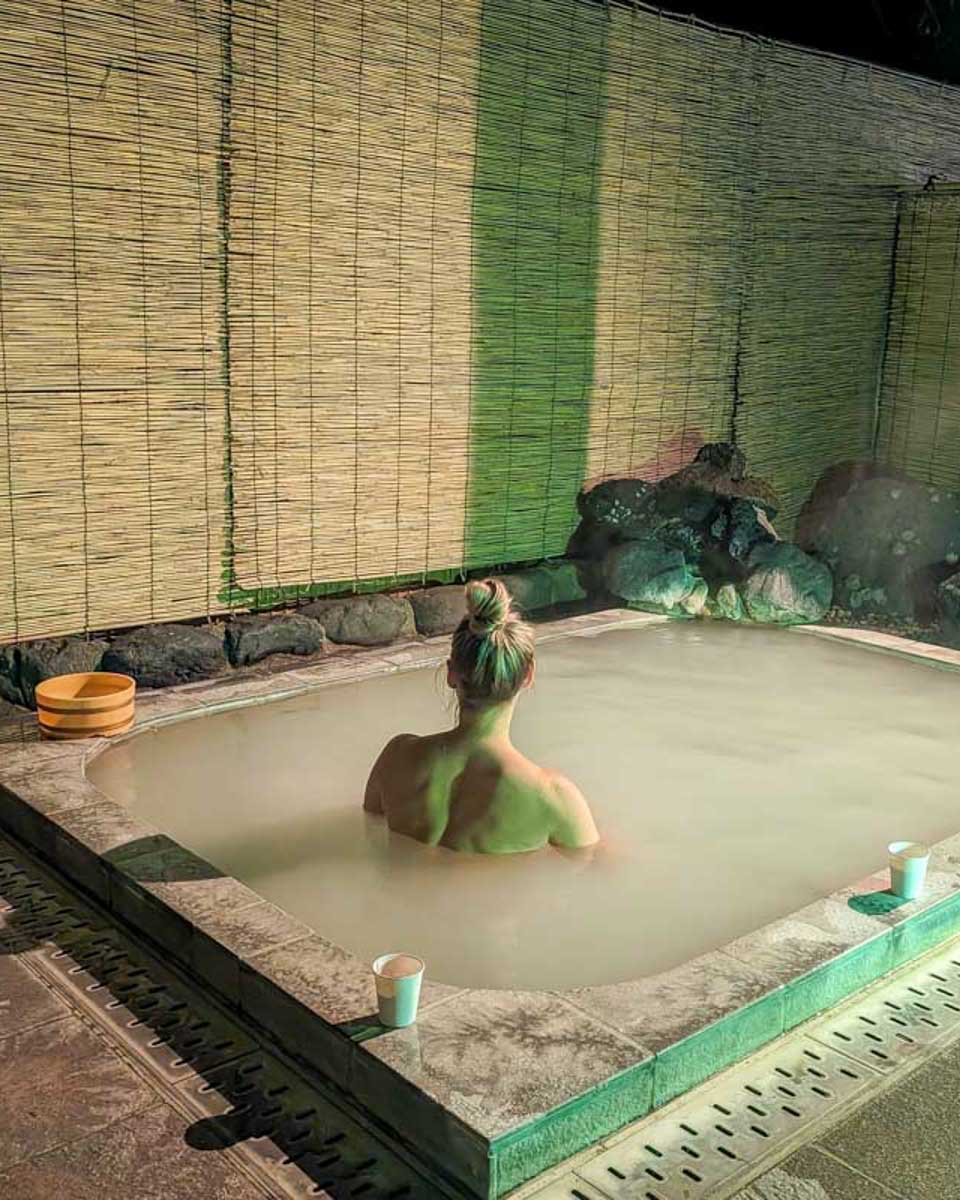
A ryokan is a traditional Japanese inn where the experience is just as important as the room. You can expect tatami mat flooring, futon bedding, and thoughtful hospitality, plus the option of seasonal Japanese meals. Add an onsen, which is typically a natural (or artificial) hot spring bath, and your stay instantly feels so much more calming and relaxing.
Kyoto is one of the best places in Japan to book a ryokan because the city is built around tradition. The city is full of lantern-lit lanes, wooden machiya houses, and neighborhoods where you can still hear temple bells in the early morning. Pair that atmosphere with a relaxing onsen stay, and you’ve got the perfect way to unwind after busy sightseeing days, especially when you’ve spent hours walking around places like Gion, Higashiyama, and Arashiyama.
- Kyoto Station – Best for convenience & transport – The city’s most convenient hub, surrounded by shopping malls, restaurants, and easy transport links to Osaka and Nara. Kyoto Takasegawa Bettei blends a serene riverside setting with polished modern ryokan style, plus an in-room hinoki bath that feels like the perfect post-sightseeing reset.
- Central Kyoto – Best for nightlife & walkability – A lively and walkable district between Nijo Castle and Nishiki Market, full of dining, nightlife, and shopping. Just a few minutes from Nishiki Market, Ryokan Sanga delivers a classic tatami room stay with a calm courtyard feel and an indoor communal bath.
- Higashiyama – Best for old-town Kyoto vibes – Kyoto’s most atmospheric neighborhood, where cobblestone lanes, teahouses, and temples capture the city’s timeless beauty. Right in the heart of Higashiyama, Kyoto Higashiyamaso pairs an unbeatable temple-side location with simple Japanese-style rooms and a soothing onsen experience.
- Arashiyama – Best for a nature-filled escape – The go-to area for a more traditional, nature-filled stay, especially popular for ryokans thanks to its riverside scenery and real onsen bathing. Ranzan combines a peaceful Japanese garden setting with traditional-style rooms and a spacious onsen that’s ideal after a long day.
Important Tip
Multiple Kyoto trips have taught me that this city doesn’t reward spontaneity when it comes to planning. The good places get snapped up months in advance, leaving the overpriced and underwhelming options for last-minute travelers.
The sweet spot for booking Kyoto accommodations is 3-4 months out—enough time to secure good rates but not so far ahead that you’re locking in plans excessively early.
The Best Ryokans with Onsens in Kyoto
Kyoto Station

BEST FOR CONVENIENCE & TRANSPORT
Pros
- Unbeatable access to public transportation
- Tons of shopping and dining options
- Ideal for first-time visitors and day trips
Cons
- Less traditional atmosphere than other districts
- Can be busy and commercial around the station
- Limited nightlife beyond restaurants and bars
Kyoto Station is hands down one of the most convenient places to stay in the city, especially for first-time visitors. As Kyoto’s main transport hub, it’s where bullet trains, subways, and buses all converge, making it the perfect base for exploring not just Kyoto, but nearby destinations like Osaka and Nara.
The area around the station is a blend of sleek modernity and subtle tradition, with futuristic architecture, high-end shopping malls, and a surprisingly good selection of ryokans that bring a touch of Japanese charm to the city’s busiest district. For a little local secret, head up to the station’s Sky Garden terrace at sunset. It’s free and offers one of the best skyline views in Kyoto.
It’s also a great area for food lovers! You’ll find everything from steaming ramen spots inside the station’s labyrinth of eateries to refined kaiseki restaurants just a short walk away. Plus, the Kyoto Tower is right across the street, offering panoramic city views, and the nearby Higashi Hongan-ji Temple provides a peaceful contrast to the urban buzz.
Staying here means zero transport stress, easy day trips, and endless dining options. It’s ideal for those who want convenience without sacrificing comfort, a great mix of modern energy and accessibility that makes travel in Kyoto wonderfully simple.
IZUYASU Traditional Kyoto Inn – $$$
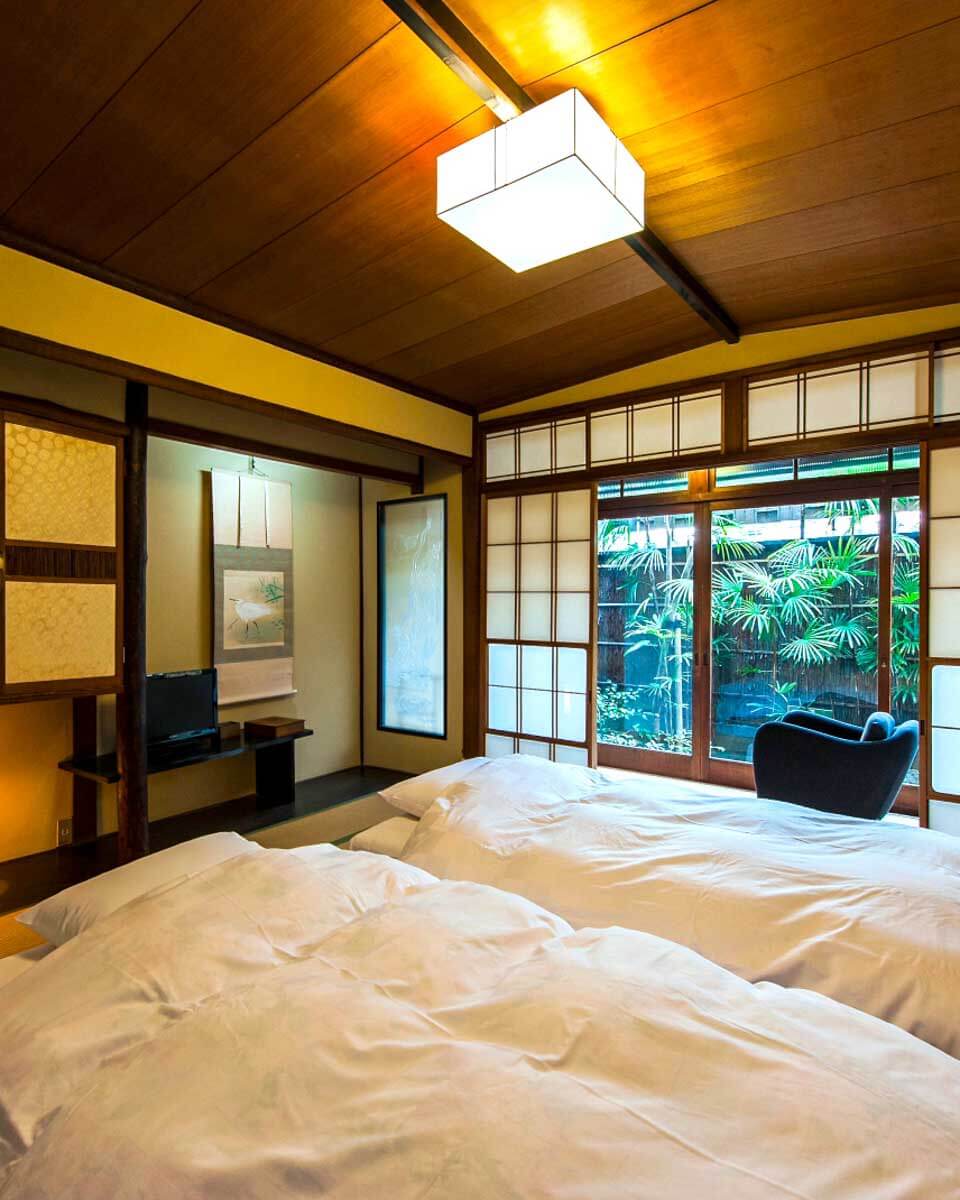
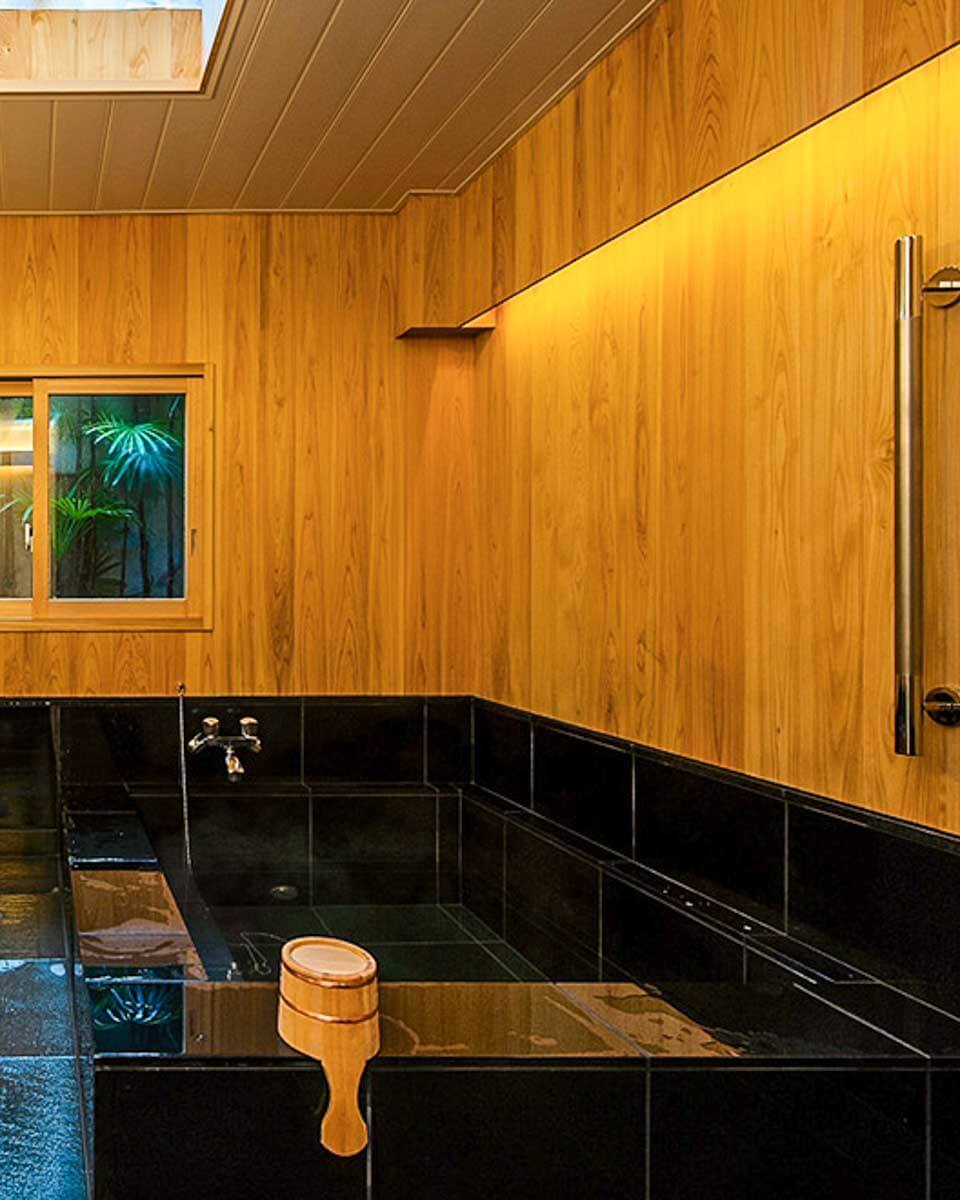
Stepping inside IZUYASU Traditional Kyoto Inn feels like slipping into old Kyoto, even though you are just a short walk from Kyoto Station and right near Higashi Honganji. Built in 1839 and beautifully renovated in 2013, it keeps that historic charm front and center with tatami floors, shoji screens, and calm courtyard views.
The onsen-style highlight here is the bath setup: rooms do not have their own tubs, but the inn has three private family baths you can lock and use solo, which makes the whole soak feel wonderfully personal. Time slots are arranged at check-in on a first-come basis, and the baths are available until 11:00 pm.
Expect roughly ¥50,000 to ¥110,000 JPY (about $330 to $740 USD), depending on the season, per night with breakfast and dinner included.
Yuno Yado Shoei – $$
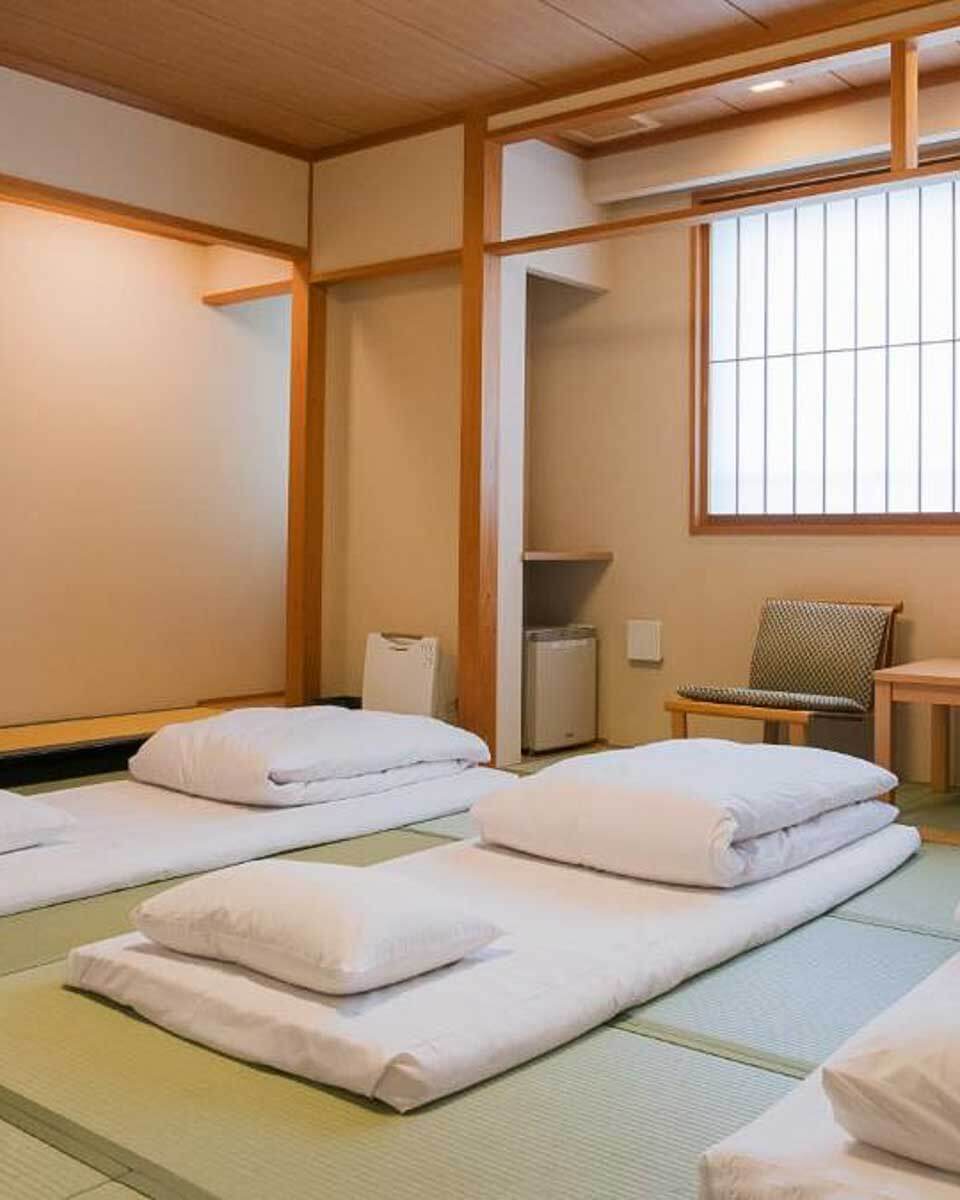
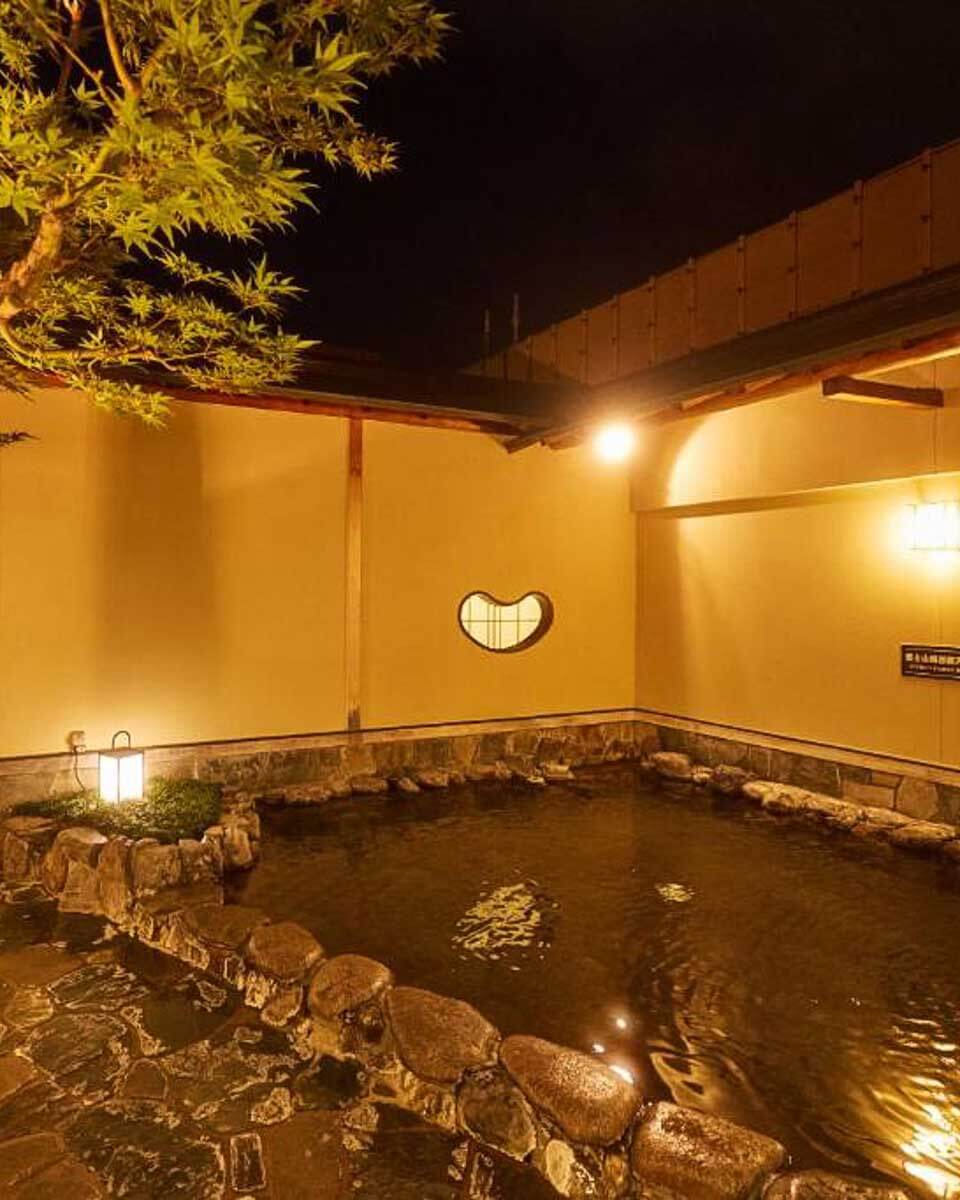
Yuno Yado Shoei feels like a genuine Kyoto reset button. It’s set in a quieter neighborhood near JR Tambaguchi Station, so getting around is easy, but you’re not dealing with the constant bustle right outside the door. Umekoji Park is close for a relaxed stroll, and Kyoto Station is only a short ride away, which makes this a really convenient base for sightseeing days.
When it comes to soaking, you’re well covered here with multiple public hot spring baths, an open-air bath, and even a sauna for a proper wind-down. The bathing hours also run late, which is perfect after a full day on your feet.
Rooms typically range from ¥23,000 to ¥47,000 JPY (about $150 to $300 USD) per night.
Kyoto Takasegawa Bettei – $$
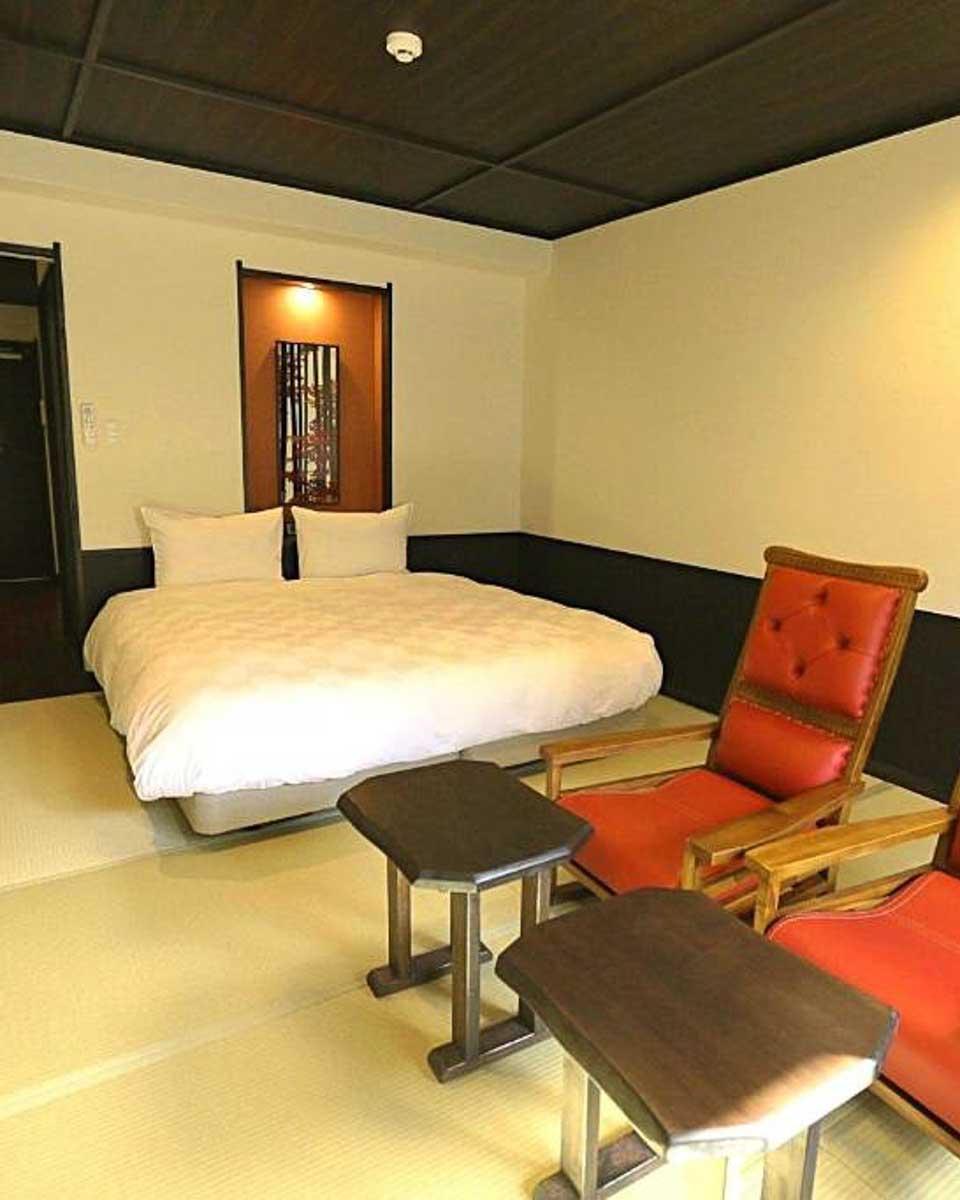
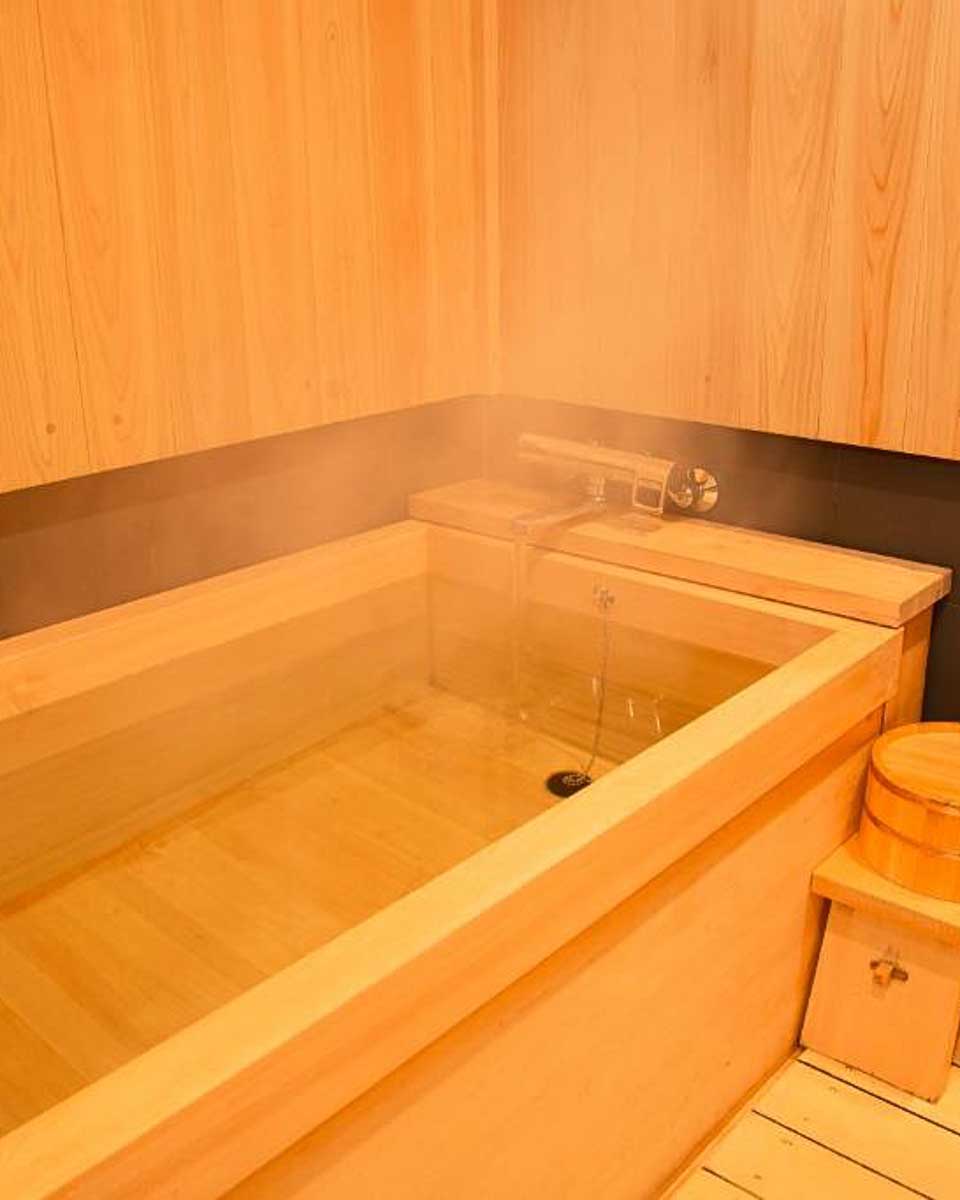
For a peaceful adults-only stay near Kyoto Station, Kyoto Takasegawa Bettei is such a lovely little find. It’s located by the Takase River on a quieter street, so you get that “ahh, finally” feeling the moment you’re back from sightseeing. The rooms are modern and understated with subtle Japanese touches, and the whole place feels calm and well looked after. Breakfast is also a big part of the experience here, served in the room and beautifully put together.
Bath-wise, it’s all about private in-room soaking. Every room comes with a hinoki cypress tub, so you can have a warm, steamy soak whenever you feel like it. There isn’t a shared onsen bath on site, so if you want that true hot spring experience, we’d pair this stay with a visit to a local sento or day onsen, then come back and finish the night off in your own cypress bath.
Prices usually range from ¥22,000 to ¥60,000 JPY (roughly $150 to $400 USD) per night.
Hatoya Zuihokaku Hotel – $$
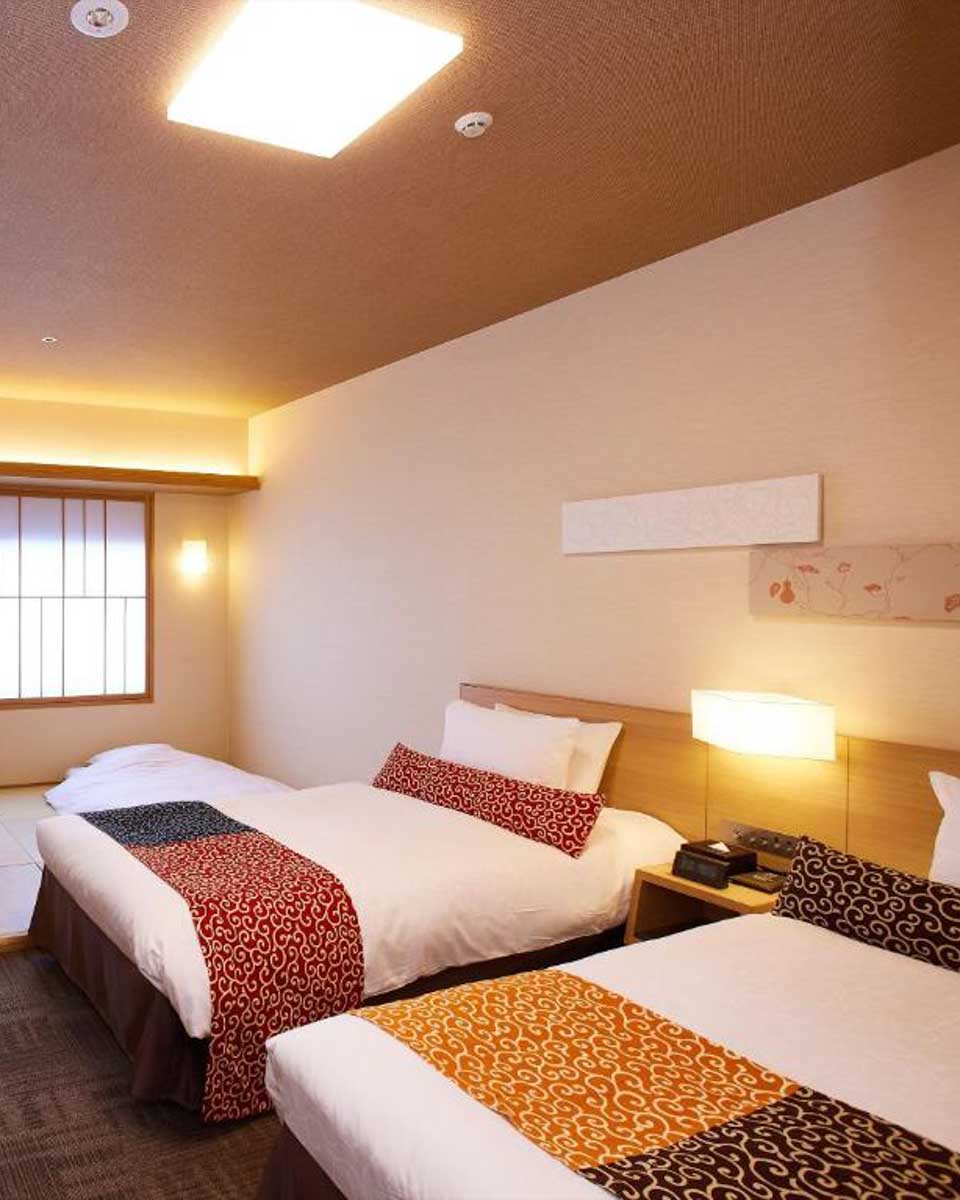
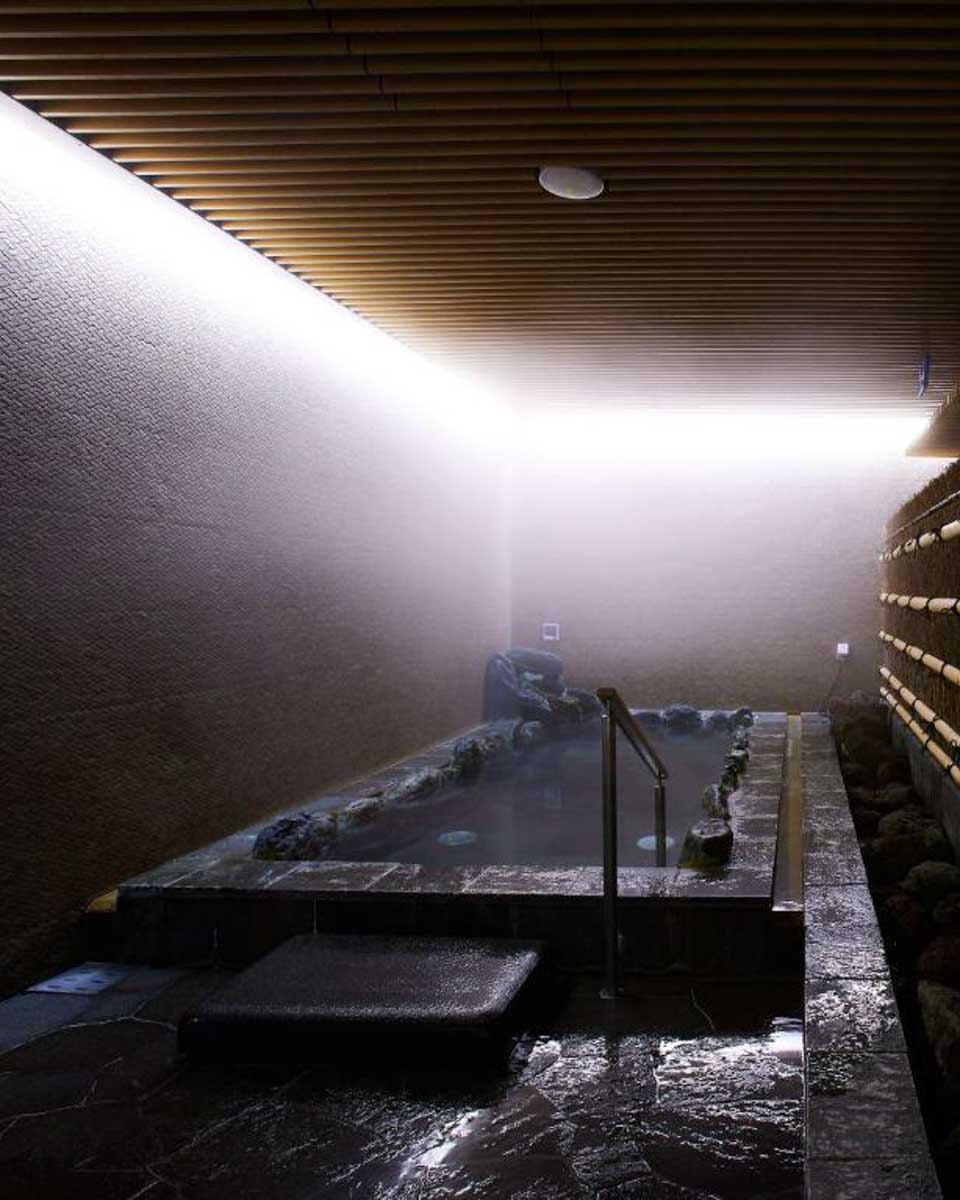
Hatoya Zuihokaku Hotel is one of the easiest “drop your bags and relax” stays near Kyoto Station. You are about a 5-minute walk from the Karasuma side, which makes day trips and early trains ridiculously convenient, but the vibe inside still leans Japanese style with tatami touches and futon setup in the traditional rooms.
What really sets it apart is the onsen. There’s a large top-floor bath that uses natural hot spring water drawn from a private spring deep underground, which is seriously rare this close to the station. Some special room types also come with their own private hot spring bath, which is a pretty amazing upgrade if you want extra privacy. Just note that tattoos may be restricted if they’re visible.
Expect roughly ¥32,000 to ¥62,500 JPY (about $200 to $400 USD) per night, depending on room and inclusions.
Matsumoto Ryokan – $
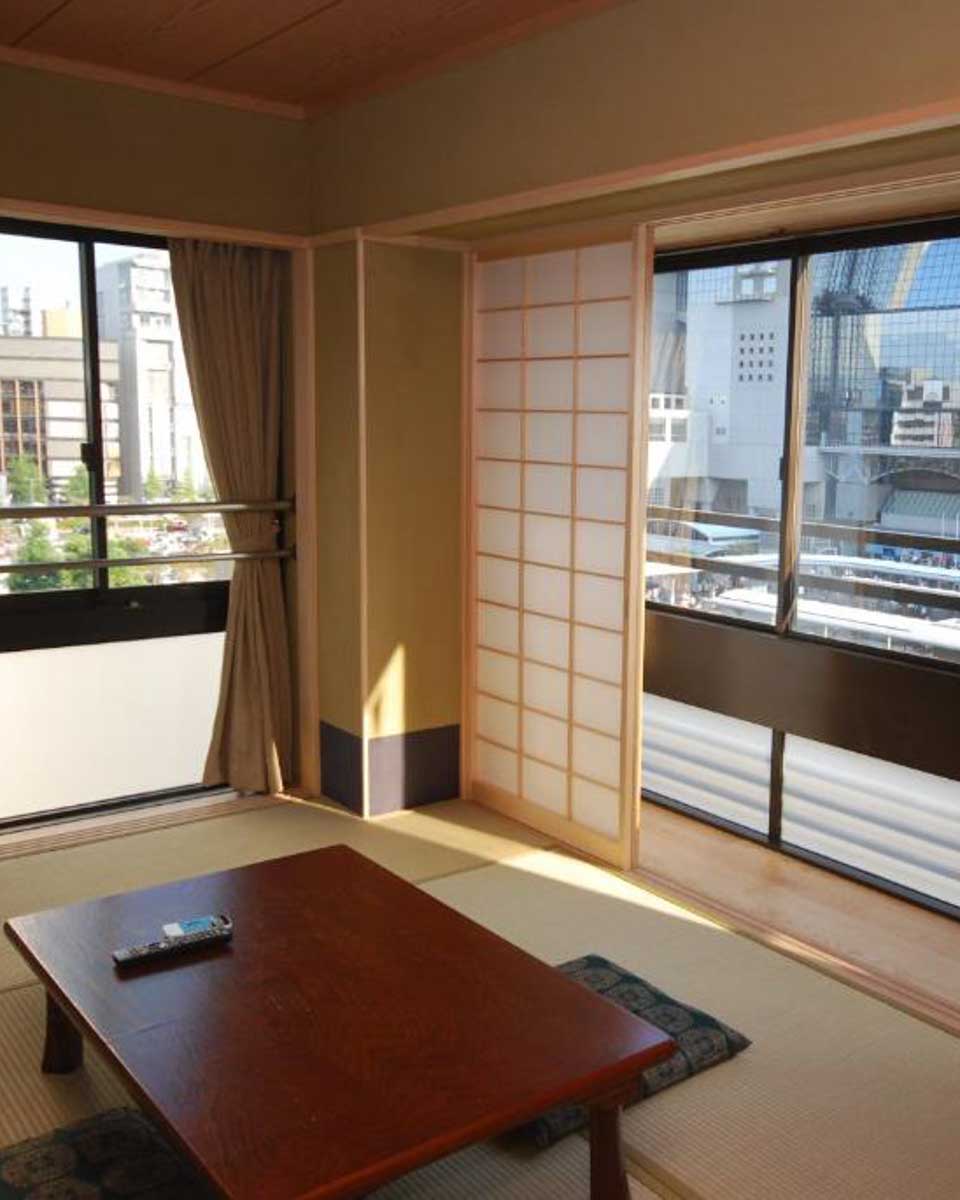
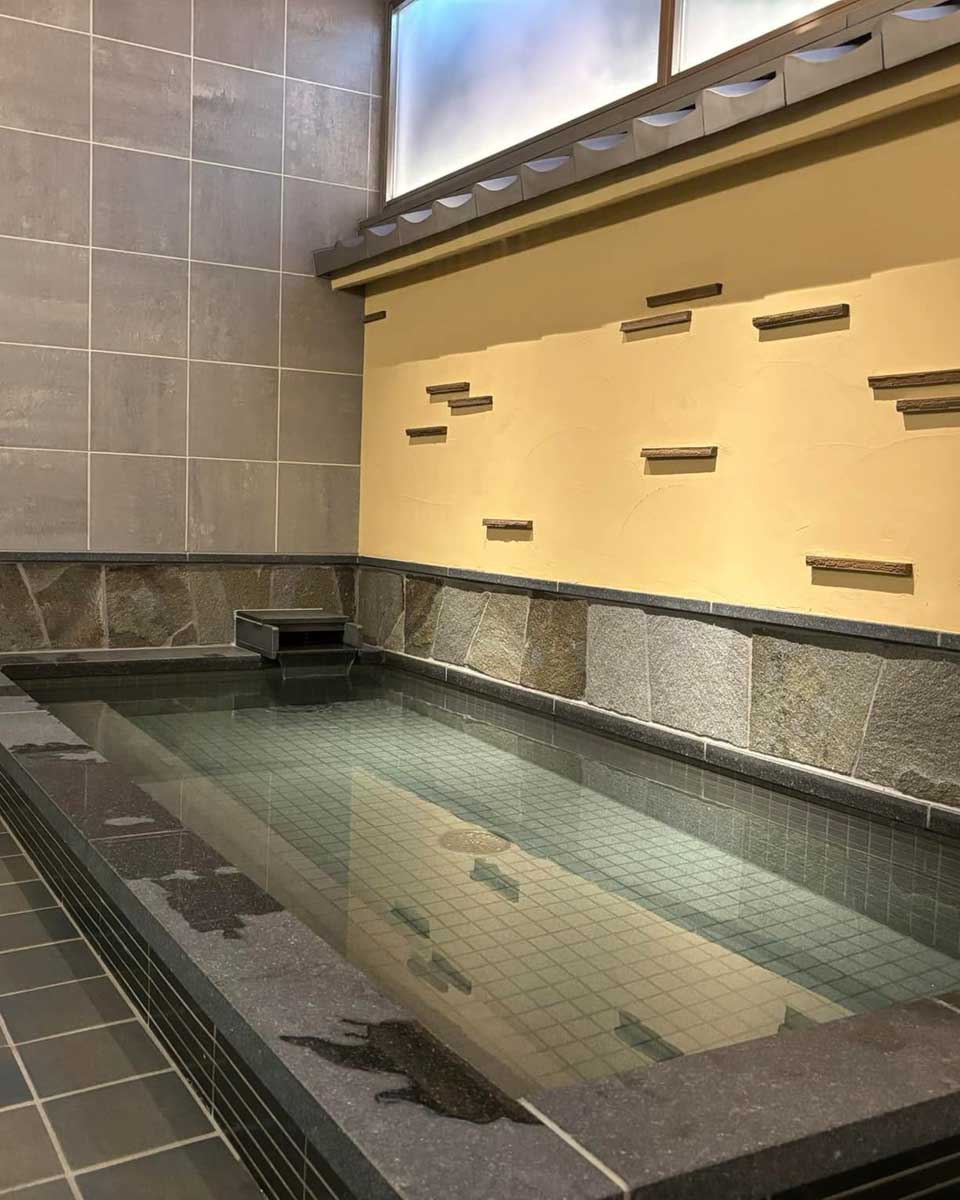
Right across from Kyoto Station’s Central Exit, Matsumoto Ryokan is all about its location and simple, old-school Kyoto charm. You can choose between Western-style rooms or classic tatami setups with futons and yukata, which makes it a great “first ryokan” option if you want tradition without anything too complicated.
When it’s time to unwind, the ryokan has a large communal bath plus an open-air bath, so you can end the day with a proper hot soak before bed. It isn’t a natural hot spring onsen, but it still delivers that soothing post-sightseeing reset.
Rates usually start around ¥11,000 to ¥38,000 JPY (roughly $70 to $250 USD) per night.
Japan Rail Pass!
The Easiest Way to Travel Japan By Train
If you’re planning to explore Japan, the Japan Rail Pass (JR Pass) is hands down the easiest and most affordable way to get around. It’s a special 7, 14, or 21 day pass for foreign visitors that gives you unlimited rides on Japan’s famous JR trains, including the high-speed shinkansen (bullet trains)!
Why We Love the JR Pass
Pro Tip: If you’re only exploring one region of Japan, consider a Regional Pass instead (like the Kansai, Hokkaido, or Kyushu Pass). They’re cheaper and perfect for smaller trips!
Where to Get Your Pass
We personally recommend buying your pass online in advance through JRPass.com — they’re an official reseller with fast worldwide delivery and English support, making the whole process super simple. They even offer handy add-ons like pocket WIFI and meet & greet services! Still not sure if the JR Pass is right for you? Check out our Ultimate Guide to the Japan Rail Pass for a full breakdown of costs, inclusions, and when it’s worth it!
Central Kyoto
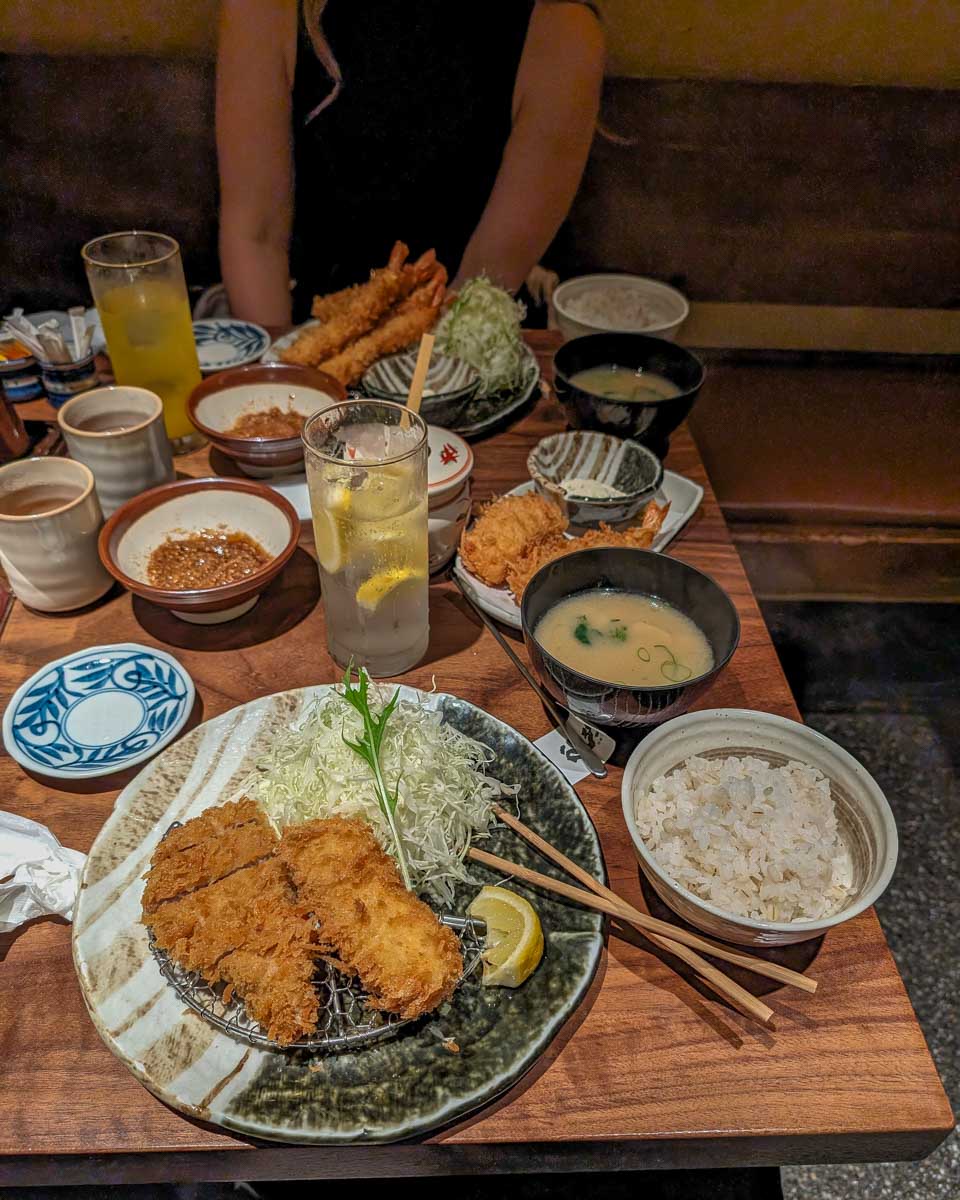
BEST FOR NIGHTLIFE & WALKABILITY
Pros
- Central, walkable location near major attractions
- Great food, nightlife, and shopping options
- Easy access to public transportation
Cons
- Can be crowded during weekends and festivals
- Fewer traditional, quiet stays than in other districts
- Some hotels may be pricier due to location
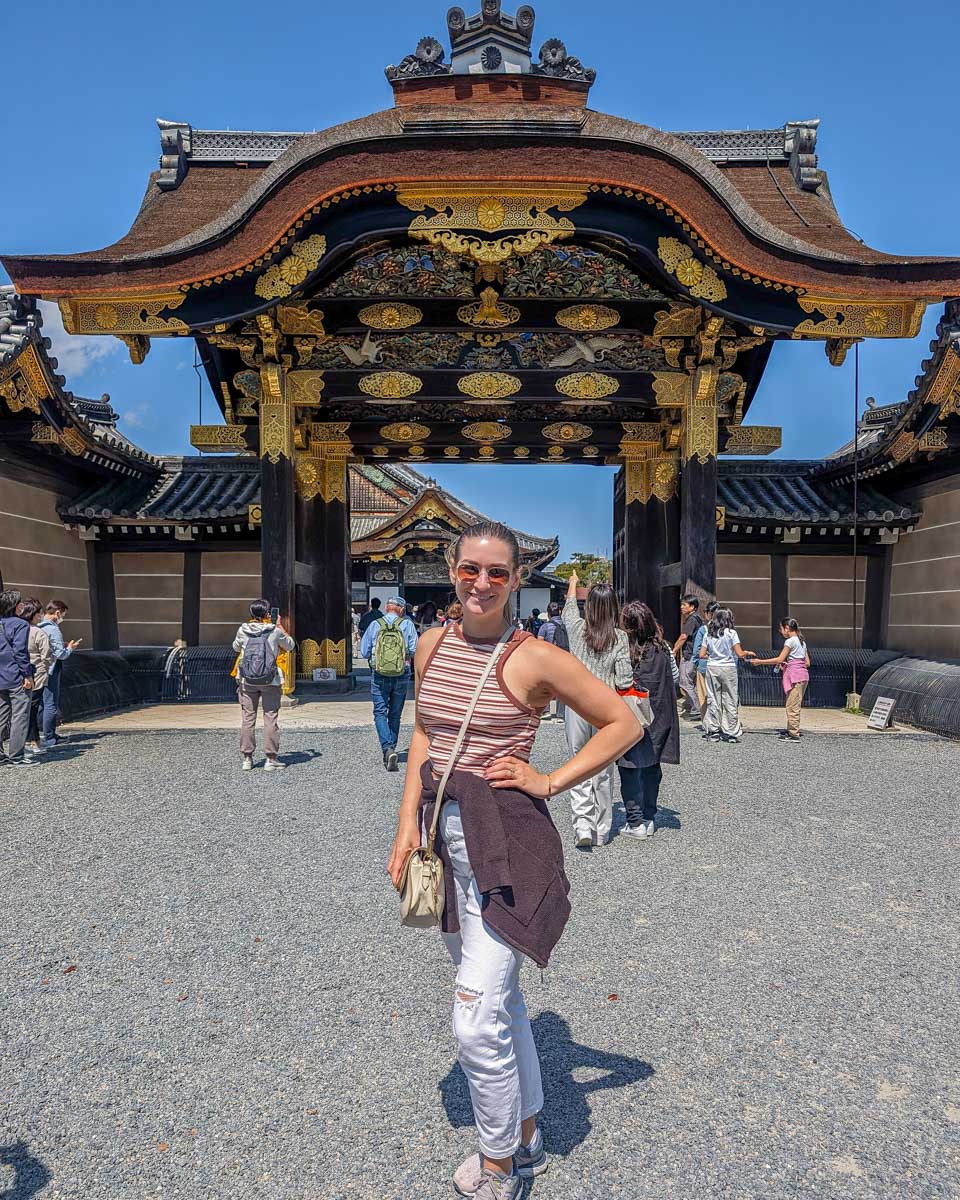
Central Kyoto is where old meets new in the most seamless way possible. This lively district stretches between Nijo Castle and the bustling Nishiki Market, offering an unbeatable mix of cultural landmarks, local dining, and endless shopping arcades.
It’s ideal for travelers who want to be in the heart of the action, close enough to walk to many of Kyoto’s top sights while still enjoying easy transport links to the rest of the city.
Here, you can spend the morning sampling street food like yuba (tofu skin) and matcha sweets at Nishiki Market, then explore the former shogun residence of Nijo Castle in the afternoon. The area also boasts plenty of stylish ryokans and boutique inns that blend Japanese aesthetics with modern comfort.
After dark, Central Kyoto comes alive with cozy izakayas, hidden bars, and local restaurants that keep the energy high long after sunset. Don’t miss Pontocho Alley nearby! Its narrow, lantern-lit lanes are perfect for a nightcap or a late bite by the river.
For first-time visitors or anyone wanting a vibrant yet balanced base, Central Kyoto is hard to beat. It’s walkable, exciting, and full of local flavor!
Nishiyama Ryokan – $$$
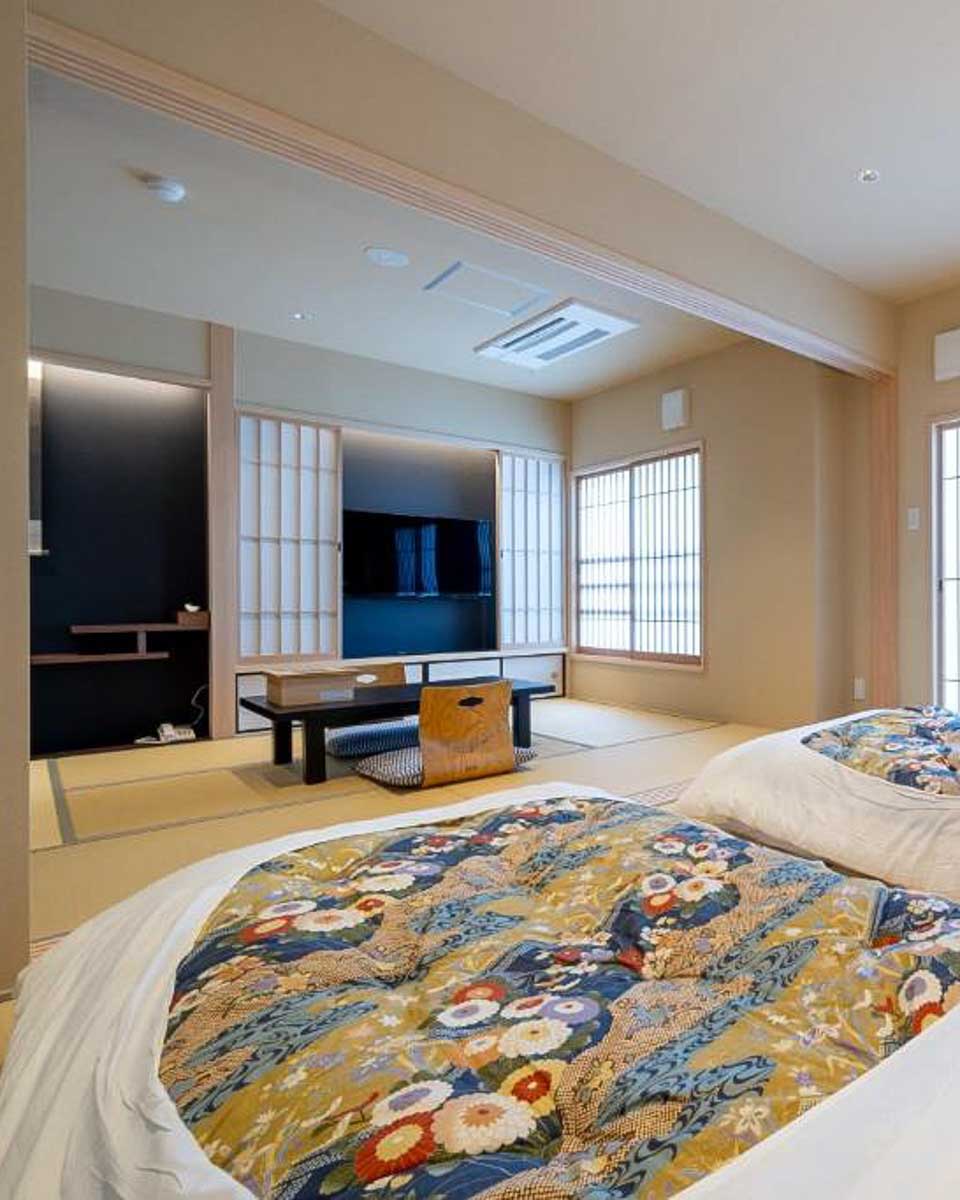
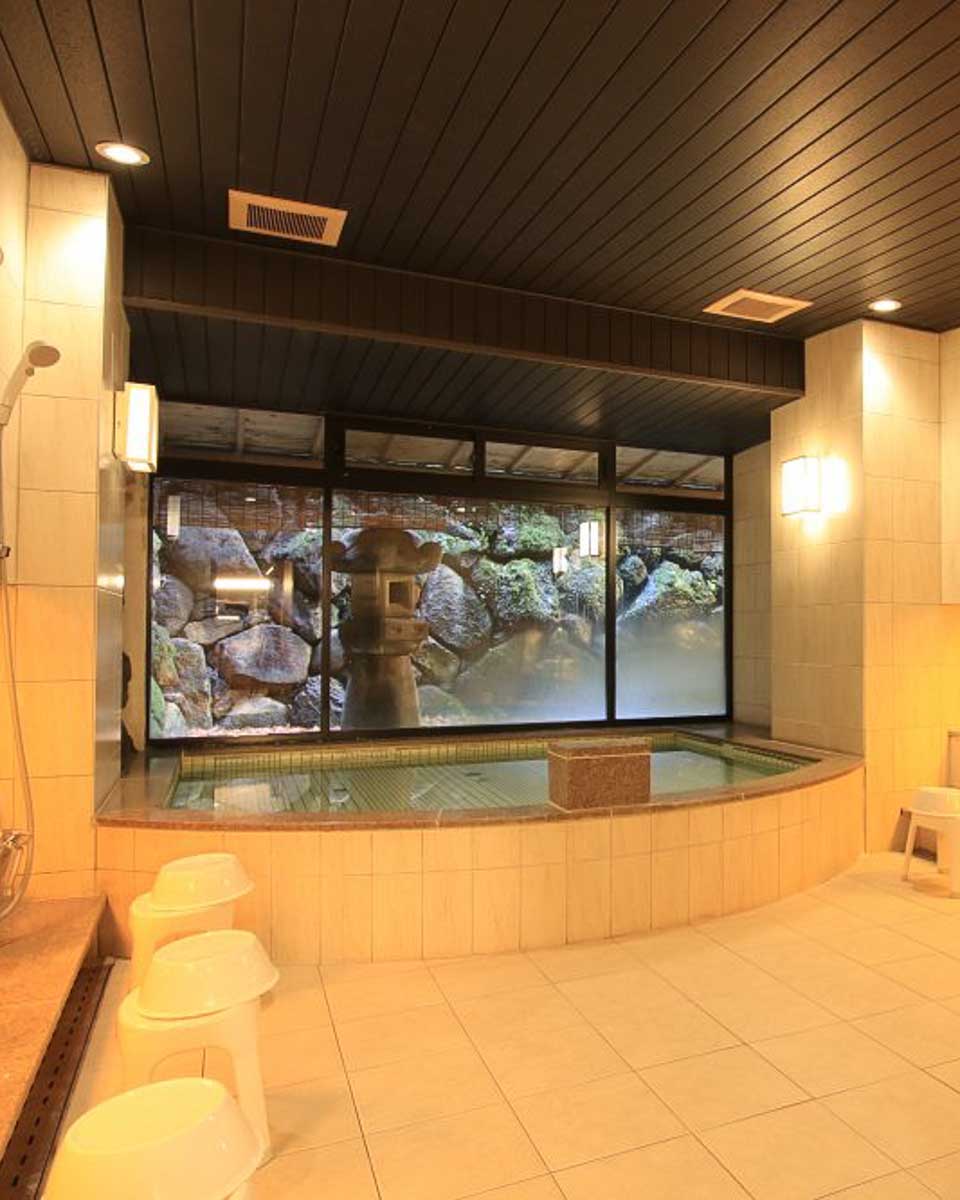
Since 1953, Nishiyama Ryokan has been doing the “classic Kyoto stay” really well, and it still feels like a little oasis right in the middle of the city. You’re a quick walk from Shiyakusho-mae Station and the Kamogawa River, with spots like Pontocho and plenty of temples and shopping areas within easy reach. Inside, it’s all tatami rooms, yukata, and a peaceful Japanese garden that makes you forget how central you are.
After a day out exploring, the shared bath is exactly what you want. There are separate men’s and women’s large communal baths with views into the garden and its little waterfall, which feels very Kyoto and very calming. This is not a natural hot spring onsen, but it absolutely delivers that soothing ryokan bathing ritual. Many rooms also have their own private bath and toilet, which is handy if you like having options.
Rates typically range from ¥55,000 to ¥110,000 JPY (roughly $350 to $700 USD) per night.
Kyonoyado Kagihei – $$
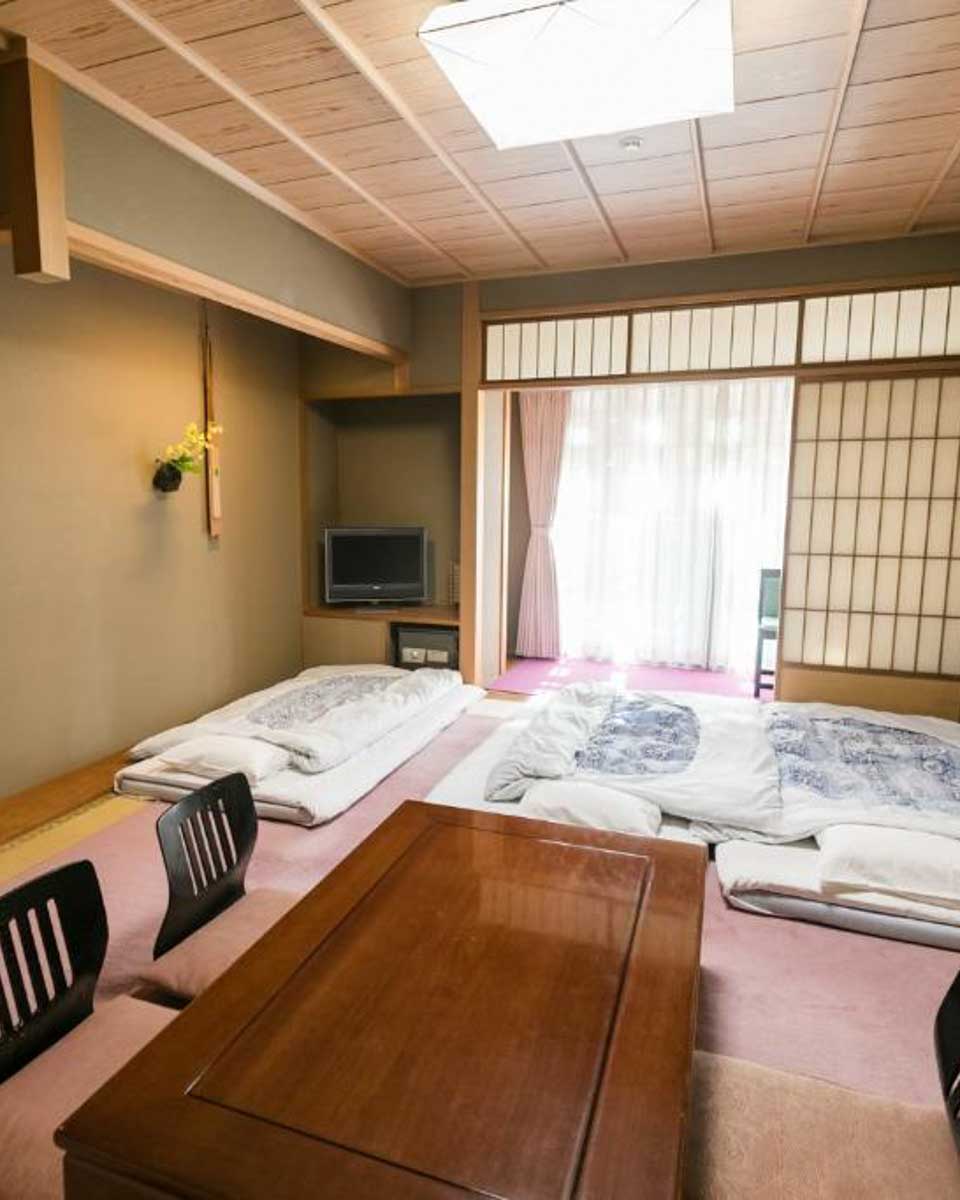

Tucked just north of Nishiki Market, Kyonoyado Kagihei is a small, traditional ryokan that’s located right in the middle of Kyoto’s best food and shopping streets. The inn traces its roots back to 1843, so it has that lived-in Kyoto character, but it still feels comfortable and well cared for, with simple Japanese-style rooms and a little garden space that adds to the calm.
The best part of coming back to Kyonoyado Kagihei is the simple ritual of a hot soak. There’s a shared bath for guests, and it leans more spa-like than traditional, with a Jacuzzi-style tub that feels amazing after hours of walking around Kawaramachi and Gion.
Rooms usually run around ¥23,500 to ¥31,500 JPY (about $150 to $200 USD) per night, depending on the season.
Ryokan Sanga – $$
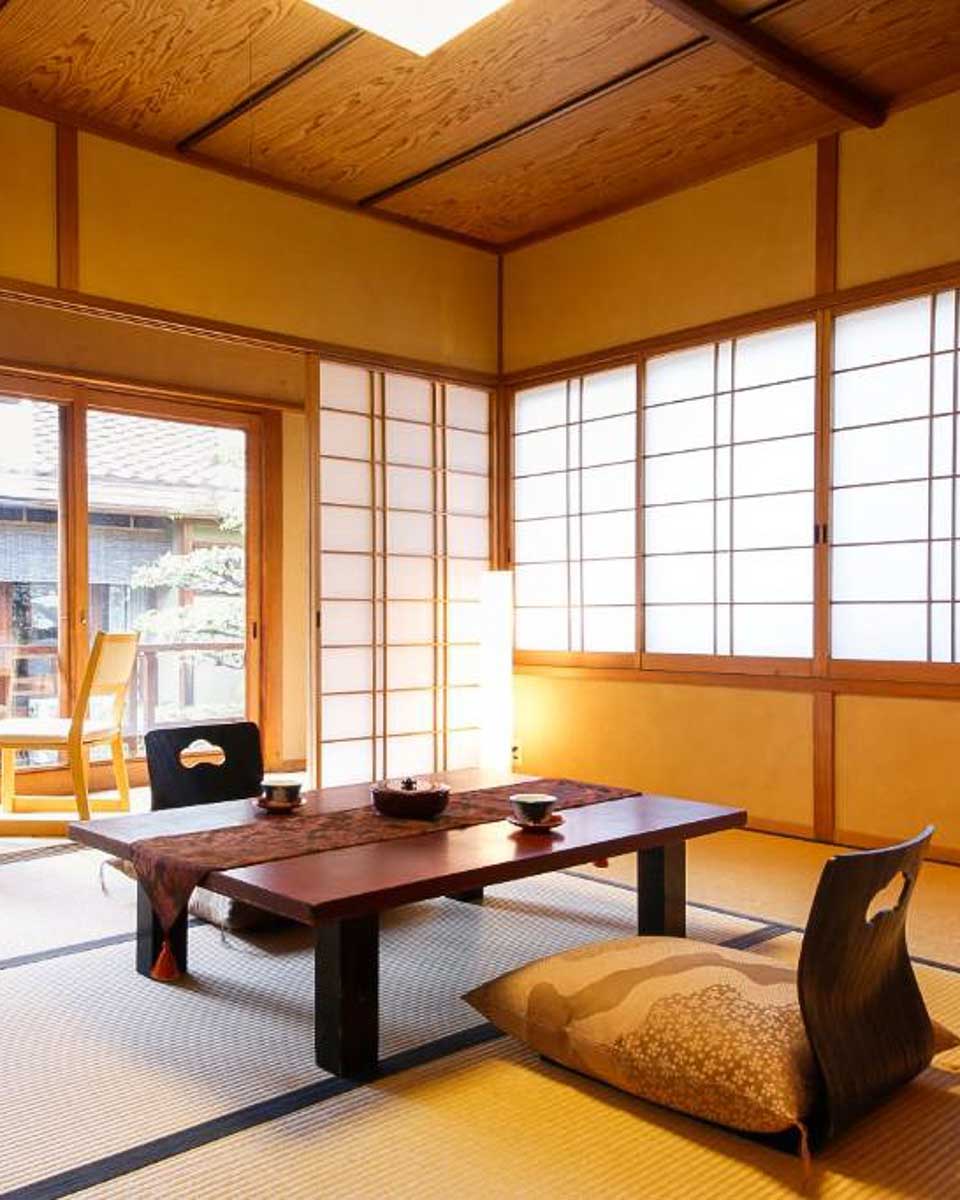
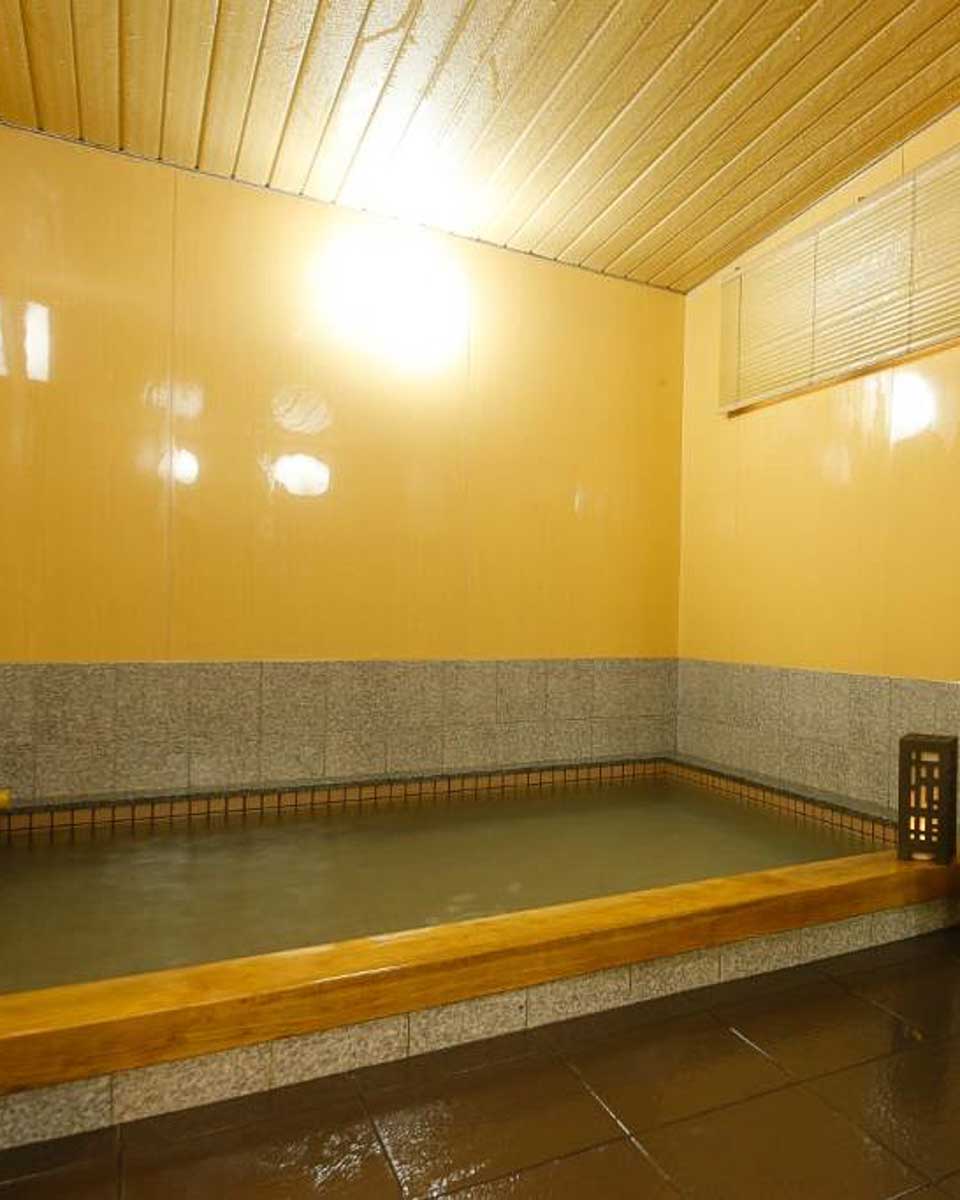
Right in the middle of Kyoto’s shopping and food streets, Ryokan Sanga gives you that classic machiya-style stay without sacrificing convenience. It’s only a short walk to Nishiki Market, and we love how calm it feels once you step inside, even though you are firmly in central Kyoto.
Rooms lean traditional with tatami floors, futon bedding, and yukata robes, plus modern basics like air conditioning and Wi-Fi. The inn also has some real history behind it, since it was once the residence of a wealthy Kyoto merchant in the Meiji period.
After a long day of walking, the shared baths are a welcome part of the routine. There are separate men’s and women’s indoor communal baths (no open-air bath and no private baths), and they’re more of an onsen-style wind-down than a true hot spring.
Rooms typically range from $100 to $480 USD (about ¥15,600 to ¥74,900 JPY) per night.
Kyomachiya Ryokan Sakura Urushitei – $
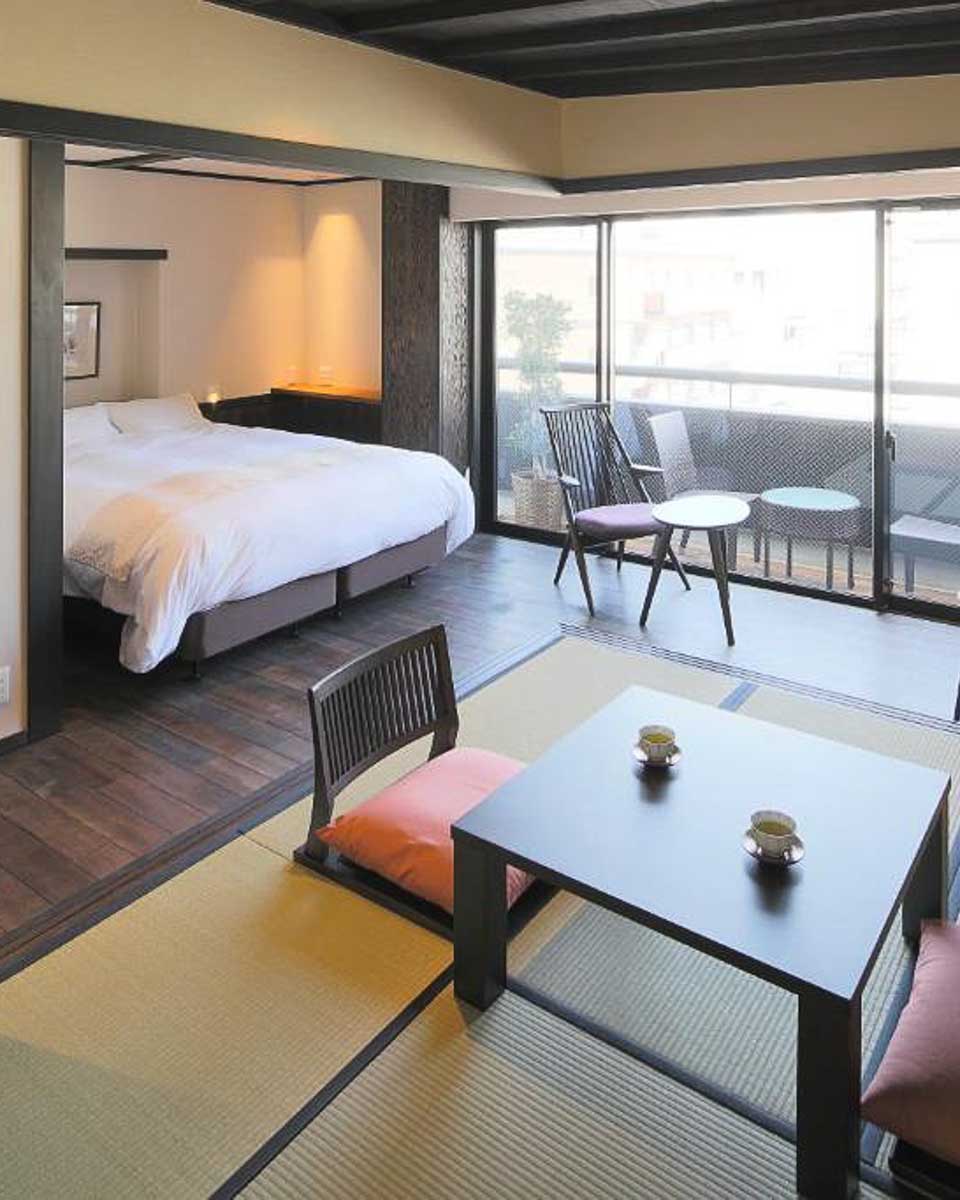
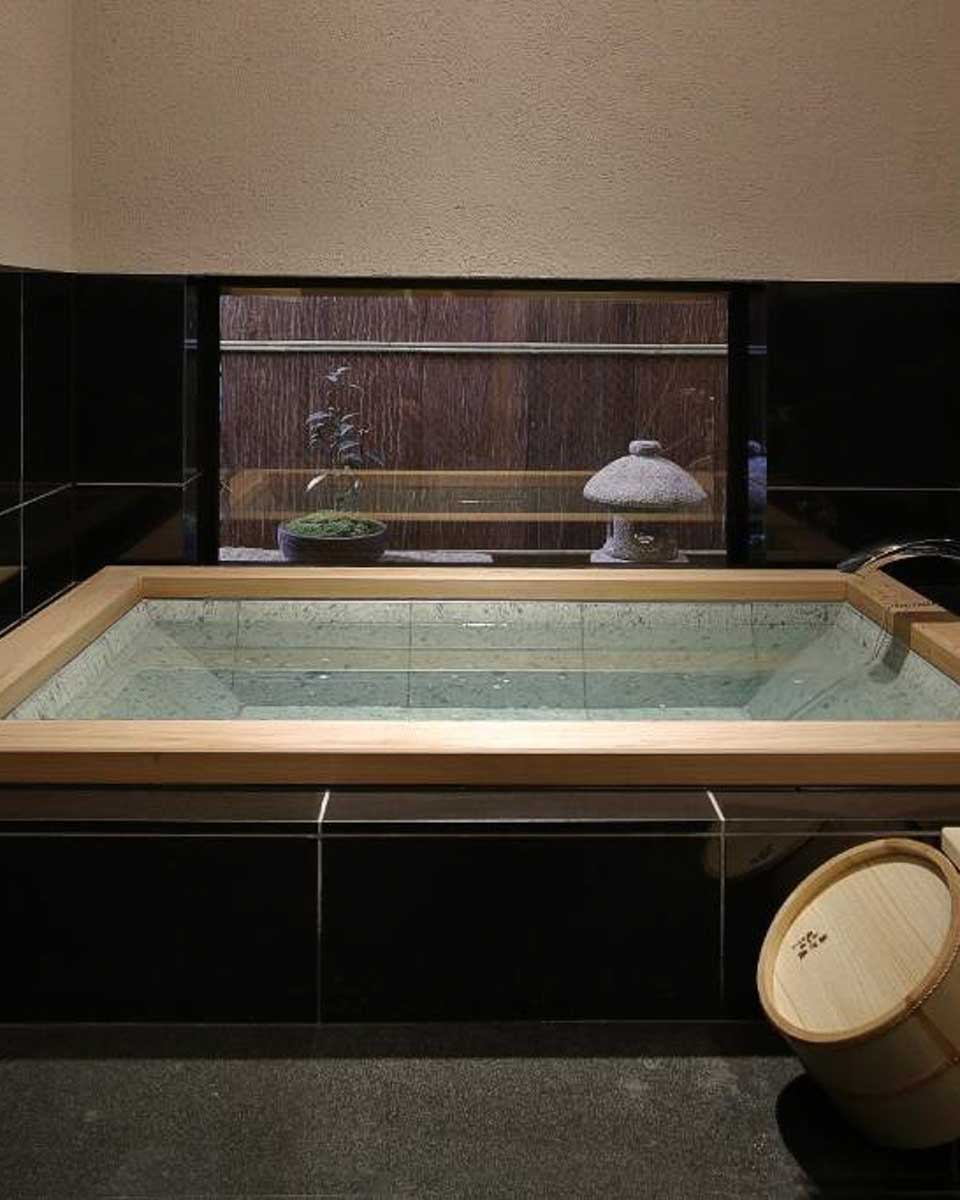
Kyomachiya Ryokan Sakura Urushitei is a really fun mix of “Kyoto traditional” and “easy modern comfort,” right near Kawaramachi, Shijo, and all the central shopping and food streets. The whole place is inspired by Kyoto craftsmanship, and it even sits on the former site of a long-running lacquerware workshop, which is a cool little bit of local history to have under your feet.
When it’s time to wind down, there’s no large public bath, but you can book a private rental bath for 1 to 2 people (it’s a short, timed slot, and there’s a small fee). It’s not a natural hot spring onsen, but it does give you that onsen-style reset after a big day out in the city.
Rooms typically range from ¥14,000 to ¥28,000 JPY (about $90 to $180 USD) per night.
Related Read: Need help planning the rest of your trip? See our Ultimate 3-Day Kyoto itinerary for our top activities, restaurants, and more!
Higashiyama


BEST FOR OLD-TOWN KYOTO VIBES
Pros
- Richly traditional atmosphere with historic streets and temples
- Walking distance to Kiyomizu-dera and Gion
- Excellent boutique ryokan and machiya options
Cons
- Narrow streets can get crowded during peak hours
- Limited nightlife and fewer modern conveniences
- Slightly hilly terrain, which can be tiring for some visitors
Higashiyama is the Kyoto you’ve always imagined, where narrow cobblestone streets wind between wooden teahouses, centuries-old temples, and craft shops selling handmade ceramics and sweets. In spring, cherry blossoms frame the lanes in soft pink, while in autumn, glowing maple leaves light up the temple paths.
Staying here feels like stepping into a living postcard, where every corner hums with quiet history and every lantern seems to glow just for you. It’s ideal for travelers who crave an authentic, traditional experience while staying close to must-sees such as Kiyomizu-dera Temple, Yasaka Shrine, and the Gion District.
Days here are best spent slowly. Wander through the Philosopher’s Path in the morning, stop for matcha and sweets at a hidden teahouse, and browse the small galleries and kimono boutiques lining Ninenzaka and Sannenzaka streets. In the evening, the crowds fade, and the district transforms – the air feels hushed, and the sound of temple bells carries softly through the alleys.
Many ryokans and machiya inns in Higashiyama embrace this peaceful rhythm, offering tatami rooms, garden views, and traditional kaiseki meals served in-room. It’s Kyoto at its most atmospheric, graceful, and nostalgic.
Seikoro Ryokan – $$$
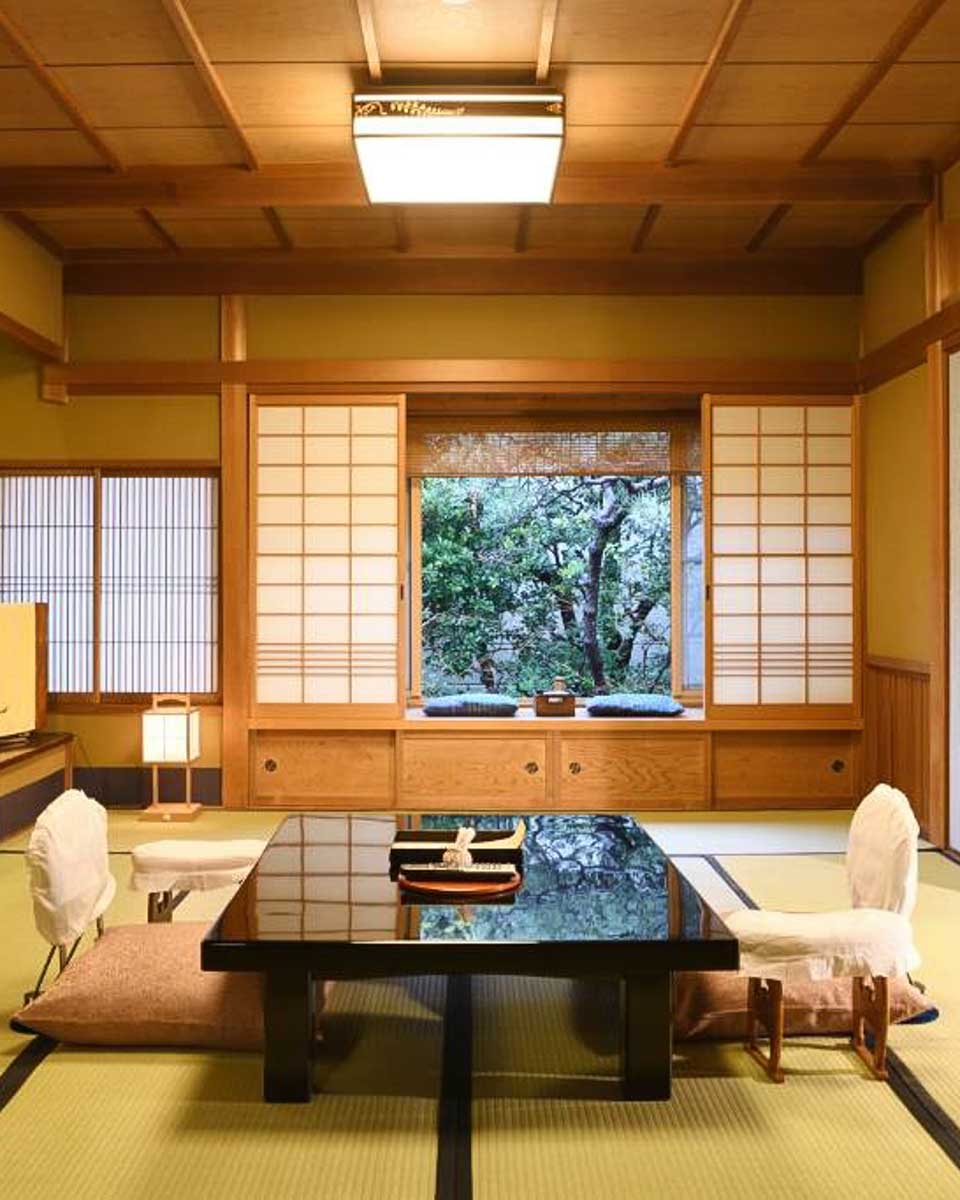
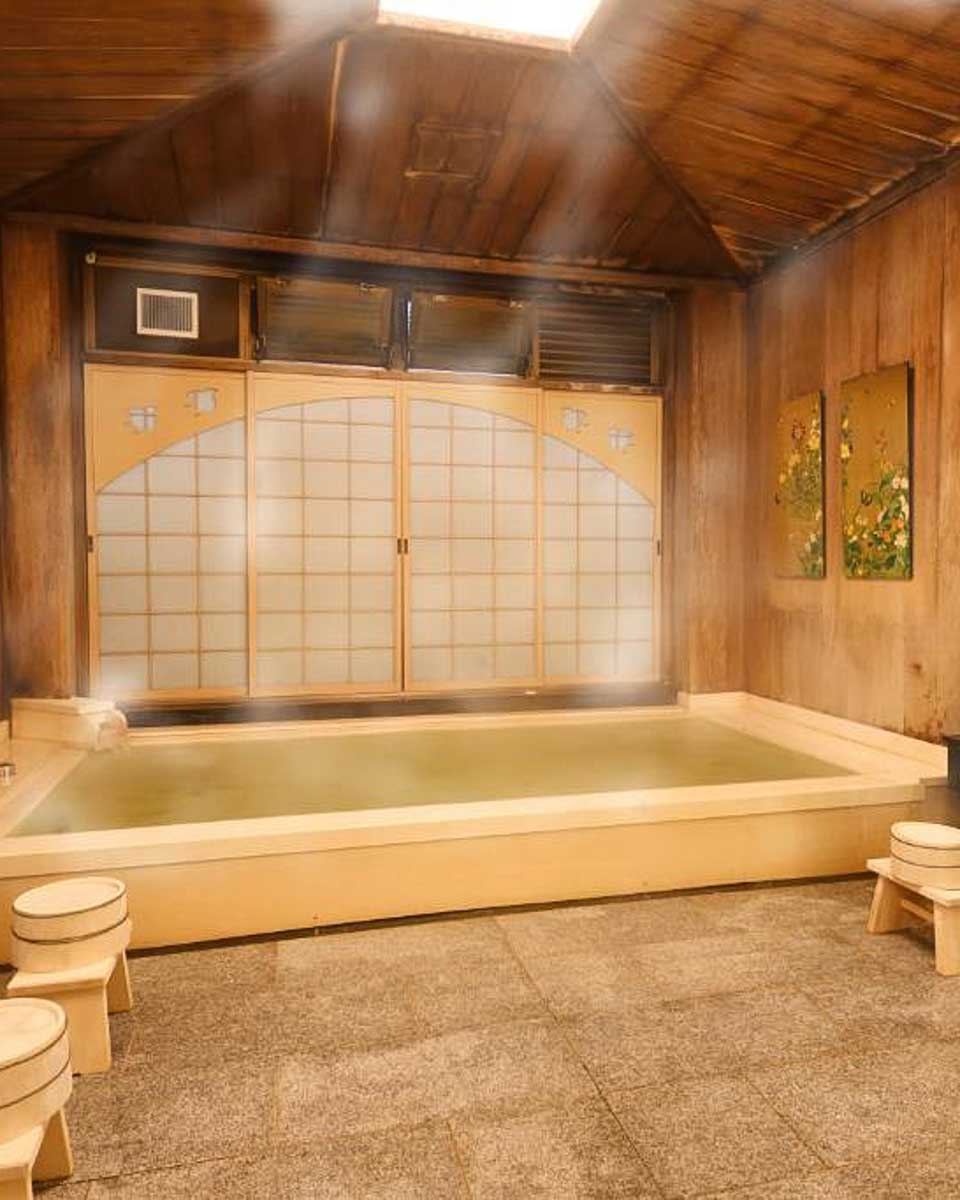
Seikoro Ryokan is a gorgeous, family-run classic in Higashiyama, and it nails that “timeless Kyoto” feeling the second you walk in. It sits just east of the Kamo River, within easy reach of big hitters like Sanjusangen-do and Kiyomizu-dera, but once you are inside, it’s all soft lighting, wooden architecture, tatami rooms, and that quiet, unhurried ryokan rhythm.
Dinner is a real occasion here too, with kaiseki meals served in your room, so you can fully lean into the experience without ever having to rush out again.
The bathing setup is also part of the appeal. Seikoro has gender separated baths, and while it’s not a natural hot spring, the ryokan is known for its artificial onsen made with koyamaki (Japanese umbrella pine), which gives the soak a more traditional feel than a standard hotel bath.
Rooms typically range from ¥56,000 to ¥148,000 JPY (about $360 to $940 USD ) per night, usually with meals included.
Kyoto Nanzenji Ryokan Yachiyo – $$$
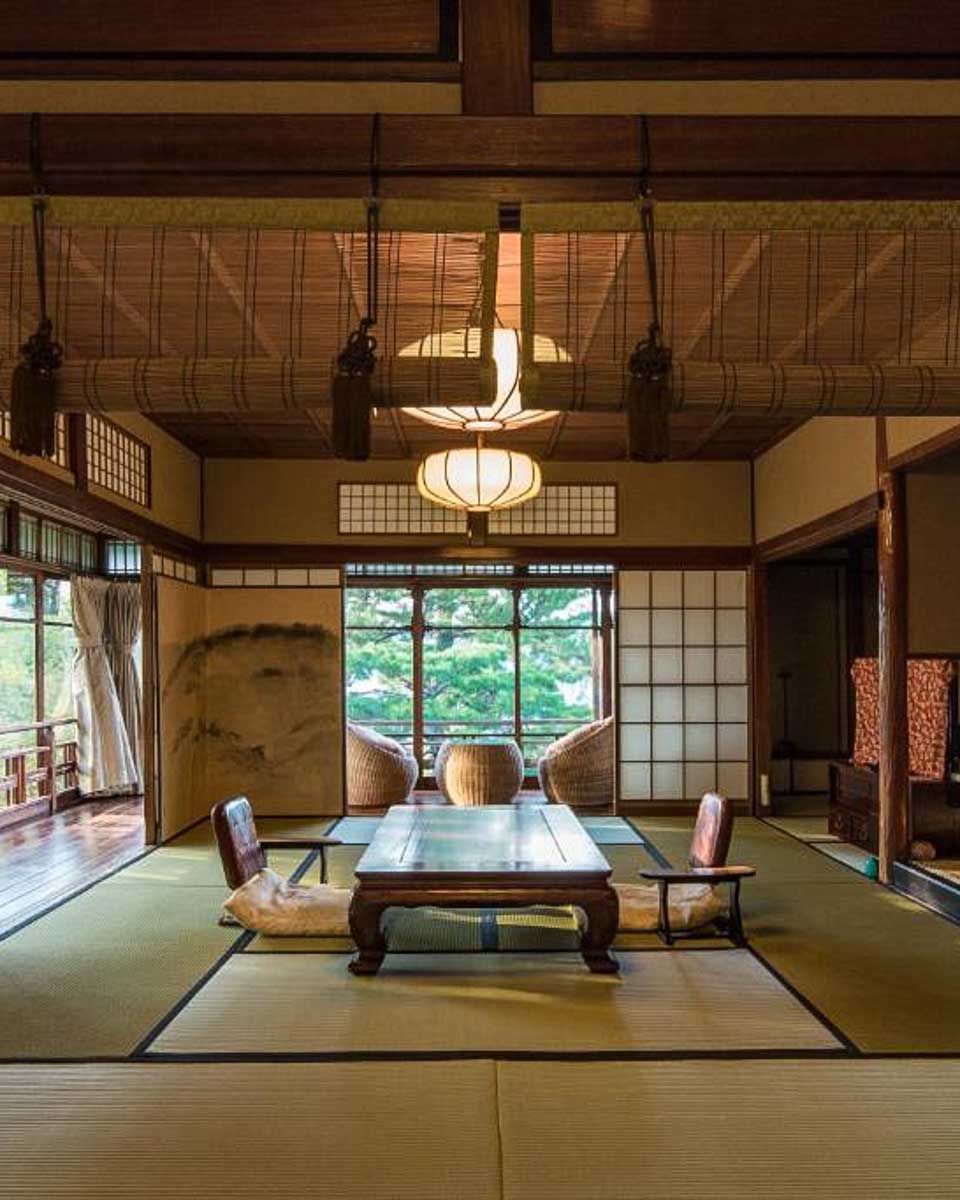
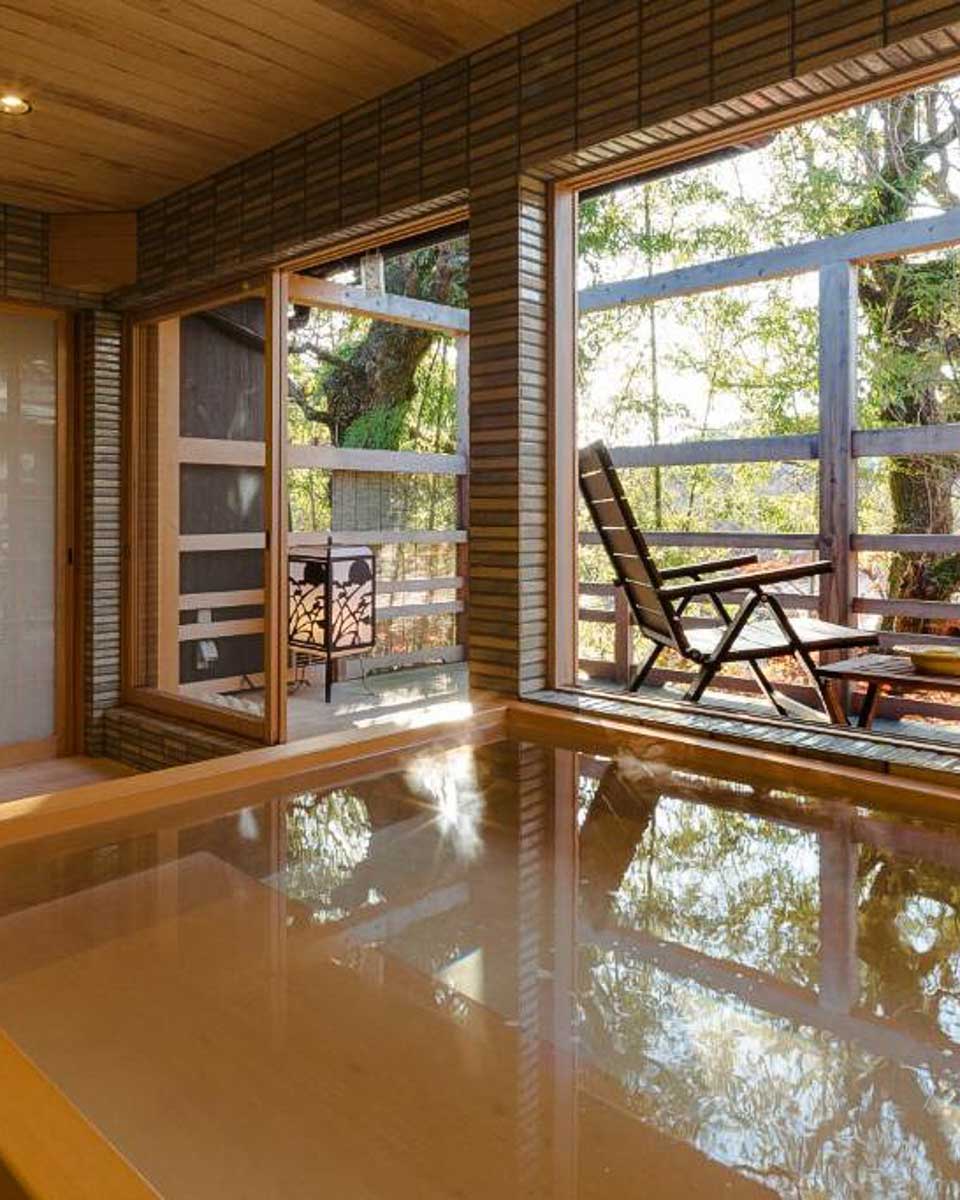
Right on the doorstep of Nanzen-ji Temple, Kyoto Nanzenji Ryokan Yachiyo is a true Kyoto classic. It has been welcoming guests since 1915, and the location is gorgeous, with a landscaped garden and the Higashiyama foothills right behind it. You are also brilliantly placed for a quieter, temple-filled side of Kyoto, with Eikan do, and the Philosopher’s Path nearby, plus the subway is close enough that heading downtown feels easy.
For onsen time, Yachiyo has an onsen-style bath that stays open into the evening, and there are also private reservation slots, which are perfect if you want a more relaxed soak. Some rooms even come with private onsen-style garden bathrooms, and a sauna suite is also an option if you want to really lean into the wellness vibe.
Rates usually land in the moderate to expensive range, roughly ¥34,000 to ¥140,000 JPY (about $220 to $900 USD) per night, depending on the room and season.
Ryokan Motonago – $$
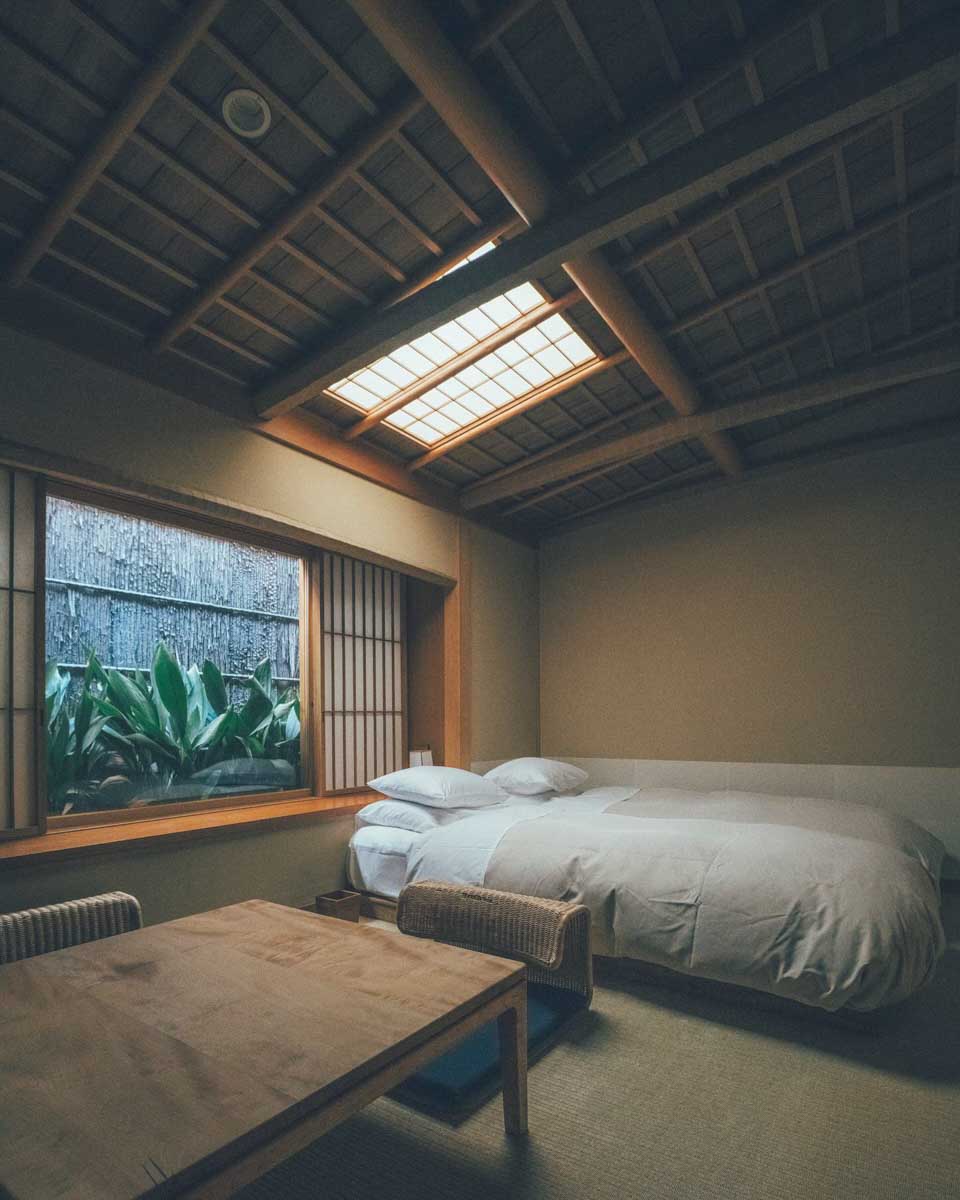
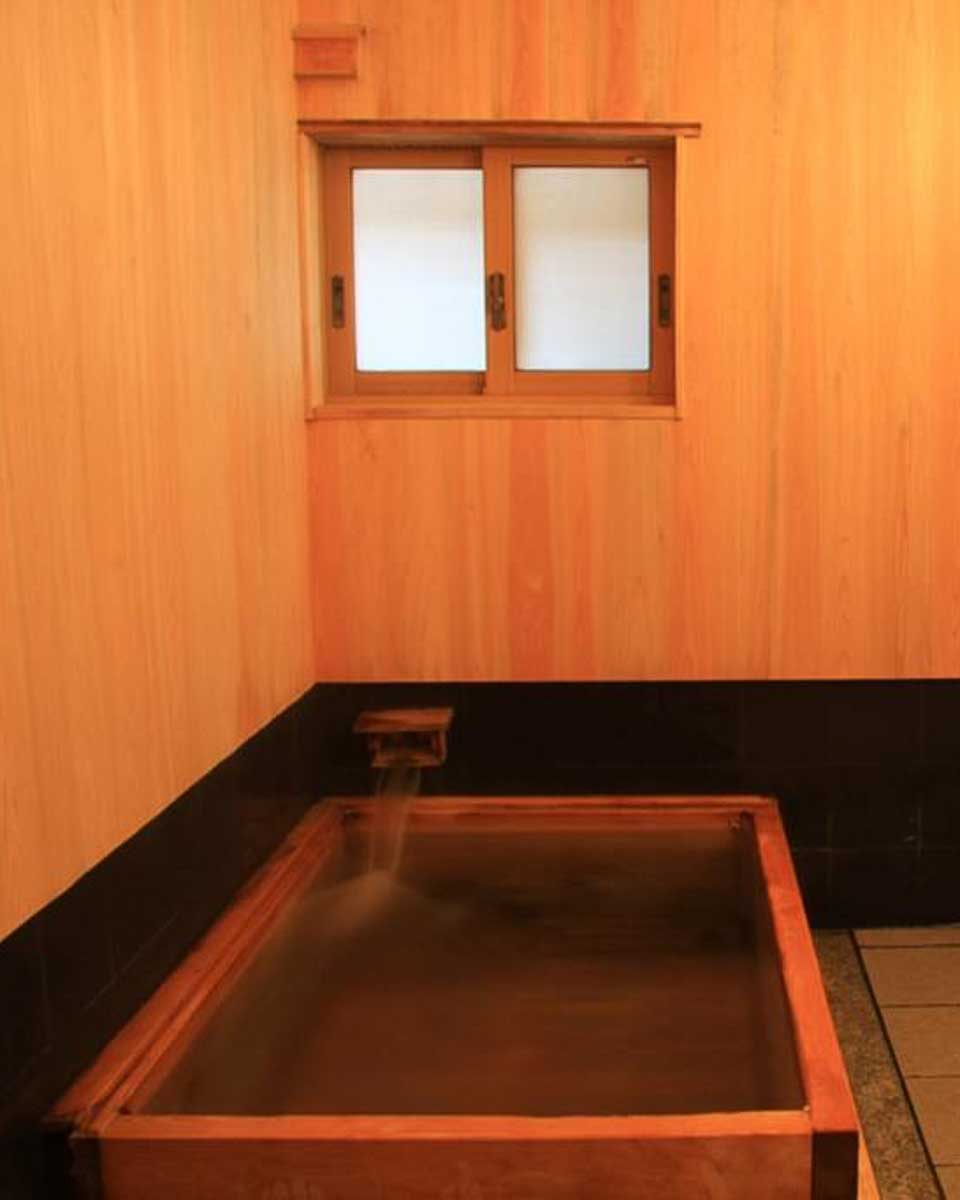
Just a few minutes from Kiyomizu-dera and the lantern-lit lanes of Gion, Ryokan Motonago puts you right in the middle of Higashiyama’s most atmospheric streets. Rooms keep things traditional Kyoto with tatami floors and futon bedding, and many look out onto a small garden that adds a quiet, tucked-away feel even though you are so close to the action. Dinner and breakfast are a big part of the experience too, with beautifully presented Japanese meals that lean seasonal and local.
After a full day exploring Higashiyama, it’s really nice to have a hot soak waiting back at the ryokan. Ryokan Motonago offers a reservable private bath, so you can book a slot and unwind without sharing the space with other guests. It’s an onsen-style soak rather than a true natural hot spring, but it still feels like the perfect end-of-day reset.
Rooms typically range from ¥39,000 to ¥78,000 JPY (about $250 to $500 USD) per night.
Kyoto Higashiyamaso – $$
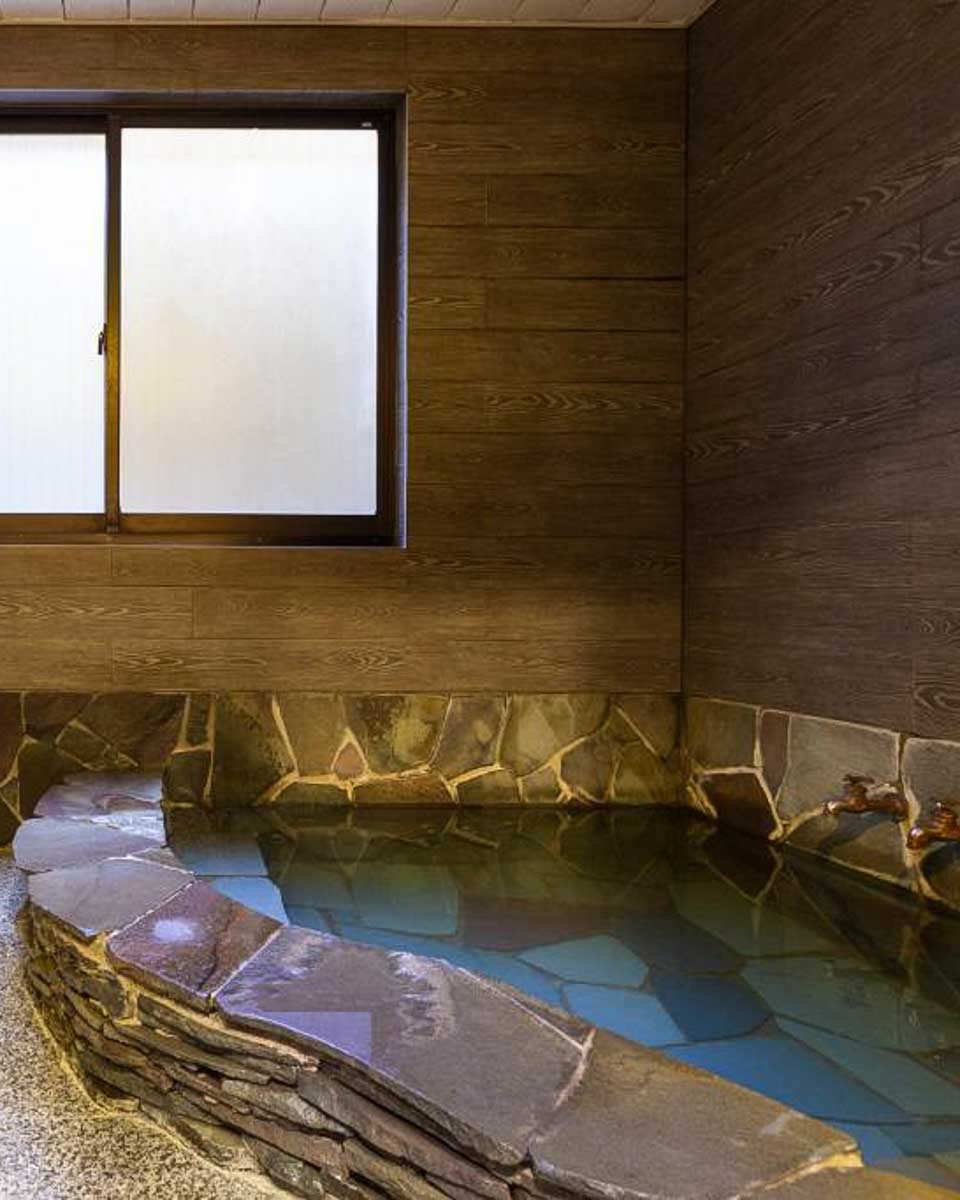
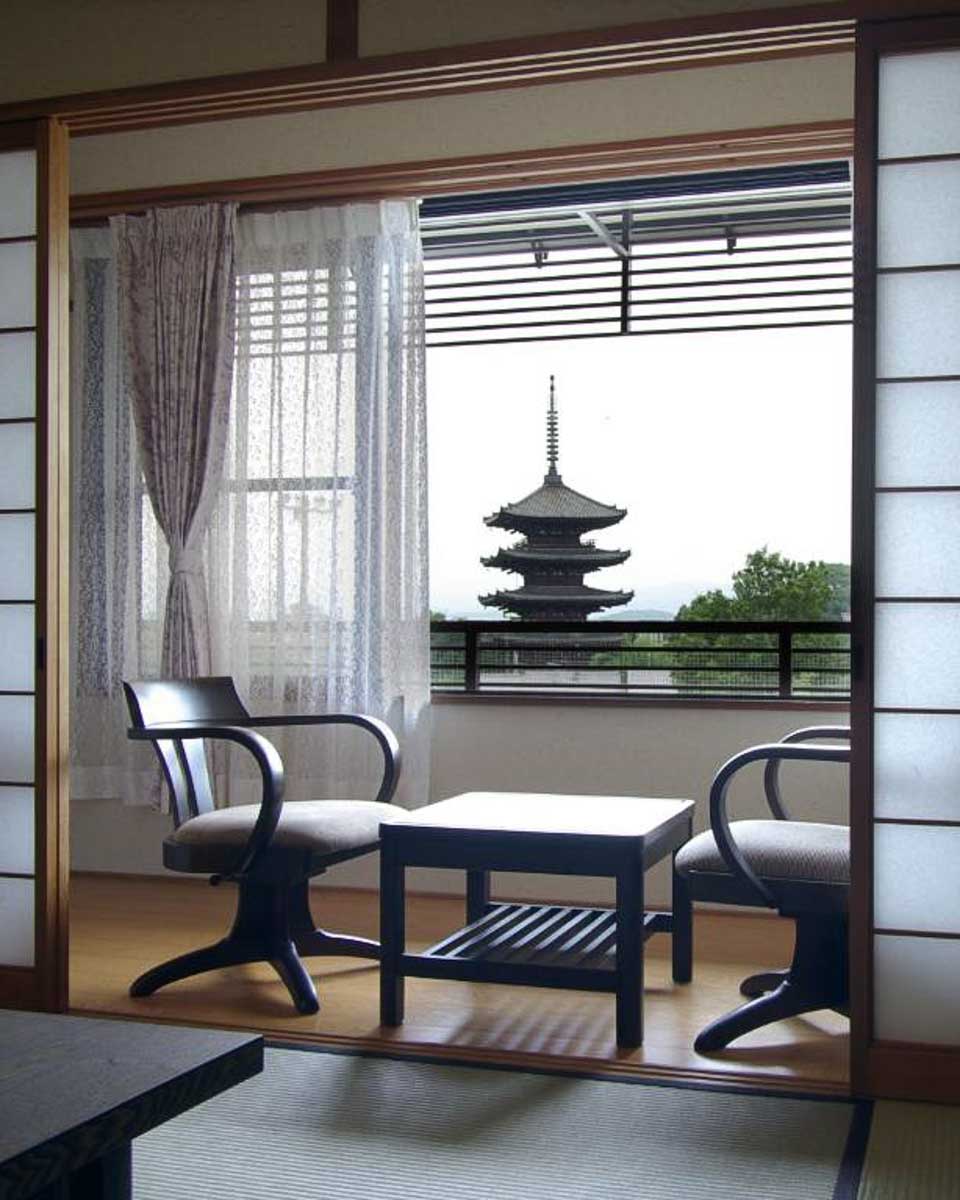
Kyoto Higashiyamaso puts you in one of Kyoto’s most iconic pockets, just an easy walk from Kiyomizu-dera and the photo-famous streets around Yasaka Pagoda. Some rooms even look out toward the pagoda, which feels very Kyoto-esque, especially early in the morning before the crowds roll in.
When you’re ready to unwind, the ryokan has two shared baths: a stone bath and a rock bath, so you can swap sightseeing shoes for a long, quiet soak. It’s worth noting that this is not a natural hot spring onsen, but it still gives you that soothing, ryokan-style wind-down at the end of the day.
Rates usually sit around ¥18,000 to ¥40,000 JPY (about $120 to $270 USD) per night, depending on season and room type.
Related Read: Another great place for a ryokan stay is Nara. See our favorite ryokans in Nara and book your stay!
Arashiyama


BEST FOR A NATURE-FILLED ESCAPE
Pros
- Beautiful scenery near the Bamboo Grove, river walks, and temples
- Great for a calmer stay with an onsen-focused wind-down
Cons
- Longer travel times to central Kyoto and Gion
- Quieter evenings with fewer late dining options than more central options
Arashiyama sits on Kyoto’s western edge, and it’s one of those corners of the city that instantly feels like a breath of fresh air. We love it for those who want a more traditional, nature-led stay, especially couples, photographers, and anyone planning to slow the pace for a night or two with an onsen soak as part of the routine.
The area is best known for the Arashiyama Bamboo Grove, the riverside path by the Katsura River, and the iconic Togetsukyo Bridge, plus you’re right near Tenryu-ji and its gorgeous garden. You can also hike up to Iwatayama Monkey Park, wander the villa-style grounds at Okochi Sanso, or jump on the Sagano Scenic Railway for an easy, scenic outing.
It’s worth knowing that Arashiyama gets very busy during the day, especially in peak seasons, and it’s not the most convenient base for crisscrossing central Kyoto. Evenings are much quieter once the day trippers leave, which is part of the charm, although late-night dining options are limited.
Transport is still straightforward, though, with the JR Sagano Line, the Randen tram, and buses linking you back to the city when you need them.
Kyoto Arashiyama Onsen Ryokan Togetsutei – $$$
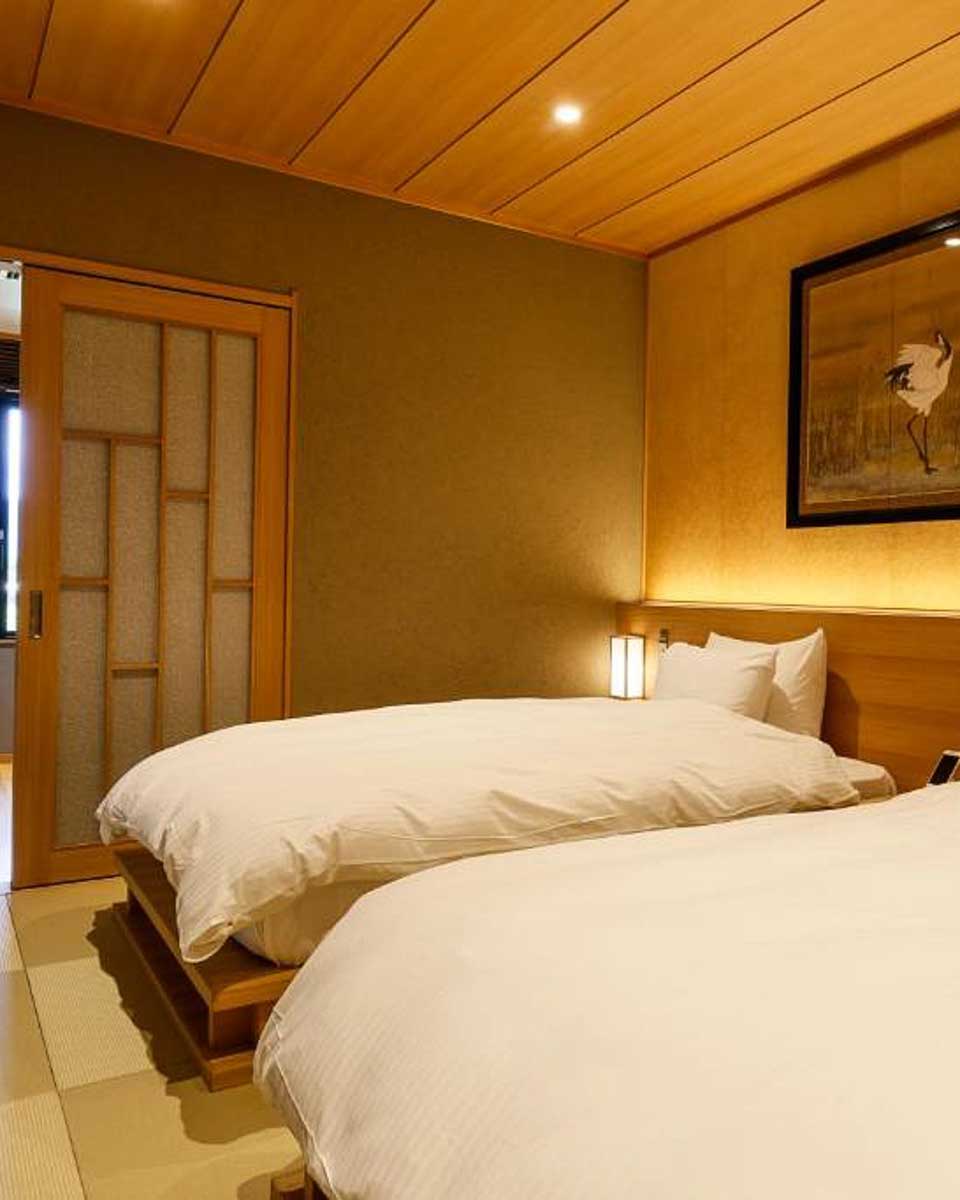
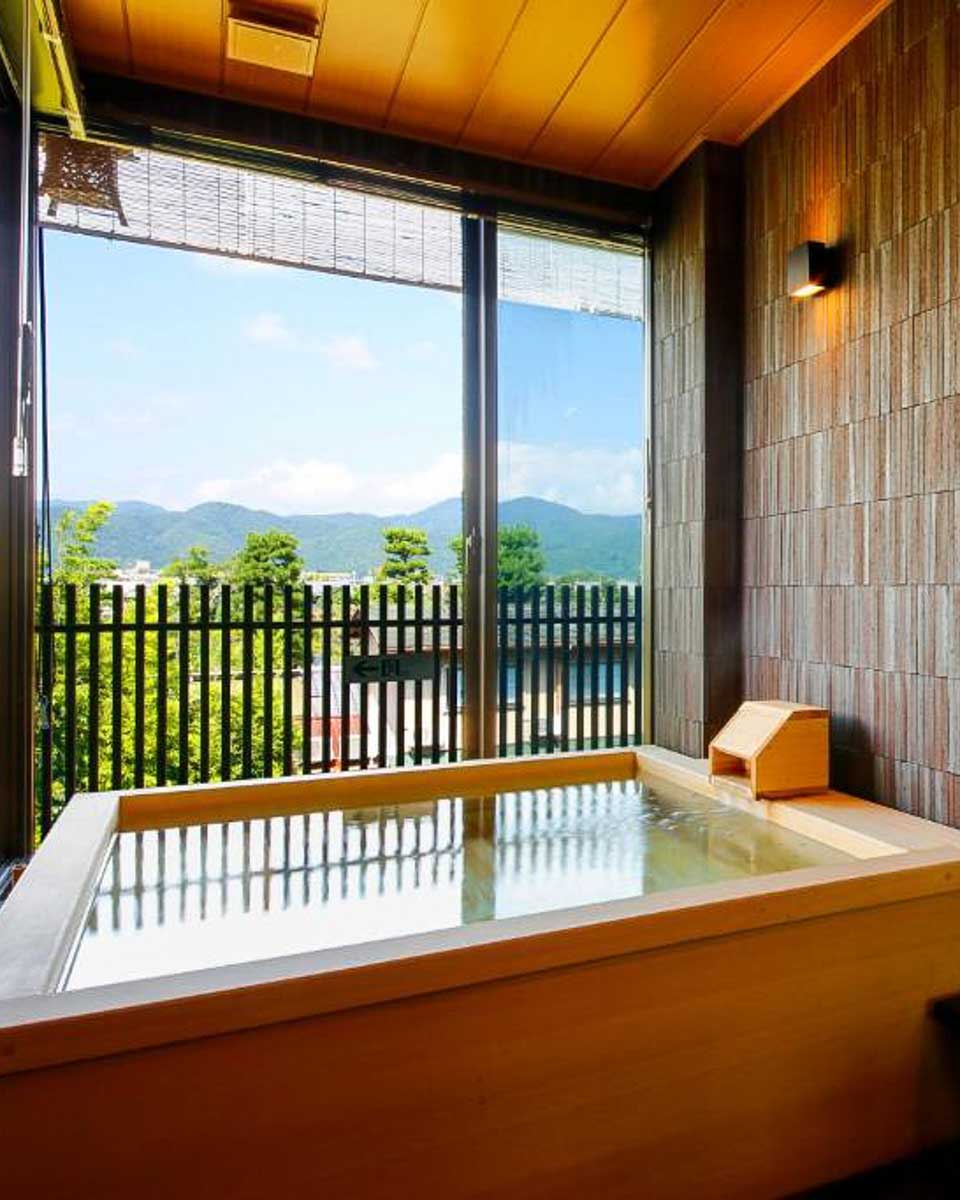
With the Katsura River out front and Togetsukyo Bridge a short walk away, Kyoto Arashiyama Onsen Ryokan Togetsutei puts you in Arashiyama’s most scenic stretch. It’s the kind of location that makes it easy to do the Bamboo Grove early, wander back for a break, then head out again for dinner and sunset river views.
The onsen setup is a big part of the appeal here, with separate public hot spring baths, plus a private, reservable bath option if you want a quieter soak. Some room types also come with their own private open-air hot spring bath, which feels especially magical in this nature-filled part of Kyoto. There’s also a sauna on site for a little extra wind-down time.
Rooms typically range from ¥60,000 to ¥120,000 JPY (around $400 to $800 USD) per night, depending on season and room type.
Ranzan – $$
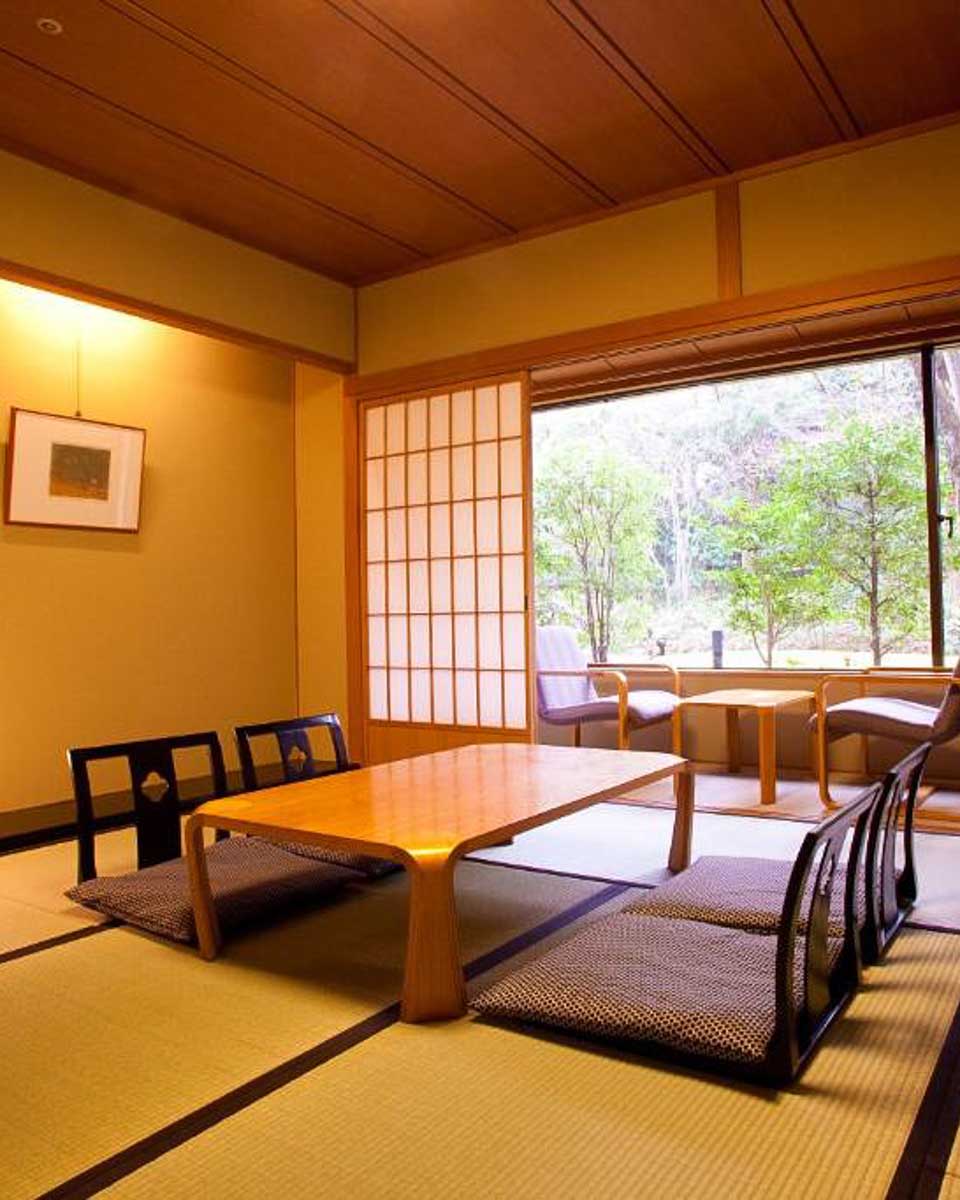
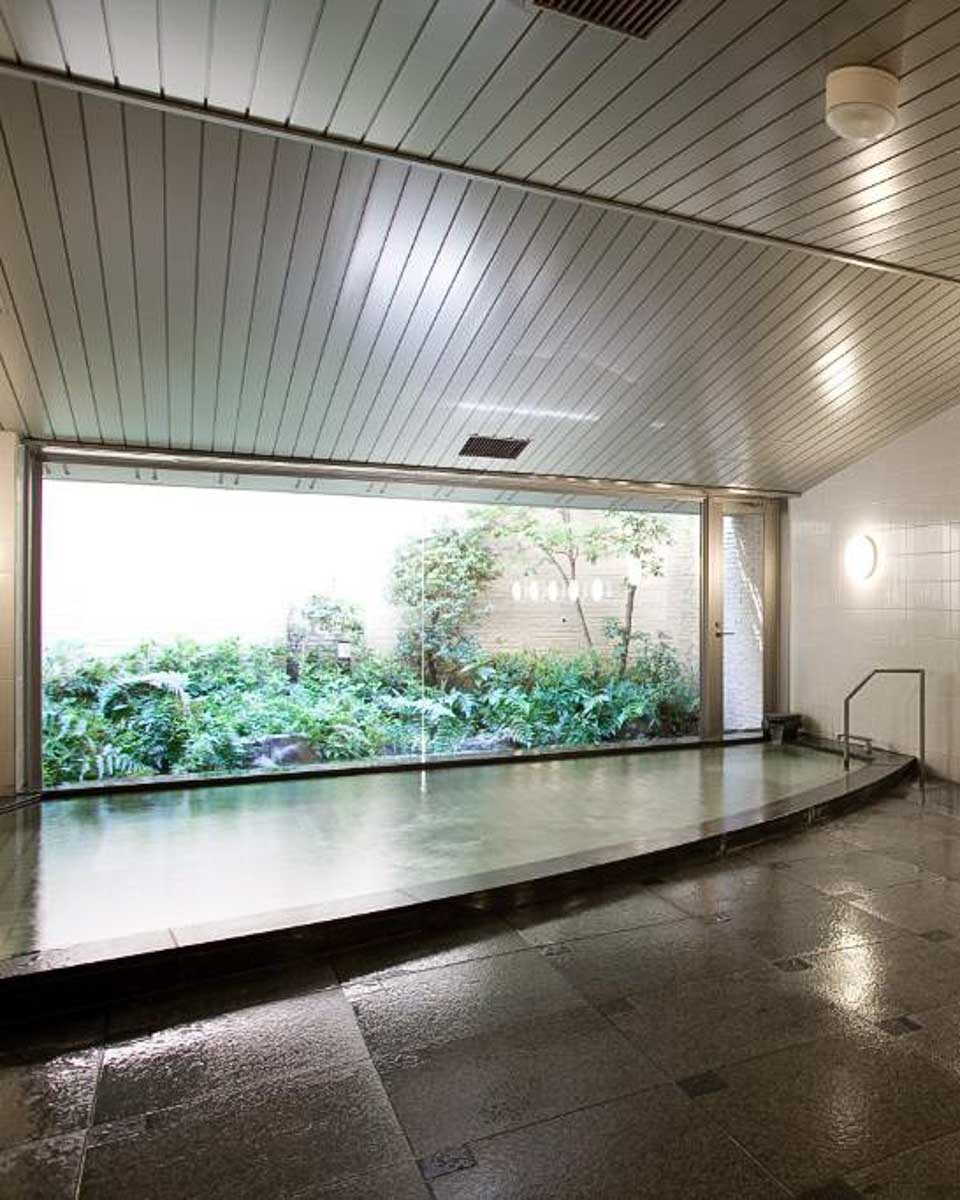
Set just a short walk away from Tenryu-ji and Togetsukyo Bridge, Ranzan makes it easy to enjoy Arashiyama at its best, especially early mornings before the crowds show up.
Inside, it’s a comfy mix of traditional and practical. You can choose tatami rooms with futons or go for a Western-style setup, and the peaceful garden gives the whole stay a relaxed, tucked-away feel even though you are right in the center of the area. Dinner here usually leans into Kyoto specialties, and it’s a great excuse to turn the evening into a slower, more “ryokan style” experience.
For bathing, there’s a spacious public bath that stays open late, which is exactly what you want after a full day of bamboo paths, temples, and river walks.
Rooms typically range from ¥15,000 to ¥45,000 JPY (about $100 to $300 USD) per night, depending on the season and room type.
Top Activities to do in Kyoto


Now that you have a list of the best ryokans with onsens in Kyoto, it’s time to fill your itinerary! This is one of Japan’s biggest tourist hubs for a reason – there is so much to see in Kyoto. So let us help you narrow down the can’t-miss activities so you can make the most of your time!
- Taste Kyoto’s best food – We were so excited to indulge in authentic Japanese food, so we joined this top-rated food tour! Our guide took us to some of the best local spots in the Gion and Pontocho neighborhoods, and we tried so much food that we wouldn’t have without their local insight.
- Kyoto sightseeing tour – If you’re limited on time or keen on learning as much as possible, you can’t go wrong with this full-day sightseeing tour. We were bused all around Kyoto and visited Fushimi Inari-taisha Shrine, Arashiyama Bamboo Forest, and so many iconic shrines – all in an easy, organized tour!
- Learn to cook ramen – We couldn’t get enough ramen while in Japan, so taking this ramen cooking class was an easy addition! Our chef/guide taught us how to roll the noodles and perfectly simmer the soup. It was a ton of fun and a skill I still use today!
- Explore the Gion Geisha District – If you want to experience authentic Japanese culture, join this geisha walking tour in Gion. We learned so much from our guide as they led us through the streets of Old Kyoto and regaled us with stories of the geisha. It was a totally unique experience!
- Take a day trip to Nara – Visiting Nara to see the famous bowing deer is a must-do in Kyoto, so make it easier by joining this full-day Nara tour! We visited Deer Park, as well as the Todaiji Temple, and had a tea ceremony in Uji. It was a full, but awesome day!
Related Read: Looking for more memorable activities? See our complete list of the best things to do in Kyoto here – you simply can’t miss these!
Renting a Car in Japan

Japan’s trains are great, but if you want to explore rural areas, scenic routes, or off-the-beaten path hidden gems, renting a car offers unmatched flexibility. Driving in Japan is generally safe, with well-maintained roads and clear signage, though there are some unique rules and customs to be aware of.
We always book with Discover Cars and can’t recommend them enough. It’s super easy to compare multiple provider prices, check company ratings, filter for the type of vehicle you want, and add affordable full coverage insurance. If you want a full breakdown, check out our Discover Cars review here.
Tips for Renting a Car in Japan
What You Need to Rent a Car in Japan
Ready to hit the road? Discover the freedom of exploring the Japan on your own terms!
Airalo e-sim
Up To 15% Off With Code “DTRAVEL10”
What’s an eSIM?
An eSIM is a digital version of a SIM card. Instead of buying a little plastic chip and swapping it into your phone, you just download it. It connects your phone to a local network in whatever country you’re visiting — no stores, no waiting, and no fiddling with tiny cards.
In simple terms, it’s the easiest way to get data and stay connected while traveling.
We’ve tested a bunch of eSIMs in North America, and after a few frustrating experiences, we’ve found our favorite — Airalo. It’s fast, reliable, and incredibly easy to use. You can set it up in minutes (even my mom managed it solo on her first try!), and the prices are some of the best out there.
Bonus: We’ve got an exclusive 15% discount for our readers. Use the codes:
Thanks for reading!

Staying in a ryokan is a fantastic experience in itself, but add in a beautiful onsen, and you have yourself a memorable time in Kyoto! Whether you want a convenient stay in downtown or something tranquil and forested, you can find a ryokan to fit your style with this list.
If you need help planning the rest of your trip, see all of our Japan blogs here! We love to help fellow travelers map out an epic vacation, whether it’s your first or tenth visit to Japan. Here are a few related blogs to inspire your next destination – cheers!
The 10 Best Ryokans in Hiroshima
The 6 Best Onsen Hotels in Tokyo
Where to Go in Japan Based on Your Travel Style
The Services We Recommend
From hotels to guided tours, we only recommend services we know and trust. Here are our recommended partners so you can explore Japan with confidence.