
15 Best Things to do in Nagano
Nagano is known for its mountains, wildlife, and skiing – so basically, it’s got pretty much everything we look for in a travel destination! And on our travels throughout Japan, this city really stood out to us because there were so many fun and unique things to do.
Located in central Japan, Nagano definitely isn’t as famous as some other destinations in Japan, so you might be wondering what there is to do here. But you won’t be wondering for long, because we’ve compiled our ultimate list of things to do in this historic and beautiful city. Let’s get into it!
Don’t miss out!
Our Top Choice
The tour we loved the most and suggest booking ASAP is this one!
Our personal FAVORITE activity was this guided tour to Zenko-ji Temple and the Snow Monkey Park! As Nagano’s two most iconic sights, we wanted to learn as much as possible and have a smooth experience, and this tour delivered.
See the snow monkeys!
Things to do in Nagano
1. See the famous Snow Monkeys


Tour Details
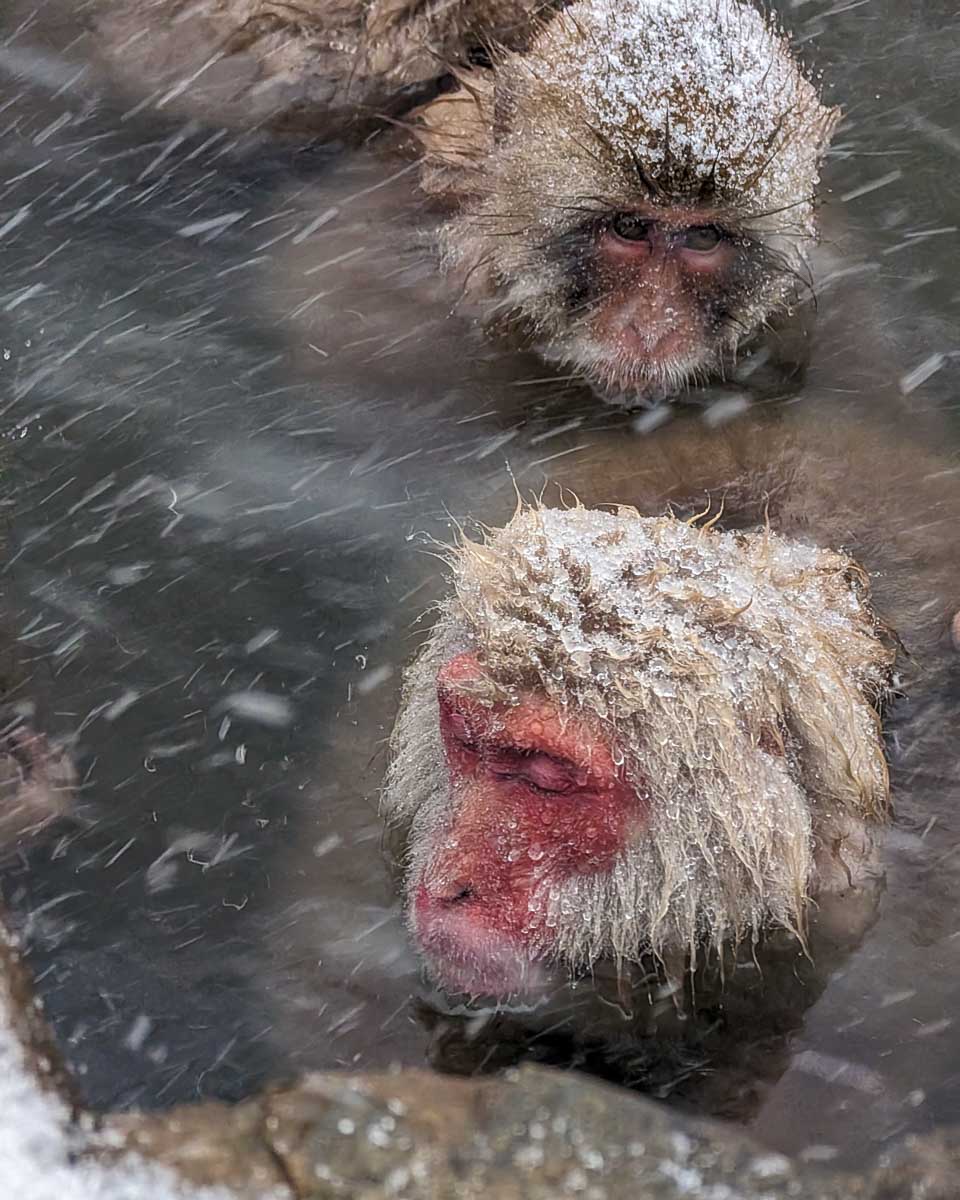
Seeing the snow monkeys is one of the best things to do in the whole of Japan! Of course, we just had to go and visit them, and we weren’t disappointed at all.
The monkeys live in Jigokudani Snow Monkey Park, which is about an hour’s drive from Nagano. The park is home to hundreds of macaque monkeys, and during the winter, they love to bathe in the park’s hot springs. How cool is that?
We have a full guide to Jigokudani Snow Monkey Park here, but the basics are that you can visit any time of the year. We went during the winter, as this is when you can see the monkeys hanging out in the hot springs! They typically like to be around the hot springs between December and March. However, it’s possible to see this as early as October and as late as May.
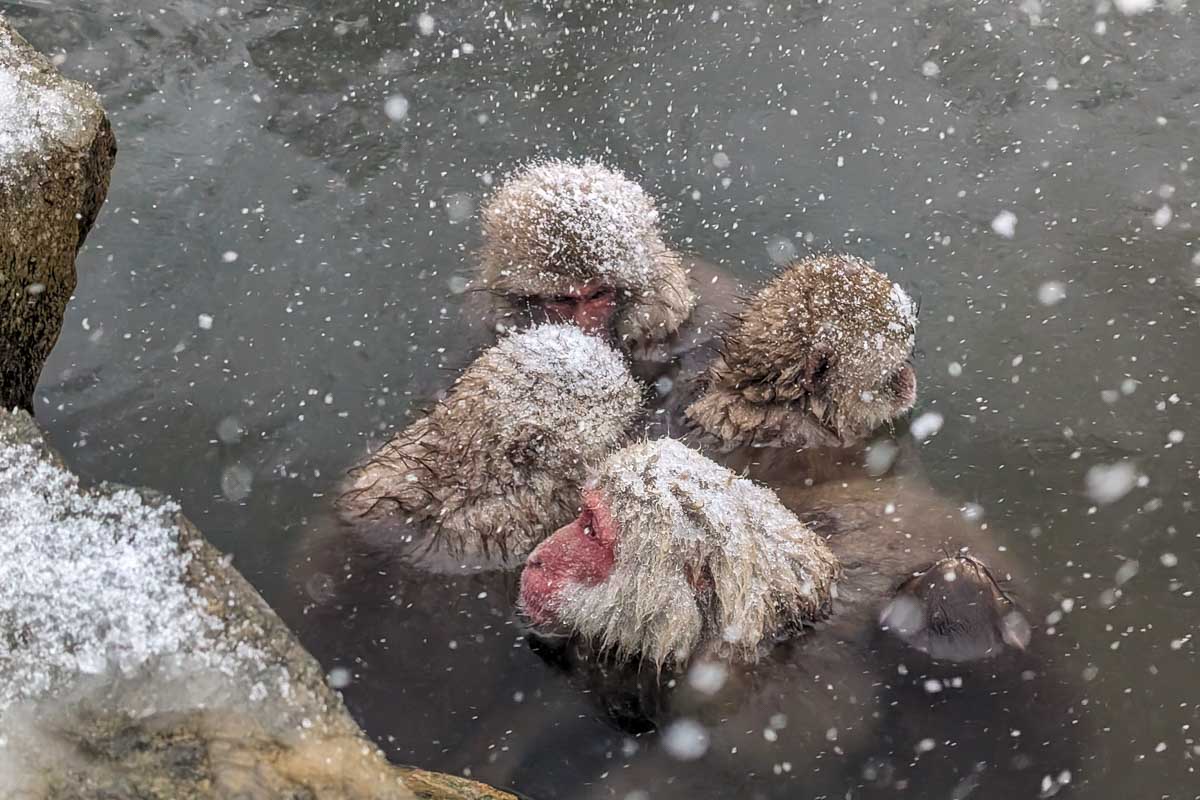
You can either visit the park by yourself or take a guided tour. We rented a car and drove out to Jigokudani Park, where we paid an entrance fee of 800 JPY ($5.50 USD) each. From there, it was a 40-minute walk to the monkeys. When we went, it was snowing a lot, and the path was covered, so we highly recommend wearing warm, waterproof clothing and good winter boots.
However, if you don’t have a rental car, then we recommend booking a tour, as getting to the park via public transport is time-consuming and complicated. We suggest this top-rated tour from Nagano, which has 900+ glowing reviews. It includes a guided visit to the Snow Monkey Park, as well as a visit to the famous Zenkoji Temple (which we’ll talk about below), a sake tasting, and a delicious local lunch. Not too bad!
2. Wander Zenkoji Temple


Zenkoji Temple is one of the most famous tourist attractions in Nagano – and the whole of Japan. It was originally founded in the 7th century, so it’s super historic and a real must-do. After all, not every day do you get to visit a place that’s 1,400 years old!
Nestled into the hillside, the temple is a 30-minute walk from the city center, or a 10-minute drive. Parking here costs 500 JPY ($3.50 USD) for 2 hours, or you can take the #10 bus from town to Zenkoji Daimon, and then walk for 10 minutes to the temple.
It’s free to wander the grounds and go inside the temple’s main hall. We also made a stop at the Sanmon Gate, where we went up to the second level for a great view of the temple. You can also walk along the temple’s underground passage and touch the fabled “key of enlightenment,” which is said to bring good fortune!
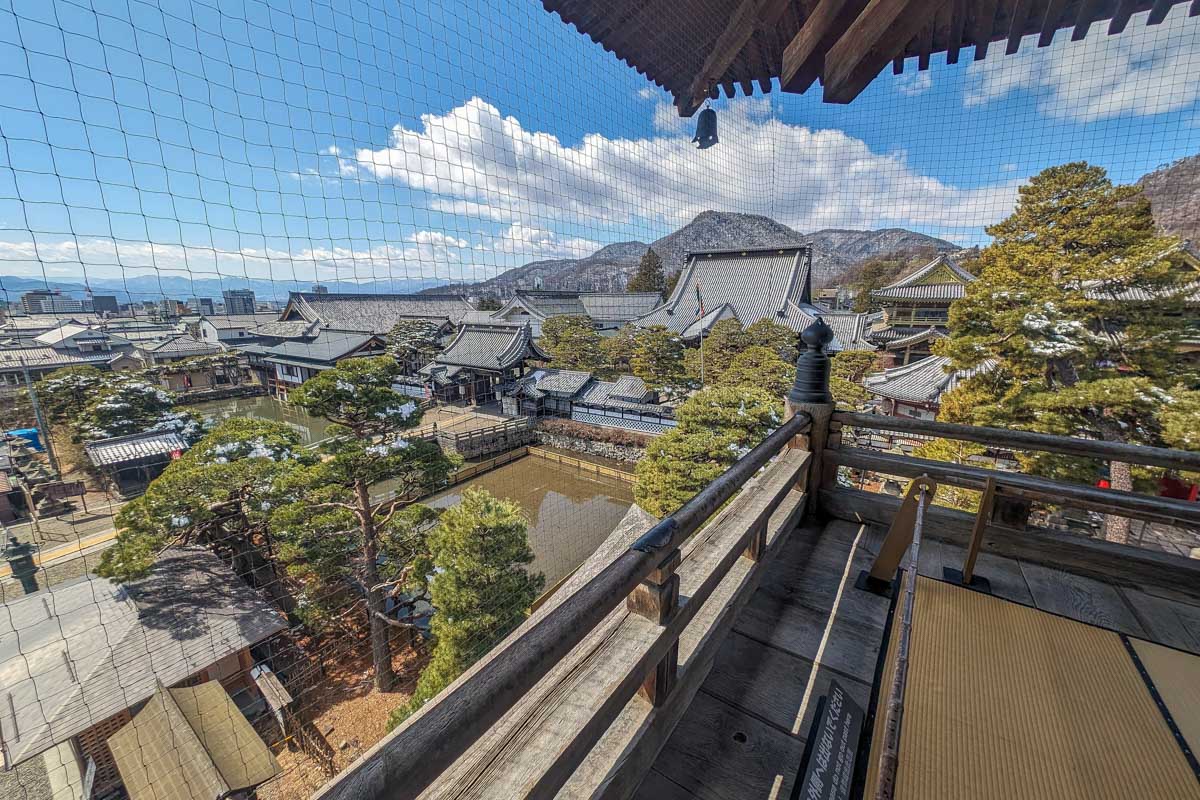
While it’s free to wander around much of the area, there is a 500 JPY ($3.50 USD) fee to access the Sanmon Gate, which we thought was worth it. There’s also a separate 600 JPY ($4 USD) fee to gain access to the underground passage, inner chamber, and the history museum here.
The temple opens daily about one hour before sunrise and stays open until 4 pm. The Sanmon Gate and the history museum are open every day from 9 am to 4 pm.
Related Read: One of the iconic views in Japan is Mt Fuji – find out all the best Mt Fuji viewpoints in our blog here!
Japan Rail Pass!
The Easiest Way to Travel Japan By Train
If you’re planning to explore Japan, the Japan Rail Pass (JR Pass) is hands down the easiest and most affordable way to get around. It’s a special 7, 14, or 21 day pass for foreign visitors that gives you unlimited rides on Japan’s famous JR trains, including the high-speed shinkansen (bullet trains)!
Why We Love the JR Pass
Pro Tip: If you’re only exploring one region of Japan, consider a Regional Pass instead (like the Kansai, Hokkaido, or Kyushu Pass). They’re cheaper and perfect for smaller trips!
Where to Get Your Pass
We personally recommend buying your pass online in advance through JRPass.com — they’re an official reseller with fast worldwide delivery and English support, making the whole process super simple. They even offer handy add-ons like pocket WIFI and meet & greet services! Still not sure if the JR Pass is right for you? Check out our Ultimate Guide to the Japan Rail Pass for a full breakdown of costs, inclusions, and when it’s worth it!
3. Walk Zenkoji Nakamise Street

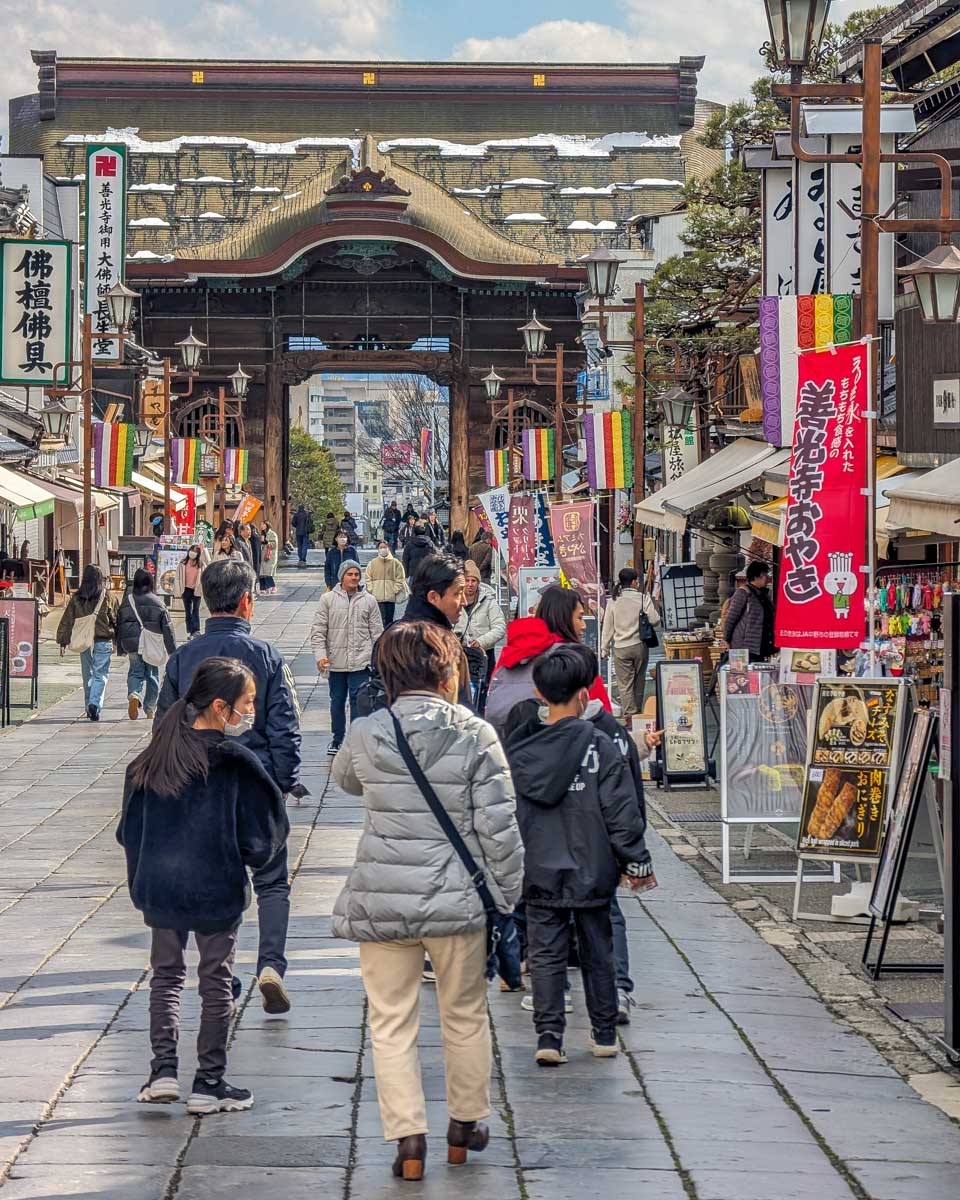
We wouldn’t normally expect to find a shopping street at a temple, but we loved wandering up and down Zenkoji Nakamise Street. This is a shopping street that leads up to the temple and travels under both the Sanmon and Niōmon gates. It’s really lively and definitely worth exploring!
There are lots of cute little souvenir shops, and even one selling antiques! We also saw bookstores and places to buy food, including freshly steamed buns and miso ice cream.
But as far as I’m concerned, the best things to try here are the pastries from BENIBENI, Shinshū-ringogashi-kōbō. They’re a bit like apple turnovers but are filled with Japanese custard, and they’re so delicious – I would go back to the temple just to get some more of these.
4. Try the famous dumplings


Ogawanoshodaimonten is a small local dumpling shop that has (rightfully) earned a reputation for having the best oyaki in the city!
Okayi are a type of stuffed dumpling that actually originated right here in Nagano. You’ve got to try some while you’re here, and as far as we’re concerned, there’s no better spot than Ogawanoshodaimonten.
We loved this place because it’s super authentic and they cook the dumplings right in front of you, over the fire. They have both vegetarian and meat options, so of course, we just had to try both. We’re pleased to say that they definitely lived up to the hype!
The dumpling shop is only a 10-minute walk from the temple, so it’s well worth stopping on your way there, or as you head back to Nagano. But honestly, these dumplings are worth the trip in their own right.
Or, you can even go one better and book this dumpling-making class at Ogawanoshodaimonten! Not only do you get to make (and eat) lots of delicious oyaki, your guides will also show you around Zenkoji temple and the shopping street. They’ll also take tons of photos for you, which are sent for free after the tour.
5. Small-Group Izakaya Food Tour in Nagano


Tour Details
We love a good food tour, and this evening Izakaya tour introduced us to so many great little spots in Nagano that we would never have found on our own. Our guide, Masa, was so friendly and knew Nagano like the back of his hand!
He took us to three different izakayas where we ate about five different dishes in total, including dumplings, yakitori (chicken skewers), and the most delicious ramen. And of course, we got some beer and sake along the way!
This ended up being one of our favorite nights in Nagano, and it’s an easy recommendation for couples, groups, or even solo travelers looking for a fun, social evening. Between the generous amount of food and the lively atmosphere, it felt like incredible value and a great way to experience the city after dark. The tour lasts around three hours and runs most evenings, making it an easy fit into a Nagano itinerary.
6. Go on a Wasabi Tour and try real wasabi

Tour Details
Nagano is one of Japan’s main wasabi-producing areas, so we just had to book this Wasabi tour!
One of the things that we learned on the tour is that most of the wasabi that you get in Japanese restaurants in the West is not real wasabi at all. Not even close! But after taking a guided tour of one of the area’s biggest wasabi farms, we now know the difference. You might even say we’re wasabi connoisseurs!
We had a private guide who led us around the farm and explained everything to us in English. We learned so much about how wasabi is farmed, grown, and made into a condiment. We also discovered how to distinguish it from the fake stuff! The farm was really beautiful, and we had such a good time touring around and then, best of all, we got to round off the experience with wasabi ice cream (which is surprisingly good!).
This small-group tour is capped at just 12 people, which makes the experience feel relaxed and personal. It runs on weekdays with morning and midday start times, and it’s a self-drive experience. The drive from Nagano took us about an hour each way, followed by roughly two hours on the tour itself—an easy half-day adventure that fit smoothly into our plans.
7. Overnight stay at Zenkoji Temple with sake and ceremonies


If you’re looking for a real bucket list experience in Nagano, then look no further than this incredible overnight tour! It offers the unique chance to stay overnight at the famous Zenkoji temple, in traditional “shukubo” lodgings typically used by visiting monks.
And if staying in this iconic temple wasn’t enough, guests also get to participate in two different Buddhist ceremonies. On day one, after a private tour of Nakamise Street and lunch along the way, there’s a Goma Fire ceremony. This is a very unique Buddhist ritual, and we love this aspect of the tour, as getting to take part in a ceremony like this is a really rare opportunity.
The day wraps up with a private tour of the temple and a super fun sake tasting! In the morning, guests participate in the daily o-asaji ceremony, which is led by leaders of two different Buddhist sects.
This tour costs 29,800 JPY ($206 USD) per person, which we think is very fair since it includes accommodation, three meals, sake tasting, and a gift of Japanese seven spices. We’d say that this tour is the perfect cultural experience for anyone looking to immerse themselves in Japan’s rich history and culture.
8. Visit the Nishinomon-Yoshinoya Sake Brewery


We had a great time when we visited Nishinomon-Yoshinoya, a local sake brewery that’s just a short walk from the Zenkoji temple. In fact, it actually makes a great free thing to do in Nagano!
Visitors get to walk around the brewery and museum for free. The museum is where the old brewery plant was. Although production has now moved to a bigger facility, it’s cool to go and check out the original! Then, once we had finished exploring, we got to try some of their sake for free.
We especially loved the hand-filtered sake that we tried, and we couldn’t resist buying some to take home! The lady serving us was lovely, and we didn’t feel like she was trying to sell us anything. To be honest, this sake sells itself!
If you’d prefer to visit with a guide, you can book this small-group tour, which visits the Zenkoji Temple and Nishinomon-Yoshinoya brewery. As well as trying five different sakes, this tour also includes a bowl of miso soup and some local snacks at the brewery. Plus, we think it’s nice to have a guide to explain the rich history of both the temple and sake.
Related Read: Another place we found amazing breweries was during our visit to Sapporo, Japan!
9. Soak in an onsen


There are so many great onsens in the Nagano area that are worth a visit.
Our favorite was Susobanakyo Onsen. It’s a beautiful outdoor spring that’s just under 10 minutes’ drive from Nagano, and we found it so peaceful there. It cost 670 JPY ($4.50 USD) and one of the reasons we chose this one is because you’re allowed in with tattoos, although you do still have to cover them.
A lot of the onsens are a bit out of town, but many hotels have onsens, too! We stayed at Jizokan Matsuya Ryokan, which had indoor onsens for guests to use.
Related Read: If you haven’t booked a hotel yet, check out our guide on where to stay in Nagano for all the best picks!
10. Try oyaki


As I mentioned earlier, oyaki are the famous Nagano dumplings that we tried at Ogawanoshodaimonten. Those were the traditional variety, but it’s also fun to sample different versions around the city and taste some more modern versions. Lots of places have them on the menu, but if you’re renting a car, we highly recommend taking a trip out to Oyaki Farm!
The farm is just 15 minutes from the city, and it’s a super modern building made with all-natural materials. There’s a free sky deck, a cafe, and a huge outdoor area that’s perfect for families. There’s even an oyaki-making workshop for 1,800 JPY ($12.50 USD), which is such a steal, although it books up weeks in advance, so sadly, we weren’t able to do this.
However, it was still well worth visiting as we loved relaxing here and they had so many different flavors of oyaki to try. There’s pumpkin, red bean paste, and green onion miso oyaki, to name a few.
There were also things here we didn’t see anywhere else, like oyaki ice cream sandwiches, deep-fried oyaki donuts, and oyaki clam chowder! These were all so delicious, and everything was priced between 230-470 JPY ($1.50-$3.25 USD), so we didn’t spend a ton even though we ate a LOT.
11. Stay in a Ryokan in Yamanochi


I highly recommend staying in a ryokan at least once while you’re in Japan. A ryokan is a traditional Japanese inn, and they usually have quintessential Japanese facilities like futons, onsens, and tatami rooms. They also usually offer a kaiseki, which is a multi-course dinner – more on this in a moment!
You’ll often find lots of ryokans in hot spring resort areas, so it makes sense that there are lots around Yamanochi, which is the area where you can visit the snow monkeys! We stayed overnight at Yudanaka Yasuragi, and it’s easily our favorite stay in Japan to date. It’s a small, cozy inn with a beautiful onsen, and the owners really couldn’t have been nicer. We felt so welcome!
There was a beautiful onsen on-site, which we loved, but the highlight was the kaiseki dinner. Our hosts cooked so many delicious courses for us, and we got to cook our own wagyu beef on a stone plate. It was a fantastic evening and so, so worth the 4,800 JPY ($33 USD), so I highly recommend doing this if you stay here.
Rooms at Yudanaka Yasuragi start from $110 USD per night, but there are only six rooms here, so they book up fast. If you’re too late, then other great options include Senjukaku, which has lovely gardens, and Shimaya, which has big family rooms.
12. Go skiing and snowboarding


Nagano is surrounded by mountains and receives a ton of snow during the winter – it even hosted the 1998 Winter Olympics! So it’s no wonder this is a great place to grab your skis (or snowboard) and hit the slopes.
We loved skiing around here because it gets lots of powder snow, which is the best kind of snow to ski on!
There are tons of fantastic resorts around. Some of the best include Shigakogen Sun Valley Ski Area and Iizuna Resort, both of which are small with just a few lifts. The Yokoteyama Shibutoge Ski area is very popular with both beginner and advanced skiers, and the Cupid of Romance, which caters to everyone. On one hand, it’s got an awesome kids area, so it’s great for families, but there’s also a 45-degree slope!
We went to Iizuna Resort because it’s just under a 30-minute drive from Nagano, so we could spend more time on the slopes and less in the car. We had a great time, but if you’re up for a longer drive or an overnight stay, then Yokoteyama Shibutoge Ski is very popular. And for a super cool stay, the Shigakogen Yokote Yamamotoso hotel has ski-in ski-out rooms – how cool is that?
13. See the snow walls of Tateyama-Kurobe

Tour Details
If you’re in Nagano during the spring, don’t miss your chance to see the dramatic snow walls of Tateyama-Kurobe! This is a stunning alpine route that can only be accessed between mid-April and mid-June when the snow conditions are just right to cut a road through the snow plains.
As you might expect, this is still far too dangerous for your average Joe to drive, so you can only visit as part of a tour. But we think it’s so worth booking this tour because there’s really nothing like seeing the huge snow walls, and the Kurobe Dam is just beautiful, too. This is truly one of the most unique landscapes to see in Japan. Plus, we love the fact that this is a small group tour, so it feels really personal and welcoming.
This experience definitely falls into the “save-for-something-special” category, but for us, it’s well worth it. With transportation from Nagano, national park fees, and an English-speaking guide included for the entire day, everything is seamlessly taken care of—making it a truly memorable, once-in-a-lifetime experience.
Why We Book Tours with Viator
Viator is a trusted online booking system for tours around the world! We almost always book our tours using Viator for a couple of reasons:
14. Visit the Underground WWII Tunnels Japan used as the last frontier


For history buffs, the Matsushiro Underground Imperial Headquarters are a must-visit in Nagano. This complex was built in late 1944 as a base if there was a battle for the Japanese mainland during WWII. The underground tunnels were carved out under three mountains and are now partially open to the public.
It was about 80% finished by the end of the war, and you can see dynamite holes in places. Some even say that the tunnels are haunted by the ghosts of the laborers who built them, as many Koreans who were forced to build the tunnels died during construction.
The tunnels are about a 25-minute drive from the downtown area, and there’s free parking. If you don’t have a rental car, the #30 Alpico bus goes from Nagano Station to Matsushiro Hachijuni Ginkou Mae, which is a 15-minute walk from the tunnels.
There’s only one tunnel that’s open to the public, and it’s about 10 kilometers (6 miles) long in total, so we had to put on helmets to go in. It was pretty cold inside, so I’d recommend bringing a warm layer, even if you’re visiting during the summer. Honestly, I could see why people say the tunnels are haunted…
This was definitely an adventure and an important piece of history worth checking out. It’s open every day from 9 am until 4 pm, and it’s free to enter the tunnel and only 200 JPY ($1.50 USD) to see the museum here.
15. Explore Obuse


Obuse is a cute little town that’s a 25-minute drive from Nagano. We were so glad that we made the trip! It’s famous for its chestnuts, as well as the Hokusai Museum, which, for us, was definitely the highlight of visiting.
Hokusai is considered one of the greatest artists of all time! Even if you don’t know his name, you’ll definitely recognize his paintings. He was a bit of a maverick, and his most famous work is The Great Wave off Kanagawa. He basically started a whole art movement with this painting!
Hokusai spent the final years of his life in Obuse and even painted the ceiling of the Ganshoin Temple in town. At the museum, we got to see lots of his paintings and woodblock prints, as well as festival floats that he decorated. Some of the information was in English, so we got to learn about his life. It was pretty cool, and definitely worth the 1,000 JPY ($7 USD) entry fee.
Now, as I mentioned earlier, Obuse is known for its chestnuts. So, what I suggest you do after the museum is get yourself to Sakurai-kanseido Kurinoki Terrace for their Mont Blanc Suzaku Cake. It’s stuffed with chestnuts and is a local specialty, so I definitely recommend enjoying this alongside a cup of tea or coffee.
Where to Stay in Nagano

With so much to do and see in Nagano, we suggest spending a couple days here to check off some of the things on our list! Luckily there are lots of great hotels and everything is really budget-friendly – especially compared to some of Japan’s larger cities.
Here are our top picks!
Jizokan Matsuya Ryokan – $$$ (Where we stayed!)
We highly recommend Jizokan Matsuya Ryokan after staying here ourselves. It’s within walking distance of Zenkoji Temple on a main street, and the rooms are beautifully decorated. It’s a traditional ryokan with futon beds and a yummy breakfast offered daily. Plus, there’s a private onsen we loved!
While this is one of the more expensive hotels in Nagano, it’s still very reasonable for what you get, starting at only ¥19,200 per night ($128 USD). It’s easy to get to from Nagano Station, and we would absolutely stay here again! Reserve a room online here.
Nagano Tokyu REI Hotel – $$
For a good mid-range option, Nagano Tokyu REI Hotel is across the street from the train station! Rooms are simple and cozy, and they offer a great breakfast with a variety of Japanese and Western foods. There are even free toiletries like face cream, serum, and toner that are so nice to have after a long day of traveling!
A standard room starts around ¥11,250 ($75 USD) per night. Check availability online here!
Mash Cafe & Bed
For those traveling on a budget, Mash Cafe is easily our pick! This hostel offers private rooms with bunk beds if you’re traveling with friends, or you can choose just to rent a single bunk for around ¥3,450 per night ($23 USD). The beds are “pod-style” and have black-out curtains, and there’s plenty of space for bags, or lockers are available.
The location is nice as it’s close to the station and lots of good restaurants – including the great cafe on the first floor! You can book on either Booking.com or Hostelworld.com for the best rates.
Renting a Car in Japan

Japan’s trains are great, but if you want to explore rural areas, scenic routes, or off-the-beaten path hidden gems, renting a car offers unmatched flexibility. Driving in Japan is generally safe, with well-maintained roads and clear signage, though there are some unique rules and customs to be aware of.
We always book with Discover Cars and can’t recommend them enough. It’s super easy to compare multiple provider prices, check company ratings, filter for the type of vehicle you want, and add affordable full coverage insurance. If you want a full breakdown, check out our Discover Cars review here.
Tips for Renting a Car in Japan
What You Need to Rent a Car in Japan
Ready to hit the road? Discover the freedom of exploring the Japan on your own terms!
Airalo e-sim
Up To 15% Off With Code “DTRAVEL10”
What’s an eSIM?
An eSIM is a digital version of a SIM card. Instead of buying a little plastic chip and swapping it into your phone, you just download it. It connects your phone to a local network in whatever country you’re visiting — no stores, no waiting, and no fiddling with tiny cards.
In simple terms, it’s the easiest way to get data and stay connected while traveling.
We’ve tested a bunch of eSIMs in North America, and after a few frustrating experiences, we’ve found our favorite — Airalo. It’s fast, reliable, and incredibly easy to use. You can set it up in minutes (even my mom managed it solo on her first try!), and the prices are some of the best out there.
Bonus: We’ve got an exclusive 15% discount for our readers. Use the codes:
Thanks for reading!

I hope you’re all set for an amazing visit to Nagano! This was one of the unexpected places that we ended up enjoying even more than we thought we would. There’s so much to do here!
Whether you’re in the midst of planning your first trip to Japan or a return visit, have a look through all our blogs on Japan for ideas and inspiration. We’re happy to pass along recommendations for where to eat, what tours to take, and the best hotels.
17 Best Things to do in Mt Fuji if You’re Limited on Time!
4 Best Food Tours in Tokyo, Japan
12 Best Things to do in Niseko, Japan
The Services We Recommend
From hotels to guided tours, we only recommend services we know and trust. Here are our recommended partners so you can explore Japan with confidence.